
"Earth's Eye"
Can Refer to:
🌍 A large, naturally formed geographical feature.
🌏 A famous quotation from Henry David Thoreau.
🌎 A n interactive NASA tool.
👁️ An Art Exhibition.
🌏 A famous quotation from Henry David Thoreau.
🌎 A n interactive NASA tool.
👁️ An Art Exhibition.
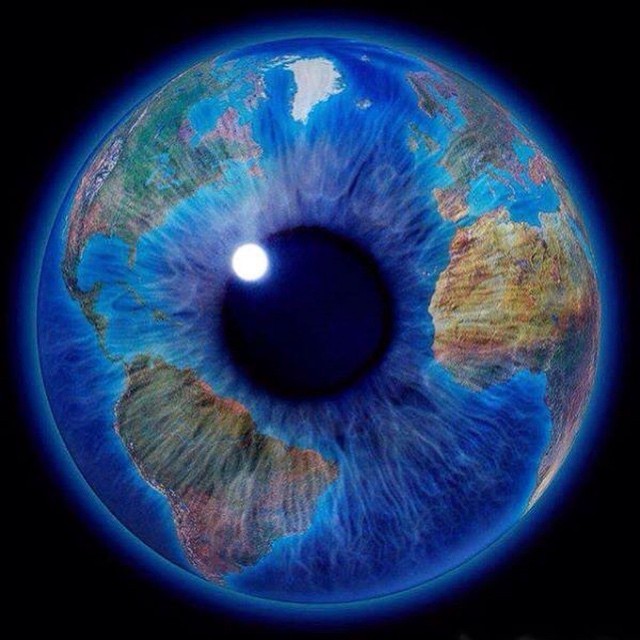
Geographical Formations
Several features on Earth's surface are colloquially called "Earth's Eye" due to their unique, eye-like appearance when viewed from above:

👁️ The Eye of the Sahara (Richat Structure): A massive, 40-kilometer-wide eroded geological dome in the Mauritanian desert. Its concentric rings make it a prominent feature visible from space.
👁️ Izvor Cetine (Eye of the Earth): A spring at the foot of the Dinara mountain range in Croatia. The deep, blue spring is the source of the Cetina River and has an uncanny resemblance to a human eye.
👁️ Tongtianluo Cave: A karst sinkhole in China that is also known as the "Eye of the Earth".+
👁️ Izvor Cetine (Eye of the Earth): A spring at the foot of the Dinara mountain range in Croatia. The deep, blue spring is the source of the Cetina River and has an uncanny resemblance to a human eye.
👁️ Tongtianluo Cave: A karst sinkhole in China that is also known as the "Eye of the Earth".+

The "Eye of the Earth," Croatia's Cetina Springs, is a natural karst spring with a known depth of 155 meters. It's the source of the Cetina River, the longest in Dalmatia, and is named for its eye-like appearance due to the vibrant blue and turquoise shades of the water. While divers have reached depths of 155 meters, some parts remain unexplored.
📚
Famous Quote
In his 1854 book Walden, author Henry David Thoreau used the phrase "Earth's eye" to describe a lake:
"A lake is the landscape's most beautiful and expressive feature. It is Earth's eye; looking into which the beholder measures the depth of his own nature".
In his 1854 book Walden, author Henry David Thoreau used the phrase "Earth's eye" to describe a lake:
"A lake is the landscape's most beautiful and expressive feature. It is Earth's eye; looking into which the beholder measures the depth of his own nature".

NASA's Interactive Tool
NASA's "Eyes on the Earth" is a free, web-based software that allows users to interact with real-time satellite data in a 3D environment. The tool lets you track:
👨🚀 Earth science missions: Follow the path of satellites as they orbit the planet.
🌌 Planetary vital signs: Monitor key environmental data like air temperature, carbon dioxide levels, sea level, and ozone.
🛰️ Weather events: View satellite imagery of major weather systems and track current conditions.
NASA's "Eyes on the Earth" is a free, web-based software that allows users to interact with real-time satellite data in a 3D environment. The tool lets you track:
👨🚀 Earth science missions: Follow the path of satellites as they orbit the planet.
🌌 Planetary vital signs: Monitor key environmental data like air temperature, carbon dioxide levels, sea level, and ozone.
🛰️ Weather events: View satellite imagery of major weather systems and track current conditions.
🛰️
NASA's Eyes is a suite of 3D visualization applications that allows everyone to explore and understand real NASA data and imagery in a fun and interactive way. The apps are all run inside a regular web browser, so any device with an internet connection and a browser can run them.
Ready to explore hundreds of planets, moons, asteroids, comets, and NASA missions from start to finish? Explore now by clicking on the "Start Exploring" buttons below, each of which launch a separate window in your browser.
🚀 🛰️ 👨🚀 🌌 ☄️ 🛸
Art Exhibition
In May 2025, the Moody Gallery in Houston, Texas, hosted Earth's Eye, a solo exhibition by artist Liz Ward. The collection of paintings and mixed-media works explores the multiple meanings of landscape through layers of human history, memory, and environmental change.
In May 2025, the Moody Gallery in Houston, Texas, hosted Earth's Eye, a solo exhibition by artist Liz Ward. The collection of paintings and mixed-media works explores the multiple meanings of landscape through layers of human history, memory, and environmental change.
Cosmic 🌌 Eye 👀

Universe Size Comparison (Original HD)
This 2018-version of Cosmic Eye contains improved graphics and minor technical corrections compared to the 2011-version in portrait format. This
short movie Cosmic Eye, created by astrophysicist Danail Obreschkow
zooms through all well-known scales of the universe from minuscule
elementary particles out to the gigantic cosmic web.


.gif)
.gif)

.gif)

No comments:
Post a Comment