Search This Blog

Showing posts with label Inspirational. Show all posts

Wednesday, May 27, 2026

Philanthropy & Yield Giving ๐Ÿ’ฐ MacKenzie Scott ๐Ÿ’ธ

https://64.media.tumblr.com/fe0467367de8d9d44d93a2ac8d719f04/ac49532e66651a01-94/s2048x3072/52963ac5faa74c0f4ae5dfb77891013f2188da3f.jpg
MacKenzie Scott is a highly influential philanthropist and novelist. Since launching her giving initiative, she has distributed approximately $26.3 billion to more than 2,700 non-profit organizations. Her philanthropy is defined by unrestricted grants, allowing organizations to use the capital wherever it is most needed.  Feb 9, 2026 
 
Philanthropy & Yield Giving
๐Ÿ’ธ Total Impact: She has donated over $26 billion through her philanthropic vehicle, Yield Giving.
๐Ÿ’ธ Giving Style: Unlike traditional philanthropy, Scott's model provides large, unrestricted gifts with no lengthy applications, mandatory reporting, or naming restrictions.
๐Ÿ’ธ Focus Areas: Her donations span a wide variety of causes, including racial equity, gender equality, climate change, and poverty alleviation.  
Business & Amazon
* Amazon Foundation: She was one of Amazon's earliest employees, helping to found the company alongside her former husband, Jeff Bezos, in 1994.
* Contributions: She played an instrumental behind-the-scenes role in the early days of the company, assisting with the business plan and the company's name. 
Background & Literary Career
๐Ÿ“š Education: She graduated from Princeton University in 1992 with a degree in English literature.
๐Ÿ“œ Mentorship: During her time at Princeton, she studied under the acclaimed author Toni Morrison.
๐Ÿ“• Author: In addition to her philanthropy, she is an established novelist and author.  
Track the latest recipients and distributions or learn about the organization’s criteria on the Yield Giving website.

The name of her organization itself is a clue to her approach and intentions. Yield Giving is a repurposing of a common term from finance and investing. At the top of her website, she defines “yield” by noting two of its meanings:
                     “yield: (verb)   1. to increase.   2. to give up control.” 
๐Ÿ’ฐ ๐Ÿ’ธ ๐Ÿ’ฐ ๐Ÿ’ธ ๐Ÿ’ฐ ๐Ÿ’ธ ๐Ÿ’ฐ ๐Ÿ’ธ ๐Ÿ’ฐ ๐Ÿ’ธ ๐Ÿ’ฐ ๐Ÿ’ธ ๐Ÿ’ฐ ๐Ÿ’ธ ๐Ÿ’ฐ ๐Ÿ’ธ
   https://64.media.tumblr.com/a6ae2ef33dd4e36b41f8dc723baf8f7a/df4f4479dfdb8590-9f/s1280x1920/c2285e86db24e805e9848a3a060582bb2a3d957d.jpg
Philanthropy, to the Rescue
Having donated more than $19 billion since 2019, MacKenzie Scott ’92 is setting a new model for philanthropy, not just in the scope, but also in the way she gives

In 2019, as MacKenzie Scott ’92 began giving away billions of dollars at a pace that few, if any, in the history of philanthropy have ever matched, her mind traveled back to when she was pinching pennies at Princeton. At the time, juggling jobs with classes wasn’t making ends meet. She tried gluing a broken tooth by herself because she couldn’t afford a dentist. She was on the verge of quitting college as a sophomore for lack of funds.

Nearly three decades after graduation, when circumstances positioned her to be able to give like a Carnegie, Rockefeller, Buffett, or Gates, she didn’t model her singular philanthropic style on such eminent givers.

“Whose generosity did I think of when I made every one of the hundreds of gifts I’ve given so far?” 
Scott wrote in a 2021 essay on philanthropy. 
“It was the local dentist who offered me free dental work when he saw me securing a broken tooth with denture glue in college. 
It was the college roommate who found me crying and acted on her urge to loan me a thousand dollars to keep me from having to drop out sophomore year.”

The acts of charity she experienced at Princeton taught her that the size of a gift matters less than the intention behind it, and in that sense, all of us have the capacity to be philanthropists. She realized that giving starts with an impulse, and it’s wise to act quickly on that impulse. She became convinced that givers should trust the receivers to know best what to do with the gift. After giving, the givers should step aside, be all but invisible, while the receivers shin

Her Princeton experience showed her one more thing: The returns on generosity are incalculable. Consider the Princeton roommate who spotted her $1,000. Could the roommate have known that the English major she helped stay in school would go on to become a novelist mentored by Toni Morrison — her thesis adviser — who would recommend her for the job where she would meet her future husband, whom she would help start an internet bookselling business that would revolutionize online retailing and make the couple one of the richest in history?

Jeannie Ringo Tarkenton ’92, that generous sophomore roommate, later founded a company, Funding U, which has provided $80 million in low-interest loans, without requiring co-signers, to about 8,000 students needing help to pay for college. Tarkenton demurs when asked about her impact on Scott’s trajectory. “I’ve always said she would have graduated without that grace, as would probably a lot of the thousands of kids I help because they are hardworking people who kind of try to figure it out,” Tarkenton says in an interview with PAW. “But small graces everywhere add up — or big graces, when it comes to MacKenzie’s” giving.

Scott, in her essay, portrays the roommates’ exchange and its aftermath as a parable of the kind of philanthropy she aspired to practice. Scott ended up loaning to Funding U a portion of the capital that Funding U has loaned to students, whose repayments are then loaned to more students.

“How quickly did I jump at the opportunity to support her dream of supporting students like she once supported me?” Scott wrote. “And to whom will each of the thousands of students thriving on those gratitude-powered student loans go on to give? None of us has any idea.
https://64.media.tumblr.com/ecb91e28b943246167b0d5e7be0a38ad/df4f4479dfdb8590-aa/s1280x1920/b06d010cba04e02f41c7ea9e0f94f7dc57c784cf.jpg
MacKenzie Scott ’92, Toni Morrison, former Princeton administrator Ruth Simmons, and Princeton President Christopher Eisgruber ’83 celebrate the naming of Morrison Hall in November 2017
 
In 1992, a young woman named MacKenzie Tuttle graduated from Princeton University with a degree in English literature. She had studied under Toni Morrison, who later called her one of the best creative writing students she had ever taught. Sharp, disciplined, and gifted with language, MacKenzie took a job at a high-performing New York hedge fund called D.E. Shaw, where a conventional career in finance seemed to await her.      Then she met Jeff Bezos.
He had an unusual idea — selling books on the internet. Most people who heard it dismissed it. MacKenzie did not. She married him in 1993, helped pack their belongings into a car, and drove cross-country to Bellevue, Washington. In a rented garage, with a few computers and no guarantee of anything, they built Amazon together. In those earliest days there were no vast teams or polished systems. There were two people packing boxes, answering customer calls, writing business materials, and building something from nothing.
She was there at the very beginning of all of it.
As Amazon grew into a global force, MacKenzie stepped back to raise their four children and pursue her own writing. She published two well-regarded novels, taught writing, and lived quietly and largely out of public view for most of the next two decades.
Then, in January 2019, Jeff Bezos announced their divorce.. The settlement gave MacKenzie approximately four percent of Amazon's shares — worth roughly $36 to $38 billion at the time — making her one of the wealthiest people on earth, essentially overnight.
What she did next is what this story is actually about.    -   Within months, she signed the Giving Pledge, a commitment to donate the majority of her wealth to charitable causes. Her letter explaining the decision was short and striking.
She did not describe the fortune as her personal achievement. She described it as something built by the collective labor of countless people — something that needed to be returned, not kept.

She meant it.   She built a small, focused team and created a philanthropic initiative called Yield Giving. 

The approach was deliberately different from how most billionaires give. No lengthy applications. No required progress reports. 
No conditions attached. No press releases issued in her name. Instead, her team quietly identified organizations doing serious, underfunded work in overlooked communities — then called them out of nowhere and told them a large unrestricted gift was on its way.
Many recipients thought it was a scam. Some asked the caller to repeat the number. Others wept.   She gave hundreds of millions to Historically Black Colleges and Universities — the largest single gift in the institutional history of many of them. She gave $436 million to Habitat for Humanity. She directed enormous gifts to food banks, climate organizations, racial equity groups, women's health initiatives, immigration services, rural communities, tribal colleges, shelters, and prison reform programs — causes that larger, more image-conscious philanthropists had long considered too unglamorous or too complicated.
In 2025 alone, she donated $7.17 billion to 186 organizations. That single year of giving exceeded the entire lifetime charitable giving of her former husband. Her total giving since 2019 now stands at $26.3 billion across more than 2,700 organizations. Forbes places her third among all living philanthropists in lifetime giving — behind only Warren Buffett and Bill Gates — and she reached that position in just six years.
Her net worth still sits at approximately $38 to $40 billion despite all of it. The stock keeps rising faster than she can give it away.
Here is the part most people do not know.
MacKenzie Scott did not grow up wealthy. At Princeton, she struggled. A local dentist once gave her free dental work after seeing her use denture glue on a broken tooth because she could not afford care. A college roommate loaned her $1,000 when she was nearly unable to pay tuition and on the edge of dropping out. Those two small acts of generosity from strangers never left her. They are part of why she gives the way she does — quietly, without transaction, without expecting anything back.
She has no named buildings. No branded foundation. No public speeches. She does not attend galas in her honor because she does not hold them. In her 2025 year-end essay, she described herself as one small part of a much larger story — the dollar total of her giving a tiny fraction of the care being shared into communities every year by ordinary people.
She is also a novelist. A mother of four. A woman who once worked in a garage when a company had nothing, and who is now systematically redistributing a fortune built from that same company — not to cement a legacy, but simply because she believes other people need it more than she does.
There is a word for that.   Not philanthropy. Not strategy.   Just generosity. The same kind a dentist once showed a young woman with a br*ken tooth, and a roommate showed a friend who was crying over tuition.
It ripples forward.
Apparently, it always does.  
https://64.media.tumblr.com/ecc33dab130a6240deea11482f2bb562/df4f4479dfdb8590-b3/s640x960/9be73fd8f466c1492ec53f62f4aec2b836f5550c.pnj
MacKenzie Scott.
Philanthropy: As of 2022, she has donated over $19 billion to more than 2,450 non-profit organizations through her initiative, Yield Giving.Background: She graduated from Princeton University in 1992 with a degree in English literature, studying under author Toni Morrison.Business Career: She was an early employee at Amazon, helping to found the company alongside her former husband.

Monday, February 16, 2026

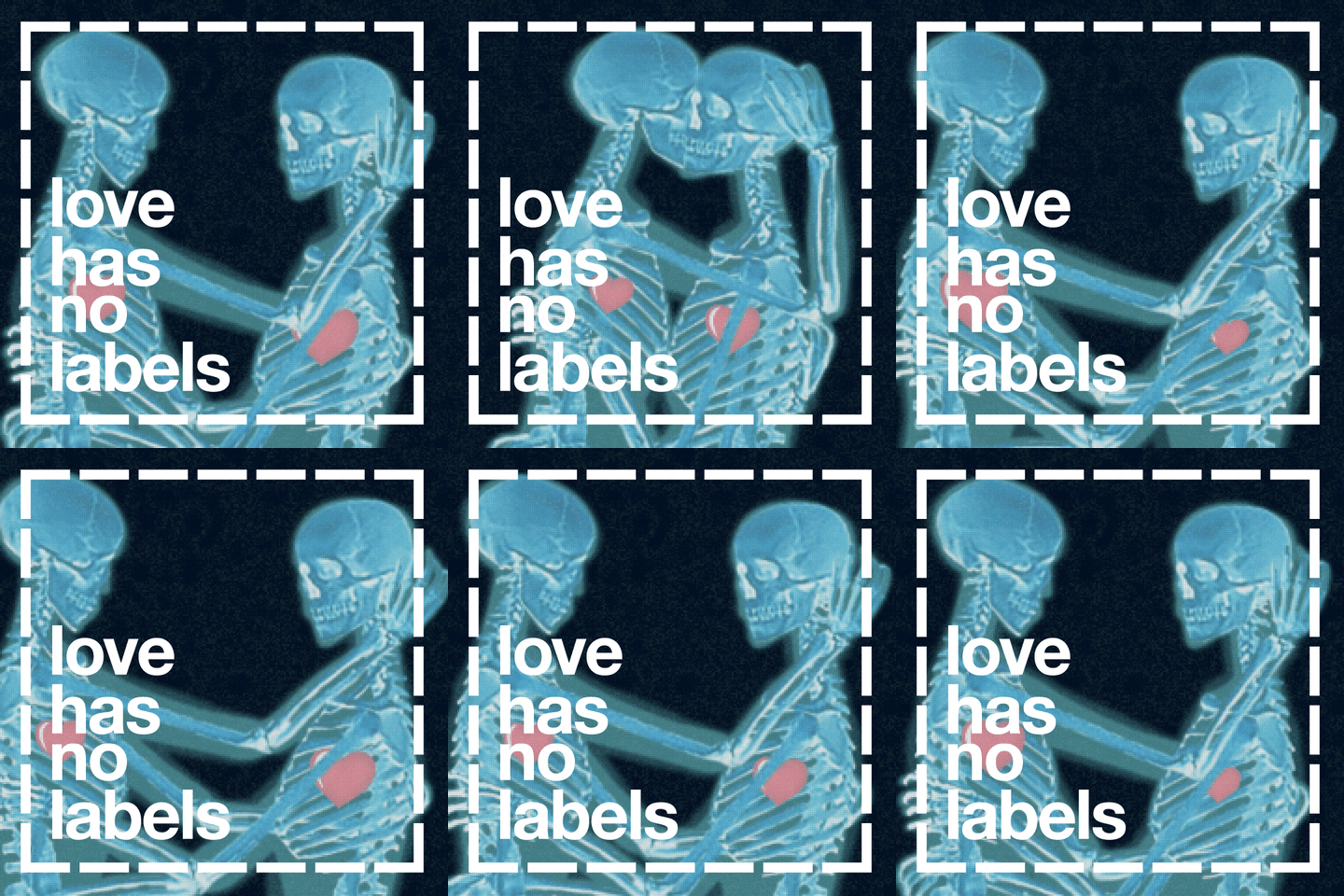
Love๐Ÿ’— Has No Labels

Fans of Love 
Tumblr: Image
๐Ÿ’— Love Has No Labels ๐Ÿ’•
For years, kiss cams have been a big part of American sports culture. This year, Love Has No Labels puts a twist on the kiss cam by turning it into a symbol for unbiased love.
๐Ÿ’•
In the stadium, fans cheered for love in all its forms - regardless of race, gender, disability, age or religion.
๐Ÿ’•
Love Has No Labels is a movement to open our eyes to unconscious bias. While the vast majority of Americans consider themselves unprejudiced, many of us unintentionally make snap judgments about people based on what we see - whether it’s race, age, gender, religion, sexuality, or disability. 
By becoming aware of our own biases, we can work to end bias in ourselves, our families, our friends, and our communities. 
Tumblr: Image
This video really is fantastic.
๐Ÿ’•
In a new Love Has No Labels campaign, the Ad Council and the NFL teamed up to create the perfect PSA for Valentine’s Day.
๐Ÿ’•
The footage was taken at the Pro Bowl in Orlando, and the PSA turned the Kiss Cam into an opportunity to highlight love’s different forms over the traditional Kiss Cam.
๐Ÿ’•
According to the Ad Council, the video featured “real families, couples and friends across different races, religions, genders, sexualities, abilities and ages.”
It was beautifully done.
๐Ÿ’• Rethink bias at www.lovehasnolabels.com.
Love Has No Labels
๐Ÿ‘‡  ๐Ÿ’•  ๐Ÿ‘‡
Show the world you’re a Fan of Love by submitting a photo in our Faces of Love tool: 
Tumblr: Image
Join the movement by purchasing Love Has No Labels merchandise available in our store: https://teespring.com/stores/love-has...
Music: "Show Me Love (feat. Chance the Rapper, Moses Sumney, and Robin Hannibal) [Skrillex Remix]" - Hundred Waters
๐Ÿ’– Celebration  ๐Ÿ’Œ  of  Love ๐Ÿ’–
Friendship ๐Ÿ‘จ‍❤️‍๐Ÿ‘จ Valentine’s Day ๐Ÿ’• Galentine’s Day ๐Ÿ‘ฉ‍❤️‍๐Ÿ‘ฉ
Tumblr: Image                          

Sunday, August 3, 2025

Ways to Be a ๐Ÿ™ Better Person

13 Ways to Be a Better Person
You know the drill:
New You ๐Ÿ™ Better You
By Anya Strzemien
1.  Just… Be  -  Jonathan Van Ness
The grooming expert and  memoirist embodies many of the tenets of better personhood: He overcame a difficult past (sexual abuse, drug addiction and an H.I.V. diagnosis) to become the gorgeous and inspiring person we know today. “I want people to realize you’re never too broken to be fixed,” he said. And perhaps the most useful lesson in this profile: “Namaste” is a gracious yet effective way to end an unwanted conversation.

2.  Don’t, Like, Cheat
Move over, helicopters, there’s a new problematic parent in town. Enter the snowplow parent — one who removes obstacles from a child’s path, clearing the way to success. They came into the spotlight this year with their most extreme behavior yet: the college admissions scandal of 2019, in which parents who are famous or rich, or both, paid universities and coaches to cheat their kids’ ways into college.

The article: How Parents Are Robbing Their Children of Adulthood by Claire Cain Miller and Jonah Engel Bromwich

3.  Hug a Boomer/Xer/Millennial/Zoomer
In case you missed it: Gen Z is mad at boomers for the state of the world; boomers are mad at Gen Z for being so dismissive; Gen X feels forgotten and yet resents even themselves; and, not making anything much better, is the fact that five generations are currently coexisting in the workplace. May we recommend
our 2018 piece on intergenerational friendship?
The article: ‘OK Boomer’ Marks the End of Friendly Generational Relations by Taylor Lorenz


4.  Think Before You Cancel
Sometimes canceling is warranted. And sometimes it’s just bullying, as some of these teenagers’ stories show. As one kid put it, “We all do cringey things and make dumb mistakes and whatever. But social media’s existence has brought that into a place where people can take something you did back then and make it who you are now.”

5.  Live Your Life Like a Rom-Com
As this Modern Love essay showed, sometimes a practical decision (not to get married at 18) can lead to a very romantic story (planning to meet at the New York Public Library at 4 p.m. on the first Sunday in April five years later — and then doing it) and a happily ever after (they’ve been married for 35 years).
The article: Let’s Meet Again in Five Years by Karen B. Kaplan

6.  Protect Thy Acid Mantle
Yeah, we had no idea what that was, either. It’s “the protective film of natural oils, amino acids and sweat that covers your skin. Damage it with too much scrubbing or neutralize it with alkaline washes and you’re on your way to barrier problems: inflammation, allergies, breakouts.” In summary: You’re probably using too many products on your face, so … stop.
The article: All of Those Products Are Making Your Skin Worse by Courtney Rubin

7.  Sleep Until At Least 6 A.M.
We can’t all be Tim Cook, Jennifer Aniston, 
or Bob Iger  and wake up around 4 a.m. without serious impact on our immune systems, mental cognition, stress levels and blood pressure. But it’s cute that for a minute we thought we could.
The article: Waking Up at 4 A.M. Every Day Is the Key to Success. Or to Getting a Cold. by Adam Popescu

8.  Buy Stock in Leggings
Because they’re not going away anytime soon, writes our fashion director and chief fashion critic: “For Gen Y, they tend to be lifestyle signifiers that have more to do with health and activity than, say, everyday work wear; for Gen Z-ers, who largely reject uniformity and traditional labels, they are simply a basic, the equivalent of jeans. They are something you put on without thought.”
The article: It’s Possible Leggings Are the Future. Deal With It. by Vanessa Friedman

9.  Use Your Office Bathroom as It Was Intended
Pooping is a privilege - if you’re doing it normally,  it means your body is working as it should, and isn’t that nice? So, to quote the Mamas and the Papas in a song that had nothing to do with bathroom behavior: “Go where you wanna go.” Your colleagues don’t actually care.

10.  Learn Your Personality Type
This Modern Love writer swore by the Myers-Briggs Type Indicator, controversial though it may be, as a lens into romantic compatibility. So what’s your type?
The article: Want Lasting Love? First, Take This Test by Lauren Apfel

11.  Take a Quick Little Break From Booze
You may be planning a
Drynuary, which makes you among the sober curious, “a new generation of kinda-sorta temporary temperance crusaders” who are taking a more mindful approach to their drinking, but don’t feel that their relationship to alcohol requires a 12-step program. As a result, some of these folks feel so good that they attend things like early morning raves. But, don’t worry: You don’t have to.
The article: The New Sobriety by Alex Williams

12.  Do Nothing for 20 Minutes
Another thing to file under Things That Other People Swear By is Transcendental Meditation. For one, Katy Perry has said of T.M., “I will feel neuro pathways open, a halo of lights. And I’m so much sharper. I just fire up!” Our wellness columnist took a course, didn’t quite feel a halo of lights, but found that the routine took hold and helped give her perspective throughout the day.  
The article: A 20-Minute Exercise You Can Do Anywhere by Marisa Meltzer

13.   Or Do Absolutely Nothing for Even Longer

These San Francisco dudes are depriving themselves of many things, including conversation and eye contact, in order to experience more feelings later. According to James Sinka, a practitioner of dopamine fasting, “Your brain and your biology have become adapted to high levels of stimulus so our project is to reset those receptors so you’re satiated again.” In other words, a life without exclamation points — at least for a few quiet days.