Search This Blog

Thursday, July 23, 2026

GrandMa ๐Ÿ‘ต Day ๐Ÿ‘ต๐Ÿพ July 23 ๐Ÿ‘ต๐Ÿป

National Gorgeous GrandMa Day
Celebrated Annually on July 23
https://blogger.googleusercontent.com/img/b/R29vZ2xl/AVvXsEgdIlN9EsWQ4EU2BTMs1knH3FFnUVX9JoVAhM7IzYI-6CtHVsp5Tz4vARHBpBjaTE9BJhp5NbwK1PClH6wZpzKyqLeH7GzV0dd5r3yI8kZolMKSJ5oR6sw8ClssPdpRwvKPb5Dd_oRMl78/s1600/am5.gif
GrandMa Day
Maybe you call her Nana. Maybe you call her Granny. Maybe you call her when you’re in trouble because you know she’ll be there for you at the drop of a hat. Whatever the case may be, today is her day. 
But it’s not just Grandma Day - oh no. This July 23, we celebrate National Gorgeous Grandma Day. Today’s the day to tell ol’ Granny just how stunning she really is. She looks fly for an eighty year old, you have to admit. We bet all the grandpas are dying to get with her.

https://64.media.tumblr.com/b76303f722f1c26fcc46f509f9e168d5/b3c2fb9dbb229b9b-2a/s400x600/c8814e12afcfc9fd53a4c34db43eafb1d0c604b8.jpg
History of National Gorgeous Grandma Day
National Gorgeous Grandma Day is celebrated annually on July 23. As the name of the holiday suggests, our dearest, cuddliest grandmothers are celebrated. Grandmothers endlessly love and treasure their families, and typically have an infectious love for life. They have experienced a lot and have the best words of wisdom for us. With all the aches and pains of old age, most grandmothers have positive attitudes and amazing energy, which radiates into our lives. The day aims to celebrate women over the age of 50 and encourages them to defy society’s standards and live it up a bit.
We love our grandmothers but, most of the time, we see them in a stereotypical old-fashioned way. Grandmothers are expected to be calm, collected, have an outdated style, and spend their days baking and knitting. Society’s narrow perception that women shouldn’t dress up, wear bright colors, and go on dates after the age of 50 is primitive. National Gorgeous Grandma Day intends to dispel this mindset and encourage people not to frown upon ladies over the age of 50 who are not ready to retire to a quiet life yet.
#Grandma Day from UWS
Alice Solomon graduated at the age of 50 from Wellesley College in 1984. She realized that society saw her and other women of her age as senior citizens, regardless of whether or not they were actual ‘grandmothers.’ Determined to challenge this thinking, she came up with the idea of ‘Gorgeous Grandma.’ Women who were apparently ‘beyond their expiration date’ and no longer relevant are termed as ‘grandmas,’ so Solomon decided to embrace the term, but amped it up with the use of the word ‘gorgeous.’ Gorgeous Grandma is all about presenting an edgier image of older women and eliminating stereotypes confining them in a limited box.
https://64.media.tumblr.com/df3e1812ed916a52720a9b5b8238fbcf/1108200d210e7282-7b/s1280x1920/b159a32849187014f82c3f0eb3a67bcdfd1be86d.jpg
Traditions
If you are a grandmother or a woman who is in the age bracket that can be considered a grandmother, the traditions for the day is to make yourself the priority. Grandmothers spend most of their time loving their children and grandchildren, and looking after others. So the priority of the day is to pamper yourself and do something exciting that you normally wouldn’t on a regular day. Try a new class, make a Tik Tok video, blog, or even skateboard (if your body allows it).
Those who have a grandma or know an elderly female family member or friend, making the day exciting for them is a tradition. Spend time with them, pamper them, have fun, and get them to try something new. 
Think out of the box, and defy assumed age limitations!

#Grandma Day from UWS#Grandma Day from UWS
Why is Grandma special?
A grandmother’s love is a special kind. It is pure and unconditional, and overlooks all faults and flaws of her children and grandchildren.
#Grandma Day from UWS
Do you celebrate grandmas on Mothers Day?
Grandmothers ARE mothers, so when celebrating our parents, we also celebrate their parents!

#Grandma Day from UWS
National Gorgeous Grandma Day Activities
Take her shopping
When’s the last time you treated your grandma to a date? Today is the day to pamper her and treat her the way she deserves. Take this time to go shopping with her. Spoil her. Give her a modern day makeover and make her feel like the young fox she once was. (Well, is, really. Did we mention our grandmas are gorgeous yet? Grandma, if you’re reading this, you’re a foxy babe.)

#Grandma Day from UWS
๐ŸŒน ๐ŸŒท ๐ŸŒน ๐ŸŒท ๐ŸŒน
Why We Love National Gorgeous Grandma Day
๐Ÿ˜
She Makes the Best. Food. Ever. ๐Ÿ ๐Ÿฐ ๐Ÿฒ
#Grandma Day from UWS
Think about it, who makes the best food in your family? 
Whose food do you look forward to during the holidays? 
It’s always Grandma’s, am I right? Now, calm down - this is not an attack on other family members. But we’re just saying, no one in history has ever said, “This Mac’N’Cheese is amazing. Just like Uncle Jim Bob used to make it!” Well, one person out there might have said it, but you know what we mean. 
Grandmas make the best dishes. Period.
#Grandma Day from UWS#Grandma Day from UWS
Live with it, Uncle Jim Bob. Jim Bob’s probably not as gorgeous as Grandma, either. She takes the cake (see what we did there) for cooking with style and panache. Speaking of which, we’re hungry. 
Do you think our grandmas would make us some food?
#Grandma Day from UWS
She has (less than) no filter
Most gorgeous grandmothers have the tendency to say whatever comes to mind, no matter who they are around. We aren’t sure what the reason is, but we’ve narrowed it down to two possibilities. They either don’t care, or they don’t know what they are saying is “politically incorrect.” 

#Grandma Day from UWS
Either way, we’re 100% here for it. It may not fit in with our society’s standards, but it’s entertaining to say the least. Is this a good time to mention how gorgeous our grandmas look while spouting politically incorrect nonsense? No? Well we did it anyway. Our grandmas are beautiful and we don’t care who knows it. Take that, world!
 Tumblr: Image
She's a rebel with a cause 
Grandmas are badasses set in their ways, and they typically don’t like to listen to rules. Especially rules like, “Do not give Johnny Jr. ice cream, Mom.” Saying that to the average grandma is like telling her not to push a giant red button. Forget about it. Grandmas love to spoil their children regardless of what they are told. 

#Grandma Day from UWS
And so even though we love our gorgeous grandmas, we suspect our children love them even more. They’re not thinking about things like early onset diabetes—oh no. They’re just reveling in sugar highs all day.
๐Ÿ‘ต๐Ÿผ ๐Ÿ‘ต ๐Ÿ‘ต๐Ÿพ ๐Ÿ‘ต๐Ÿป ๐Ÿ‘ต๐Ÿฝ ๐Ÿ‘ต ๐Ÿ‘ต๐Ÿพ ๐Ÿ‘ต๐Ÿผ ๐Ÿ‘ต๐Ÿป ๐Ÿ‘ต๐Ÿฝ
Tumblr: Image                  

Wednesday, July 22, 2026

National Hammock Day ๐ŸŽผ July 22nd

National Hammock Day
July 22nd
A hammock is a sling made of fabric, rope or netting. When suspended between two points, a hammock forms a sling used for swinging, sleeping or resting. We usually suspend a hammock between trees or posts.  
Because hammocks are portable, you can take a hammock wherever you go...just in case you find a spot that looks enticing.
https://64.media.tumblr.com/ec0010e4cb4e901429768df3bf63daf1/8d0bebe17bd4490a-7f/s1280x1920/13e103b8a5355f1872de494d34a8c80ac1b6afad.pnj
National Hammock Day is celebrated annually on July 22nd. It's a day to celebrate the relaxation and joy of enjoying a hammock, whether for reading, napping, or simply unwinding. 
Tumblr: Image
Encouraging everyone to relax in the shade by creating a tranquil napping space. Whether you set your hammock up under a tree or on your balcony, find a spot and enjoy the feeling of swaying lightly in the peace and quiet.
Tumblr: Image
Here's a more detailed look at National Hammock Day: 
๐ŸŒบ
What is it?
National Hammock Day is a celebration of the hammock, a symbol of relaxation and leisure.

๐ŸŒด
When is it?
It's celebrated every year on July 22nd. 
๐ŸŒณ
Why celebrate?
It's a reminder to take a break, unwind, and enjoy the simple pleasure of relaxing in a hammock. 
๐ŸŒบ
How to celebrate?
Many people spend the day relaxing in their hammocks, reading, napping, or enjoying nature. Some communities host events with music, activities, and hammock giveaways. 
Tumblr: Image
Origins:
Hammocks have a long history, with origins in
Central and South America, where they were used for sleeping and resting.
https://64.media.tumblr.com/2433263eb8d052f003822125b065f3c1/8d0bebe17bd4490a-f4/s1280x1920/e0f4eb5ee0485553ac81a21e8a6a31b7b0f15b8b.pnj
๐Ÿ˜Ž J’aime la Vie Tranquille  ๐Ÿ˜Œ
Dario Moreno
 ๐Ÿ‘‡  ๐Ÿ–ฅ️  ๐Ÿ‘‡
Tumblr: Image
 National Hammock Day 
๐Ÿ‘‡    ๐Ÿ‘‡
Tumblr: Image
The hammock dates back thousands of years to Central America where it protected people from creatures and dirt. However, the netted bed didn't find Europe until explorers brought it back in the 17th century. Not long after, the hammock found its way onto naval ships, providing comfort and maximizing space.
Tumblr: Image
After swaying across the oceans, the hammock eventually became a more leisurely item. Made from a variety of fabrics, it is suspended between trees in backyards and at lake cabins. Easily packed into a backpack, hammocks became essential elements of survival. Hikers, campers, and mountain climbers added the light and compact sleep sling to their kits.

If the leisure of hammocks seems ho-hum to you, don't go the relaxing route. Extreme hammocking puts the adventure into your rest and relaxation. Thrill-seekers sleep in hammocks hundreds of feet above a canyon floor.
Whether you use a hammock to take a nap or as a convenient tool in your camping kit, National Hammock Day on July 22 recognizes one innovative way to catch some sleep.
Tumblr: Image
HOW TO OBSERVE National Hammock Day.
Hang up your hammock and take a nap. Use your own or borrow a hammock to celebrate. Host a hammock event, encouraging others to relax in the great outdoors. You can also conduct some research.
๐ŸŒบ Do you sleep better in a hammock or in a bed? According to a Swiss research team at the University of Geneva, the hammock wins. Conduct your own tests to see if it's true.
๐ŸŒบ Which is easier to pack, a hammock or an air mattress?
๐ŸŒบ Sticking to our hammock vs. air mattress test, which is easier to set up?
๐ŸŒบ Manufacturers make hammocks out of a variety of materials; Which one do you prefer?
๐ŸŒบ Answer this question: Which is easier to get out of, a hammock or mattress?
๐ŸŒด
National Hammock Day  HISTORY
National Day Calendar is researching the origins of this relaxing holiday.

https://www.nationaldaycalendar.com/national-day/national-hammock-day-july-22
Tumblr: Image
« Dolce Far Niente » - The Art of Doing Nothing

Il existe une expression italienne qui traverse les siรจcles : 
« Dolce Far Niente », que l’on peut traduire par « la douceur de ne rien faire ».

ร€ premiรจre vue, cette phrase pourrait sembler une invitation ร  la paresse. Mais sa signification est bien plus profonde. Dans la culture italienne, ce concept est liรฉ ร  la capacitรฉ de ralentir et d’apprรฉcier la vie sans culpabilitรฉ. C’est ce moment oรน l’on savoure tranquillement un cafรฉ, oรน l’on observe une place animรฉe, oรน l’on discute avec des amis au coucher du soleil, ou oรน l’on profite simplement de quelques minutes de tranquillitรฉ sans se sentir obligรฉ de produire quoi que ce soit.

"Dolce far niente" is a famous Italian phrase that translates to "the sweetness of doing nothing." It means taking time to relax, enjoy the present moment, and feel happy without rushing or worrying about work.
Meaning and Mindset
  • Not lazy: It is a positive choice to rest your mind.
  • Being present: Focusing on the current second instead of the next task.
  • Finding joy: Appreciating small and simple things around you. [1, 2, 3, 4]
https://64.media.tumblr.com/3dbdc526dc3f109c059eff0dcf00fc9b/0ffac44a9fff39f7-72/s500x750/e18e919599aa7c936573de05c2cc3e4705d9fa99.pnj
Simple Ways to Practice
☕ Drinking a quiet cup of coffee or tea without looking at a phone.
⛅ Sitting on a park bench and watching the clouds or people pass by.
For tips on how to slow down and embrace the art of rest in your daily life: https://www.instagram.com/reel/DaznKyIThOW/
Dolce far niente - the art of doing nothing. You can be super driven, hard working & still excel at this.  For me it means 5 times a day for 5 minutes, do nothing & stay in detached awareness. 
This stills my mind. This has 2 advantages
 1) it gets me in touch with my inner voice which has always been my # 1 guide at work or otherwise 
2) it helps my system slow down which does wonders for my mental & physical health. 
This is my # 1 productivity hack. Try it !!
 https://64.media.tumblr.com/003c8eedff7d88e519fbf24a73d0ded8/0ffac44a9fff39f7-5a/s1280x1920/8893c82a7b37f4bec51bfbfe3cf12415ba930979.jpg
Celebrate World Hammock Day
With Our Resident Sloth Bears!
๐Ÿ‘‡  ๐Ÿ’ป  ๐Ÿ‘‡
Tumblr: Image
National Hammock Day, celebrating the timeless craft of hammock weaving
๐Ÿ‘‡  ๐Ÿ–ฅ️  ๐Ÿ‘‡
Tumblr: Image
๐ŸŽผ ๐Ÿค—  ๐ŸŽผ๐Ÿ˜Ž
                          

Tuesday, July 21, 2026

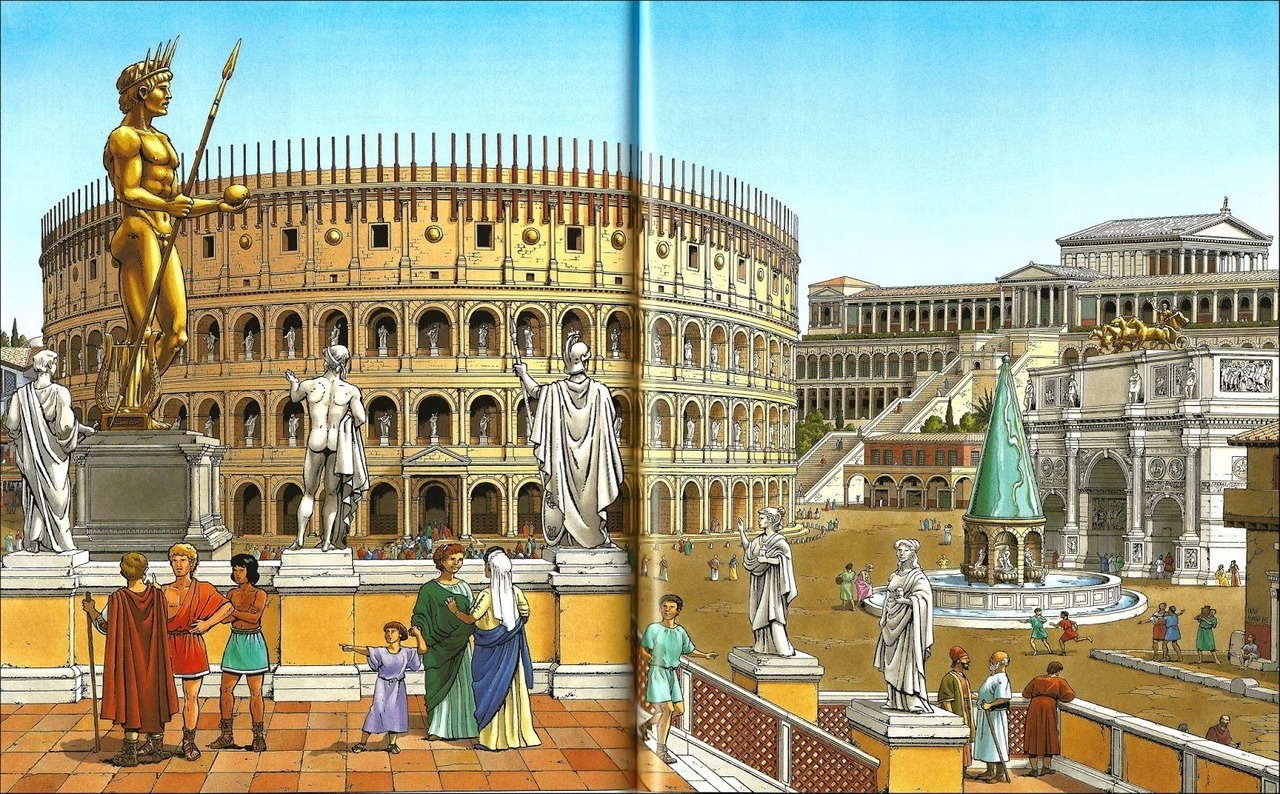
Ancient Rome ๐Ÿ›️ Misconceptions Debunked

11 Misconceptions
About Ancient Rome
Debunked
Mark Mancini August 19, 2016#Colosseum from Cosmos - Science Etc
Released in 1959, Charlton Heston's Ben-Hur is considered one of the greatest motion pictures of all time. Unfortunately, the film helped perpetuate a few mistaken beliefs concerning Rome and her citizenry. With the Ben-Hur remake set to hit theaters on August 19, now seems like a good time to bust some myths.
 
1. ROMANS DIDN’T WEAR TOGAS 24-7.
In his epic poem The Aeneid, Jupiter talks about the future of the Romans as the “masters of the world, the race that wears the toga.” No article of clothing has ever been more synonymous with this ancient culture. Only a Roman citizen could legally wear one, and as years went by, different styles came to be used as a way of displaying the wearer’s socioeconomic status. But for most of Rome’s history, togas were not considered everyday attire.
At first, the toga emphasized function over form. During the Republic’s early days, men, women, and children alike wore these accessories as a kind of durable outerwear. Underneath, they’d don a tunic, which was a sleeved, t-shaped garment that extended from the collar to the knees. Inevitably, though, the region’s fashion standards evolved. By the 2nd century BCE, it became taboo for adult women to put on a toga (prostitutes and adulteresses notwithstanding). Within the next hundred years, the toga turned into a bulky, impractical article of clothing that was mostly reserved for formal occasions like religious services and funerals. In casual environments, the average male Roman citizen would instead wear one of his tunics, sans toga.
Because togas were made with large quantities of costly wool, they were also quite expensive. The Roman poet Juvenal once observed that “there are many parts of Italy, to tell the truth, in which no man puts on the toga until he is dead.” Toward the dawn of the 4th century CE, the toga was more or less replaced by a kind of cloak called the paenula.
 
2. CONTRARY TO POPULAR BELIEF, IT LOOKS LIKE THE “NAZI SALUTE” WASN’T INVENTED IN ROME.
You’ll often hear it said that the Romans created this now-infamous gesture. Supposedly, it was then copied by Adolf Hitler’s devotees many centuries later. The whole myth is so widespread that the motion is sometimes referred to as the “Roman salute.” And yet there’s no historical evidence to suggest that such a greeting was ever used in ancient Rome.
Instead, the salute can probably be traced back to a 1784 painting called The Oath of the Horatii. Created by French Neoclassicist Jacques-Louis David, it shows three Roman brothers pledging to defend their homeland. While the men do so, we see that they’ve raised their right arms and extended the fingers. Over the next century, other artists started to portray Romans in this pose and playwrights began writing it into their historical drama scripts.
Mussolini’s Italian Fascist Party later claimed the salutation as its own and celebrated the gesture’s allegedly Roman origins. Inspired by il Duce, Hitler created a German variant for his own fascist organization. “I introduced the salute into the Party at our first meeting in Weimar,” he recalled in 1942. “The S.S. at once gave it a soldierly style.”
 https://64.media.tumblr.com/21e9a0e17328eddfacc28c691ab11d5a/870f2e04a34ee769-eb/s2048x3072/81d141e59093671fd2da8175e83828518f80afea.jpg
3. WE DON’T KNOW WHAT JULIUS CAESAR’S LAST WORDS WERE.
But they probably weren’t “Et tu, Brute?” On March 15 in the year 44 BCE, Julius Caesar was murdered by a group of over 60 co-conspirators, one of whom was Marcus Junius Brutus, the son of the dictator’s longtime mistress. The Roman historian Suetonius later wrote that, according to bystanders, Caesar’s dying utterance was “Kai su, teknon?” which means “You too, child?” in Greek. For the record, however, both Suetonius and another scholar named Plutarch believed that when he was slain, the dictator didn’t say anything at all. The world-famous “Et tu, Brute?” line was made up by William Shakespeare.
 
4. NOT ALL GLADIATORS WERE SLAVES OR PRISONERS … OR MEN.
While it’s true that most gladiators were captives who’d been forced into this dangerous occupation, the lifestyle attracted plenty of freeborn citizens as well—including women. The appeal was plain to see: Like modern wrestlers, successful gladiators frequently became celebrities. A few of them even amassed small fortunes, since winning a big fight could mean taking home a cash prize.
Those who willingly became gladiators were usually impoverished people who sought the financial security that the profession offered. A good number of ex-Roman soldiers signed up as well. To receive training, they’d join what was known as a ludus—gladiator troupes that doubled as rigorous combat schools. The typical ludus was owned by a wealthy politician or former gladiator, who’d rent out his fighters for use in organized shows. Julius Caesar himself once ran a troupe which may have contained up to 1000 gladiators.
Eventually, the government cracked down on freeborn combatants. To help keep young aristocrats out of the fighting pits, the Senate issued an age requirement in 11 CE. This made it illegal for free men who were younger than 25 and free women who hadn’t yet turned 20 from joining a ludus. A subsequent ruling enacted in 19 CE barred all upper-class ladies from becoming gladiators. Then, in 200 CE, Emperor Septimus Severus officially turned this into an all-male sport.
 
5. MANY - IF NOT, MOST - GLADIATOR FIGHTS WEREN’T TO THE DEATH.
Historian Georges Ville has calculated that during the first century CE, out of 100 fights (and 200 gladiators), 19 gladiators died, giving a death rate of around 10 percent (approximately 20 percent for the loser). By the year 300 CE, however, these confrontations became deadlier. In Ville’s estimation, half of all the man-to-man gladiator fights around that time ended with the loser’s demise.
Even so, those odds still might seem low to contemporary movie fans—after all, in “sword and sandal” flicks, gladiator fights almost always result in at least one fatality. However, Ville’s numbers make a lot more sense when you consider the real-life economics involved. Gladiators were expensive, and if one died in combat or was permanently disabled, the venue paid a steep fine to the owner of his ludus. To help keep the body count down, fighters might receive first-rate medical attention after leaving the arena.
But with that said, the crowd often demanded death. Throughout Roman history, most gladiator duels concluded when one party was rendered too weak or injured to keep fighting. Defeated athletes could surrender by throwing down their weapon or shield, or the loser would extend one arm and point upward. At that point, the bested fighter’s fate would be decided by the presiding event chairman, or editor. Generally, his verdict could be expected to appease the audience, whose cheers and jeers helped determine if the fallen warrior lived to fight another day.
 
6. THE ROMANS DIDN’T MAKE SLAVES ROW THEIR WAR VESSELS.
In an iconic sequence from Ben-Hur, we see a group of slaves being forced to row a Roman galley ship at increasingly demanding speeds. While a war beating drum sets the relentless tempo, wandering soldiers mercilessly flog those poor souls who collapse from fatigue. Though the scene is definitely compelling, it’s also inaccurate. Roman galleys were actually powered by paid and well-trained freemen unless absolutely necessary. Frankly, handing this job over to slaves would have been foolish—if a ship were captured, enslaved oarsmen might well side with the enemy and attack their masters.

7. CALIGULA’S HORSE NEVER BECAME A GOVERNMENT OFFICIAL.
Posterity remembers Rome’s third emperor as a sadistic, incestuous lunatic and a testament to the dangers of absolute power—but claims about his madness may have been grossly exaggerated. Gaius Julius Caesar Augustus Germanicus—better known by his nickname, Caligula—began a brief stint as Rome’s supreme leader in 37 CE. His own guards assassinated him just four years later.
Eighty years after the Emperor’s death, our old pal Suetonius published some truly depraved anecdotes about him in an ambitious set of biographies called The Twelve Caesars. At certain points, Suetonius’s Caligula chapter reads like an excerpt from a particularly vile Game of Thrones screenplay. (Among other things, he accuses the dictator of fornicating with his sisters—sometimes, while his dinner guests looked on.)
One often-quoted passage concerns Caligula’s beloved horse, Incitatus. According to Suetonius, the prized steed was kept in a marble stable, given precious jewelry, and waited upon by its very own slaves. Weirder still, the historian writes that Caligula “planned to make him a consul.” If true, this would have been a really strange power move because the consulship was one of the most prestigious offices in Rome.
But Caligula didn’t actually go through with the appointment, and today, some scholars dismiss the whole story as a myth. (Others, however, think the story has some truth, but it wasn’t because Caligula was crazy. As historian Aloys Winterling writes in Caligula: A Biography, “Besides symbolically devaluing the Roman consulars, Caligula’s designation of Incitatus as a consul sent a further message: The emperor can appoint anyone he likes to the consulship.”) Still, it’s often erroneously said that Incitatus became a genuine consul or, at the very least, joined the senate. This misconception was spread by Robert Graves’ classic novel I, Claudius and the wildly successful BBC television series it inspired, both of which depict Incitatus as crazy Caligula’s favorite senator.
 
8. THE ROMANS PROBABLY DIDN’T HAVE BRITISH ACCENTS.
It’s hard to find a film or TV show about ancient Rome in which the actors don’t sound like Royal Shakespearean players. The idea that all Romans spoke with an English accent was popularized by such Hollywood classics as 1959’s Ben-Hur and Quo Vadis (1951). A generation later, the aforementioned I, Claudius television series helped reinforce the trope.
So what sort of accent did the ancient Romans really have? The answer might be several. At its height, the Roman empire stretched from Portugal to Persia. Within this vast area, Latin (and Greek) was no doubt spoken through many different accents. As linguistic historian J.N. Adams has argued, “The combination of lexical and phonetic evidence establishes the existence (in e.g. Gaul, Africa, and Italy) of genuine regional varieties.” We also know that some Romans weren’t above snickering at those who pronounced certain words in a non-typical way. The Emperor Hadrian’s noticeable Spanish accent once triggered a chorus of audible laughter when he read an announcement before the senate. Poor guy.
 
9. ROMAN ELITES DIDN’T HAVE REGULAR ORGIES.
Gratuitous sex scenes filled with writhing masses of toga-clad aristocrats are a standard fixture in movies and TV shows set in ancient Rome. But firsthand accounts of orgies are fairly rare in the annals of Roman texts. As classics professor Alastair Blanshard contends, “There have been more orgies in Hollywood films than there ever were in Rome.” It would appear that—at least to some extent—religious propaganda begat our misapprehensions about the prevalence of wild, Roman sex parties. Medieval Christian writers would often peddle embellished stories of lecherous get-togethers in an attempt to paint the Empire as a morally-bankrupt cesspool.
Still, no modern person would mistake the Romans for prudes. Inside a typical household, married men would regularly have sexual affairs with numerous slaves. On the other hand, public displays of affection were frowned upon—particularly in the days of the old Republic. One senator was even expelled after word got out that he’d kissed his own wife in front of their daughter.
 
10. ROME’S FAMOUS MARBLE STATUES WEREN’T ALWAYS MONOCHROMATIC.
Today, the marble sculptures left behind by the Romans look bone white. Yet, archaeologists have known for over a century that when these sculptures were first created, they received vibrant, multicolored paint jobs. Using a technique known as multispectral imaging, historians can identify the pigments left behind by various paints on ancient statues. With this information, they can tentatively reconstruct an original coat in all its polychromatic glory.
Of course, the ancient paints were mostly washed away by time. Thus, future civilizations assumed that Rome’s wonderful sculptures had always been devoid of color. By and large, Hollywood has followed suit. Virtually all movies that take place in classical Rome are (anachronistically) filled with drab, white statues.
 
11. ROME’S PRE-CHRISTIAN GODS WEREN’T JUST GREEK IMPORTS.
Conventional wisdom holds that Rome simply adopted the Greek gods and gave them new names. What actually happened is a bit more complicated. As Rome grew increasingly enamored with Greek society, comparisons were deliberately made between Greece’s gods and some of the native Italian deities that many Romans already worshiped.
Early Roman religion had its own divine beings, each of whom came with a name and a role. For instance, the supreme god was Jupiter, an impersonal, ambiguously-defined entity that (among other things) controlled the weather. Over time, Rome’s size and influence grew. This expansion put the rising city into regular contact with the Greeks and, by extension, their gods. Gradually, Romans began to equate Italy’s existing deities with their Greek counterparts. Thus, by the third century BCE, Jupiter had transformed into a hybrid of his original Italian self and Zeus, the leader of Mount Olympus. Legends that Greeks traditionally associated with good old Zeus were now repeated as part of Jupiter’s backstory.
Despite this theological interchange, major differences between the Greek and Roman gods persisted. Many scholars have pointed out that the Greek deities were viewed as being more human-like, both in terms of appearance and behavior. Also, some Roman gods occupied slightly different roles than their Olympian equivalents did. Juno is a perfect example. As Jupiter’s wife, the goddess is seen as Rome’s answer to Hera. However, she was also considered the protector of women and childbirth. In Greek tradition, that job was more associated with Artemis (whose Roman analogue was called Diana) and not with Hera.

Ben-Hur (1959)
Rowing of the Galley Slaves HD
๐Ÿ›️
 Charlton Heston and Jack Hawkins showing what genius acting is all about. No words spoken but a thousand words being said. When you play it and watch them its a masterclass.
Intriguing is it not? That Hawkins as Quintus Arrius can convey and telegraph more menace and a sense of good old fashion Roman ruthlessness just by arching his left eyebrow than most so called heavies in today's contemporary cinema are capable of mustering up in a single performance.
Better music simply could NOT have been written for this scene. Spectacular.
"Your eyes are full of hate, Forty-One. That's good. Hate keeps a man alive. It gives him strength. Now listen to me, all of you! You are all condemned men. We keep you alive to serve this ship. So row well, and live."

https://www.mentalfloss.com/article/84558/11-misconceptions-about-ancient-rome-debunked
11 Misconceptions About Ancient Rome, Debunked 
https://78.media.tumblr.com/aac9a3c068eec82b14e5f7036c7cf5c8/tumblr_p7g1zqm6Zn1tvd7rmo3_r1_1280.jpg

Monday, July 20, 2026

Accent Expert ๐Ÿ‘…Dialect Coach ๐Ÿ‘‚ Part 2

Accent Expert๐Ÿ‘…Dialect Coach ๐Ÿ‘‚
Erik Singer
https://64.media.tumblr.com/5f018ace72a734719ff7b1b64c9eeed1/db8acec97de9aa97-e5/s1280x1920/7d86987d677d7db3be32bbcbca320ad30dba9402.png
Gives a Tour of U.S. Accents
Part 2
๐Ÿ“š  ๐Ÿ‘‡ ๐Ÿ“ฝ️ ๐Ÿ‘‡ ๐Ÿ“–
Dialect coach Erik Singer once again takes us on a tour of different accents across English-speaking North America. Erik, along with a host of other linguists and language experts, takes a look at some of the most interesting and distinct accents around the country.
  • 00:00 - Intro  
  • 00:28 - Southern Louisiana  
  • 01:27 - Miami English 
  • 02:48 - New Orleans “Yat”  
  • 03:26 - Cajun 
  • 04:00 - Texas  
  • 05:35 - Oklahoma  
  • 06:38 - Ozarks  
  • 07:03 - Chicago  
  • 07:13 - Northern Cities Vowel Shift 
  • 09:27 - St. Louis & Memphis  
  • 09:55 - Minnesota  
  • 10:47 - Lakota, Dakota, Nakota  
  • 12:23 - Iowa  
  • 13:05 - The Rockies  
  • 13:32 - Utah
 Part 1

 https://64.media.tumblr.com/933c1bafd234bff4ebc70e48f0114a60/db8acec97de9aa97-fa/s1280x1920/9baf802666db89c3ceac32c3252c8d5c5e62b4e9.jpg