The War in Syria Explained
A 5-Minute History
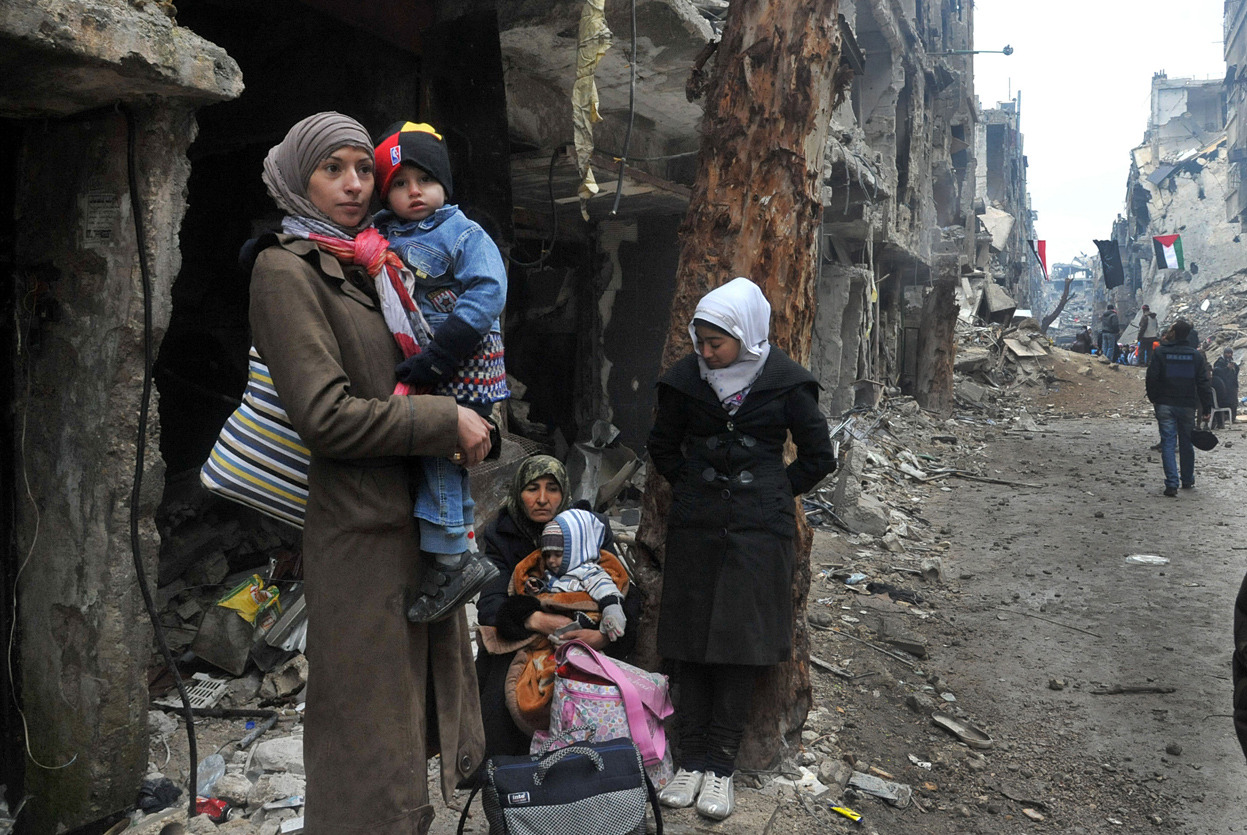
Who is Fighting and Why
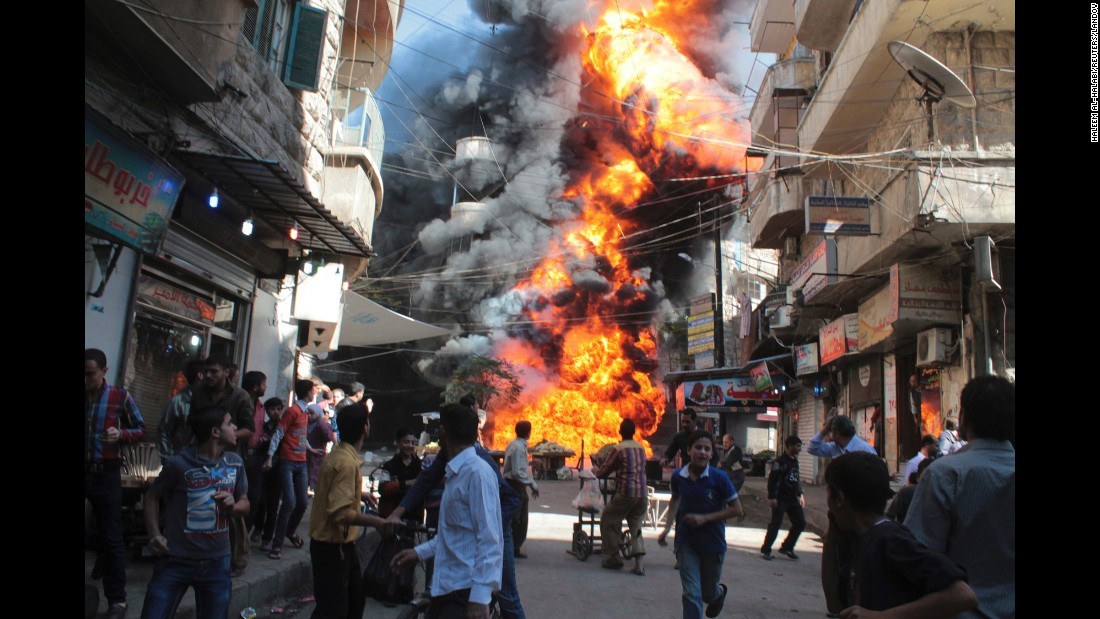
How Syria’s civil war became America’s problem.
Updated by Zack Beauchamp
Published on Apr 7, 2017
Who is Fighting and Why
How Syria’s civil war became America’s problem.
Updated by Zack Beauchamp
Published on Apr 7, 2017
Watch how the Syrian civil war became the mess it is today.
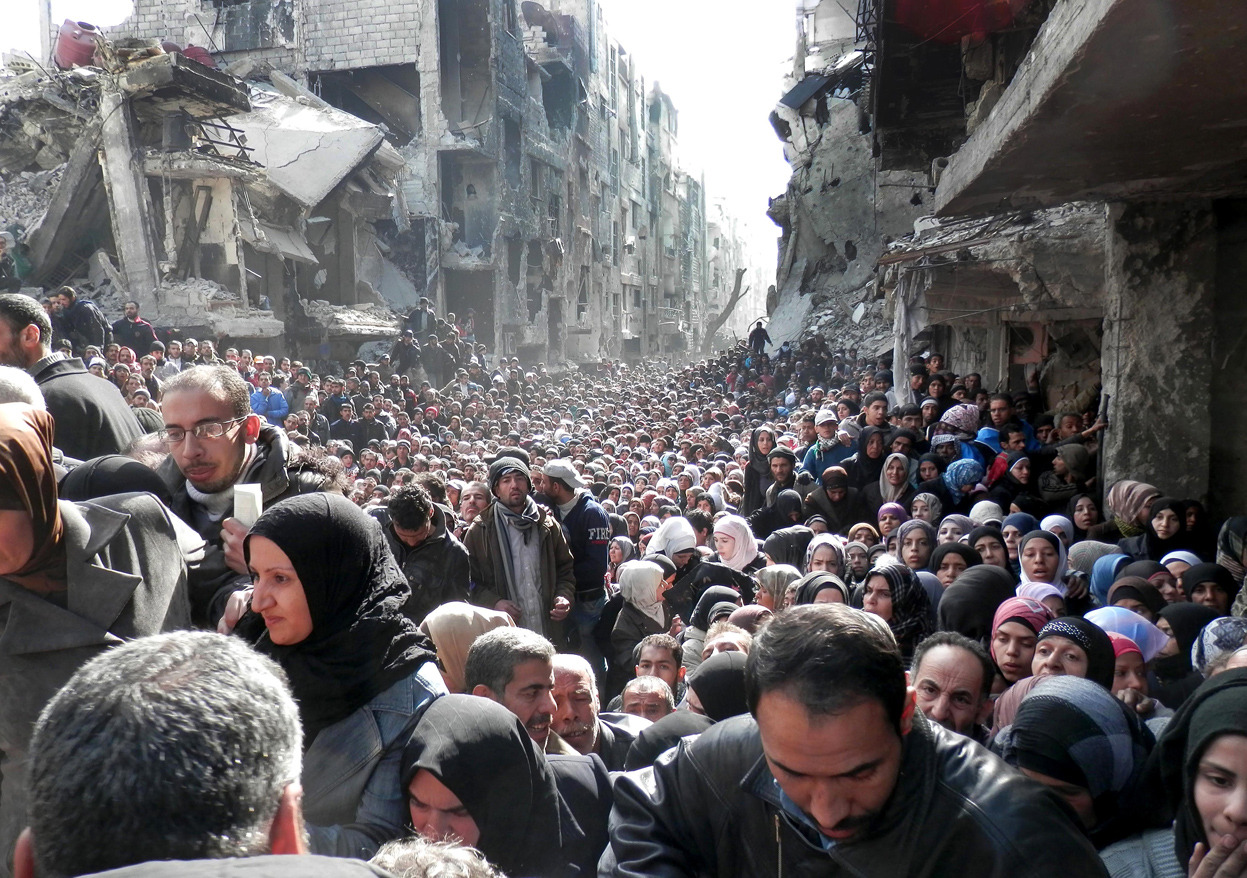
After four-plus years of fighting, Syria's war has killed at least hundreds of thousands of people and displaced millions. And, though it started as a civil war, it's become much more than that. It's a proxy war that has divided much of the Middle East, and has drawn in both Russia and the United States. To understand how Syria got to this place, it helps to start at the beginning and watch it unfold:
On the face of it, President Trump’s decision to attack
Syria doesn’t make a lot of sense. Launching 59 missiles at a single
airbase, as Trump did, is not going to seriously change the outcome of a
years-long civil war. So what’s the point of doing it at all?
Understanding the answer to that question, and really
anything the United States does and does not do in Syria, requires
understanding the real nature of the country’s horrific civil war. At
its heart, it is a conflict between a regime that represents a minority
of its citizens and the majority who want it gone. But over time, it has
spiraled into an immensely complicated international war, with some of
America’s most significant enemies and closest partners on various
different sides.
“It has been one of the hardest issues that I’ve faced as president,” President Barack Obama said in a December 2016 press conference. “Syria is the most complex, complicated issue I have ever had to deal with," then-CIA Director John Brennan said during a discussion at the Brookings Institution last year.
Getting involved in this war in any serious way is
immensely complicated and risky, which is why the Obama administration
largely avoided doing so, and why it never struck Assad directly.
Trump’s strike tried to thread the needle by punishing the Assad regime
specifically for its use of chemical weapons without getting dragged into the broader conflict.
What follows is a guide to the core dynamics at work in
Syria: how the civil war began, how it evolved, when US foes like Russia
got involved, what two American presidents have been willing to do —
and what happens next.
How Syria’s civil war began — and why America cares so much

Protesters burn images of Syrian President Bashar al-Assad at a protest on April 9, 2012
When Syrians rose up as part of the wave of Arab Spring
protests against Middle East dictators in 2011, Assad quickly decided to
emulate his father, Hafez, and try to tamp down the protests through
the use of force. The goal was to turn the broad-based protest movement
from a political struggle — which Assad’s unpopular regime was bound to
lose — into a military one, where his control of the army meant he might
be able to kill his way to victory.
"It was very much a strategic decision that the regime made, to militarize the conflict right away," Glenn Robinson,
an associate professor at the Naval Postgraduate School, told me in an
interview. "I think in their mind, and correctly, if this becomes a
political battle where populations matter, the regime probably only has
support of a third of the country. ... If this becomes a political
contestation, the opposition has the numbers."
The grim way of implementing this plan, slaughtering
protestors en masse until they were forced to pick up arms in
self-defense, got Assad the war he wanted. In July 2011, defectors from
Assad’s regime formed an organized militia called the Free Syrian Army
to protect protesters and strike back at Assad. By January 2012, the
Syrian uprising had devolved into a full-blown civil war pitting the FSA
and other assorted rebel groups against Assad and his supporters.
The strategic stakes of this war, both for the Middle
East as a region and for the United States, are enormous — for three
main reasons.
The first is Iran. Syria's alliance with Tehran dates
back to 1980 and is critical to Iran’s regional ambitions. It uses Syria
to convey weapons and other goods to its proxy militias and allies,
most notably Hezbollah in Lebanon and Hamas in Gaza. In return, Assad's
regime gets military and political assistance from Tehran.
Iranian leaders saw the revolt against Assad as a threat
not just to him but also to them. In 2012, Iran responded by sending in
Hezbollah to fight on Assad's side, an intervention that played an
important role in Assad’s campaign against the rebels.
At the same time, though, Iran’s backing made Assad into a target for some of America’s closest partners in the region. Since the Iraq War,
and maybe earlier, the oil-rich Sunni Arab states along the Persian
Gulf — particularly Saudi Arabia, the largest and strongest — had been
embroiled in a sort of cold war with Iran, a Shiite theocracy. Both
sides wish to steer the political course of the Middle East, and see the
other as a fundamental threat to their security.
So when Assad began to teeter, the Gulf states saw an
opportunity to unseat one of Iran's principal allies and started sending
arms to the Syrian rebels. In March 2013, the Arab League voted to give its members explicit permission to arm the Syrian opposition. In May of that year, the Financial Times
reported that Qatar alone had given $3 billion in aid to the rebels. In
just one shipment in 2015, Saudi Arabia provided rebels with 500 deadly
TOW anti-tank missiles.
The Syrian conflict thus became more than just a civil
war: It became a proxy fight between Iran and America’s Gulf allies,
whose outcome was of vital significance for both sides.
It also quickly became a proxy standoff between Washington and Moscow.
Russia’s ties to Syria go all the way back to the Cold War: According to one scholar, the Soviets "essentially built"
the modern Syrian military in the 1960s. Continued support for the
Assad government gave the USSR its most reliable ally and proxy in the
Middle East.
Today, Syria remains one of Russia's few reliable allies
outside of the former Soviet republics, a vestige of Moscow's former
superpower status and a final military toehold in the Middle East.
Russia maintains a valuable naval base today at Tartus, on Syria's
Mediterranean coast, and has sold a number of surplus weapons to Assad.
Between 2006 and 2010, 48 percent
of Syrian arms imports came from Russia. Assad’s defeat, then, would
have been a major strategic blow to Vladimir Putin’s regime — which has
ambitions of restoring Russia’s Cold War status as a great power with
global influence.
“This matters to [the Russians] ... more than it would if
they had another 10 [allies to spare],” says Doug Ollivant, who oversaw
Iraq policy at the National Security Council from 2008 to 2009 and is
now a managing partner at Mantid International.
As a result, Russia has been backing Assad since the war began. In 2011 alone, Russia vetoed a UN Security Council resolution condemning Assad’s crackdown on protesters, and sold nearly $1 billion in arms to Assad’s regime.
Putin’s support for Assad has steadily escalated, with Moscow selling Assad advanced air defense systems and refurbished MI-25 attack helicopters.
By September 2015, Russia was a direct participant in the war. Russian
warplanes and helicopters are hitting Assad’s enemies from the air, and
Moscow has artillery pieces bombarding rebels and special forces
embedded with Syrian troops. Some estimates place the number of Russian
soldiers in Syria today at around 10,000.
The third and final issue is terrorism. Since practically
the beginning of the conflict, al-Qaeda had been sending forces into
Syria, seeing a chaotic civil war as a great environment for them to use
as a safe haven and a place to get recruits. By mid-2012, the Syrian
al-Qaeda franchise, Jabhat al-Nusra, had allied with some relatively
moderate rebels — and established themselves as one of the most
effective anti-Assad fighting forces. Qatar in particular showered Nusra with cash in an effort to quickly topple Assad.
Put those three things together — Iran, Russia, and
terrorism — and you get a sense of why first Obama and now Trump have to
varying degrees felt the need to involve America in a brutal and
seemingly intractable conflict.
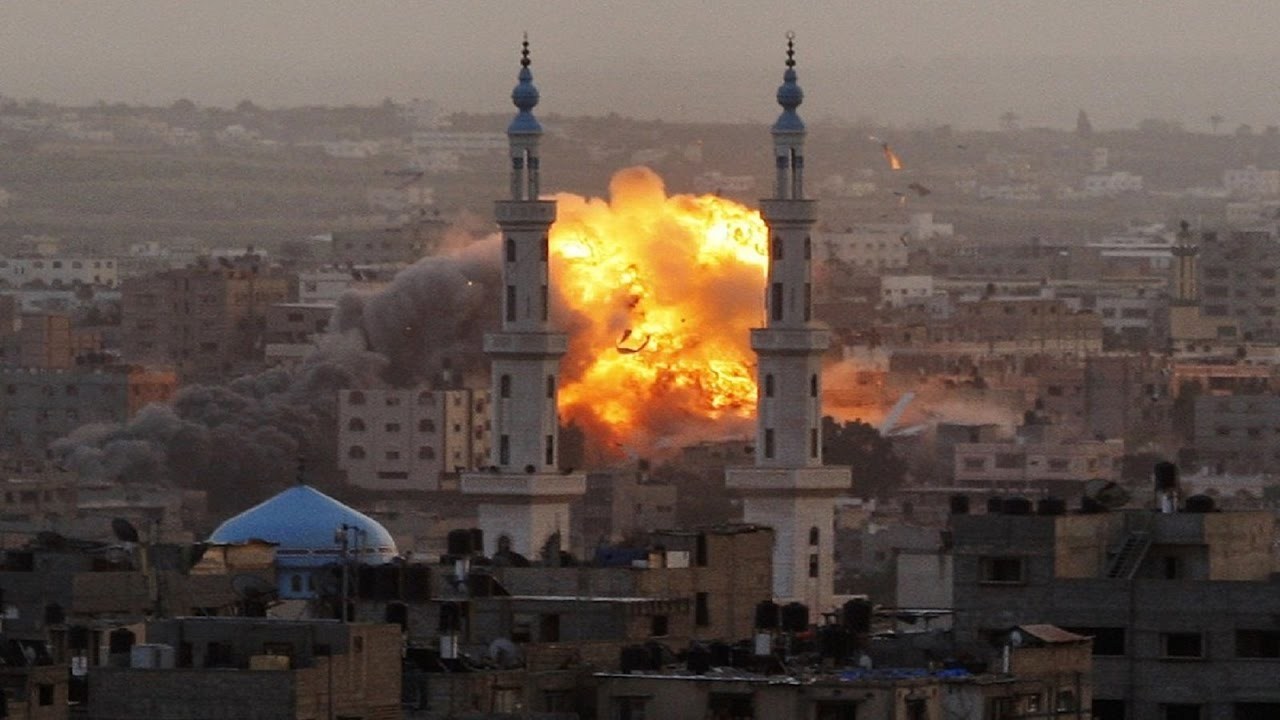
The US policy under Obama:
(mostly) non-intervention
Obama was president during the bulk of the Syrian civil
war, and his legacy as commander in chief will be shaped in part by what
he chose to do there — and what he chose to avoid.
One of those things was to refuse to endorse any kind of
large-scale effort aimed at toppling Assad — repeatedly overruling
members of his administration, like Secretary of State Hillary Clinton
and CIA Director David Petraeus, who wanted to provide more advanced
weaponry to the rebels. Parallel CIA and Pentagon efforts to recruit,
train, and arm Syrian rebels did little to shape the course of the
conflict; in 2015, the Defense Department had to concede that its $250
million effort had trained a grand total of 60 fighters (that’s more
than $4 million per trainee).
Perhaps the defining moment came on August 21, 2013, when
Assad's forces launched sarin gas — a horrifying and deadly chemical
weapon — into the Damascus suburb of Ghouta, killing up to 1,423 people. Most of the dead were civilians.
Prior to the attack, President Obama had declared chemical weapons use to be a "red line":
If Assad used them, it would trigger an American military response. But
after Ghouta, Obama didn't seem to want to follow through. He submitted
a plan for punitive airstrikes in Syria to Congress, where lawmakers
from both parties signaled that it was likely to fail.
Russia offered Obama a way out of his self-made dilemma.
It brokered a deal with Assad where he would agree to give up his
chemical weapons and submit to international inspections if the United
States agreed not to attack Assad.
The Obama team accepted this as a lifeline.
As they saw it, the critical issue was never the Syrian civil war,
which the president had decided was too risky to intervene in. Rather,
it was the use of chemical weapons — a particularly heinous act
prohibited by international law. If the threat of American military
force got Assad to back down from chemical use, that would make chemical
weapons use less likely in Syria and in other conflicts without putting American troops in harm’s way or risking a wider conflagration.
“I’m very proud of this moment,” Obama told the Atlantic’s
Jeffrey Goldberg. ““The overwhelming weight of conventional wisdom and
the machinery of our national-security apparatus had gone fairly far.
The perception was that my credibility was at stake, that America’s
credibility was at stake. And so for me to press the pause button at
that moment, I knew, would cost me politically [but] I believe
ultimately it was the right decision to make.”
Critics, by contrast, saw it as a cop-out. They argued
that if Obama wouldn’t intervene after drawing a “red line” about
chemical use, Assad and his allies would see it as proof that the US
would never intervene for any reason. This, according to some experts,
is the key reason Russia decided to escalate so dramatically in
2015: They came to believe that Obama wasn’t as invested in trying to
push out Assad as they were in trying to keep him in power, which means
the US would largely give them a free hand. In essence, Obama’s attempt
to deter chemical weapons use destroyed his ability to deter Russian
intervention.
“It is precisely when Obama went for the chemical weapons
deal over strikes in 2013 that Moscow understood it had escalation
dominance in Syria,” Emile Hokayem, a Syria expert at the International Institute for Strategic Studies, wrote in April.
This is a debatable point, to be sure. But there is no
question that Obama left office with a civil war that had already killed
at least 470,000 Syrians grinding along with no end in sight.
Wait, wasn’t the US bombing Syria before Trump?
There was one major exception to Obama’s hands-off policy
in Syria: the war on ISIS. But it was carefully limited, in ways that
show why Trump’s strike was such a major shift.
After the militant group swept across northern Iraq in
June 2014, and came to control a swath of territory in Syria and Iraq
roughly the size of Great Britain, the scale of the terrorist threat became impossible to deny. This, together with the videotaped beheadings of two American journalists, prompted Obama to declare a plan to "degrade and ultimately destroy" ISIS on September 10.
The linchpin of the plan was a series of American
airstrikes, both in Syria and in Iraq, supporting forces on the ground
that were fighting ISIS. In Iraq, that meant the official Iraqi army as
well as tribal leaders and Shia militias. But it wasn’t clear,
initially, who that would be in Syria.
Most rebel groups were preoccupied fighting Assad, and
had no ability to really refocus on the Islamic State. The same was
true, in reverse, for Assad; he had long maintained a sort of de facto
ceasefire with ISIS so he could focus on fighting the moderate rebels
whom he saw as a bigger threat.
The US ended up settling on fighters from the Kurdish
ethnic group, based in northern Syria near the Turkish border, as their
key allies. These Kurds were mostly uninvolved in the main civil war, as
their chief objective was carving out a Kurdish state in
majority-Kurdish areas rather than toppling Assad’s regime in Damascus.
Moreover, ISIS had invaded their territory, and was besieging a Kurdish
city named Kobane at the time of the US intervention.
So the thousands of missions flown by American warplanes,
and hundreds of US special forces deployed to Syria, were supposed to
accomplish two things: cut ISIS’s supply lines between Syria and Iraq,
and back Kurdish forces in their fight against ISIS.
On this metric, they’ve more or less succeeded. American
airstrikes helped break the siege of Kobane and allowed Kurdish forces
to launch a counteroffensive that swept over ISIS’s holdings in north
central Syria. Today, a joint Kurdish-Arab military group called the
Syrian Democratic Forces is camped out within miles of ISIS’s capital
city, Raqqa — and are preparing to attack the city itself, with major backing from US troops.
But note the delicacy of this strategy when it came to the main conflict in Syria.
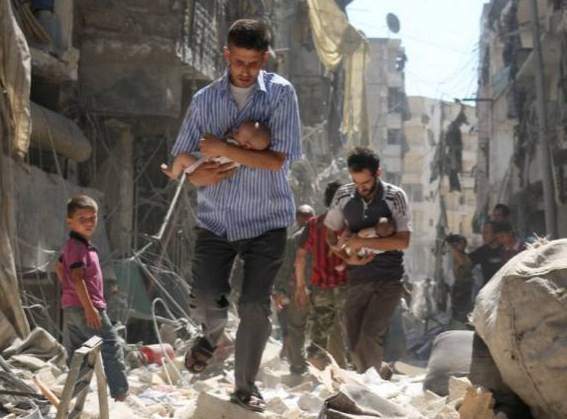
The United States was fanatical about limiting the scope
of this counter-ISIS campaign — in particular, making sure it never
became a counter-Assad campaign. When the Pentagon sent weapons to some
Syrian rebels whom they wanted to fight ISIS, it made them promise not
to use those weapons against Assad. (The tiny number of rebels who took
the US up on this weak offer were swiftly slaughtered by al-Qaeda
forces.)
This only intensified after the Russian intervention
began in September 2015. US and Russian forces developed a procedure for
flying in the same airspace, called deconfliction, designed to ensure
that there was no accidental US bombing of Russians or Assad forces. US
and Russian planes managed to fly near each other, for well over a year,
with no major incident — even as Russian planes were on their way to
drop bombs on Syrian civilians.
This made crystal clear to both the Russians and the
Syrians that the United States had no interest in intervening in their
war on the rebels. They developed a sense of impunity — enabling
atrocities like Tuesday’s chemical attack.
Why Trump’s strike is a major, but limited, escalation
There was little reason to believe that Trump would treat
Assad and Russia more harshly than Obama did. During the red line
debate in 2013, he tweeted repeatedly and angrily against a strike,
warning Obama to back down.
“AGAIN, TO OUR VERY FOOLISH LEADER, DO NOT ATTACK SYRIA,” he tweeted at the time (all caps his). “IF YOU DO MANY VERY BAD THINGS WILL HAPPEN & FROM THAT FIGHT THE U.S. GETS NOTHING!”
During the presidential campaign, Trump even suggested
that Assad’s rule was better for Syria than the alternatives. “We don't
know who the rebels are,” he said in an October presidential debate. “If they ever did overthrow Assad ... you may very well end up with worse than Assad.”
Trump did not return to his “partner with Russia” policy
after taking office. But he did shift the US’s Syria policy, at least
rhetorically, with several administration officials suggesting the US
would accept Assad staying in power. (Obama wasn’t doing anything
substantive to oust Assad but was at least rhetorically committed to his
departure.)
The April 4 gas attack profoundly changed that calculus.
First, Trump seemed genuinely angry and horrified by the
photos and videos of children killed in the chemical weapons strike, and
wanted something done about it.
This isn’t as much of a surprise as it might seem: Trump has always been more of an instinctive hawk
than was genuinely believed. Back in March 2011, when Libya’s Muammar
Qaddafi was killing his own people in the early stages of the country’s
civil war, Trump released a video calling on then-President Obama to “stop this guy” and “save these lives.”
Thomas Wright, a scholar at the Brookings Institution who
has spent the past several months studying Trump’s foreign policy
doctrine, thinks a similar kind of emotional reaction might be at work
here.
“There [have been] very few iconic images of brutality
from the Syrian civil war,” he says. “A picture of a lot of children
gassed is pretty horrific for anyone to see.”
The second factor here is the nature of the attack itself.
The goal of the 2013 deal Obama made with Syria wasn’t just to eliminate Syria’s chemical weapons stockpile
(a goal at which it clearly failed). It was to show that chemical
weapons were somehow different from normal weapons, more unacceptable.
The agreement was supposed to show that rogue actors like Assad have two
choices: either agree to stop using chemical weapons or face some kind
of punishment.
Since 2013, this had more or less worked: Assad had not
used a nerve agent prohibited by the Chemical Weapons Convention (though
he has used chlorine gas, a chemical weapon that isn’t explicitly banned).
What’s known as the “norm” against chemical weapons use —
the idea that chemical weapons were, like nuclear and biological
weapons, a special kind of evil to be prohibited even in vicious wars —
had been upheld, seemingly backstopped by US threat of force.
Tuesday’s attack made clear that Assad was prepared to
break that norm at will, something certainly not lost on Defense
Secretary Mattis or National Security Adviser H.R. McMaster. They know
how serious a violation of the norms around chemical weapons this attack
is and how important it is to limit the use of such of weapons. They
have likely told the president this, and informed him that American
credibility is on the line.
“This is a kind of flagrant flouting of that agreement.
... It’s physical proof that they’ve duped the international community,”
Michael Hanna, a senior fellow at the Century Foundation who follows
the Syria conflict, says. “It is different than other kinds of war
crimes committed by the regime, and ... that view is clearly going to be
relayed to him by his close advisers.”
This appears to be the main reason Trump struck Syria.
His goal wasn’t to intervene in any of the broader and more complicated
dynamics of the war — to stop the civil war or weaken Iran. Rather, it’s
a pinpoint, one-off strike designed to tell Assad that chemical weapon
use will be punished. As Trump put it in his address Thursday night:
Tonight, I ordered a targeted military strike on the airfield in Syria from where the chemical attack was launched. It is in the vital national security interest of the United States to prevent and deter the spread of chemical weapons.
By going out of his way to emphasize that this US strike
targeted the exact airbase from where the chemical attack was launched,
Trump is making it clear that the strike was designed as a specific
punishment for the recent chemical attack — and not a broader effort
aimed at striking Assad until he stops bombing civilians or leaves
power.
Meanwhile, the rebels are in trouble. The city of Aleppo,
a major rebel stronghold, fell to Assad in December 2016. While he may
not be on the verge of defeating the rebels outright, it’s clear that
they’re in no position to topple him. Trump’s limited strike won’t
change that: The damage was so contained, in fact, that Syrian warplanes
were already flying missions out of the sole airbase Trump targeted by Friday afternoon.
There are two main questions going forward. First, will
Trump’s strikes successfully deter Assad from using chemical weapons
again — and they don’t, how will Trump respond? Second, could this
limited initial attack quickly escalate into something far larger, with
Trump potentially being pressured into trying to not just constrain
Assad but push him out of power?
We don’t know the answers to these questions yet. But
they will play a significant role in determining America’s role in Syria
— and, possibly, the future course of the Syrian civil war itself.


.gif)