
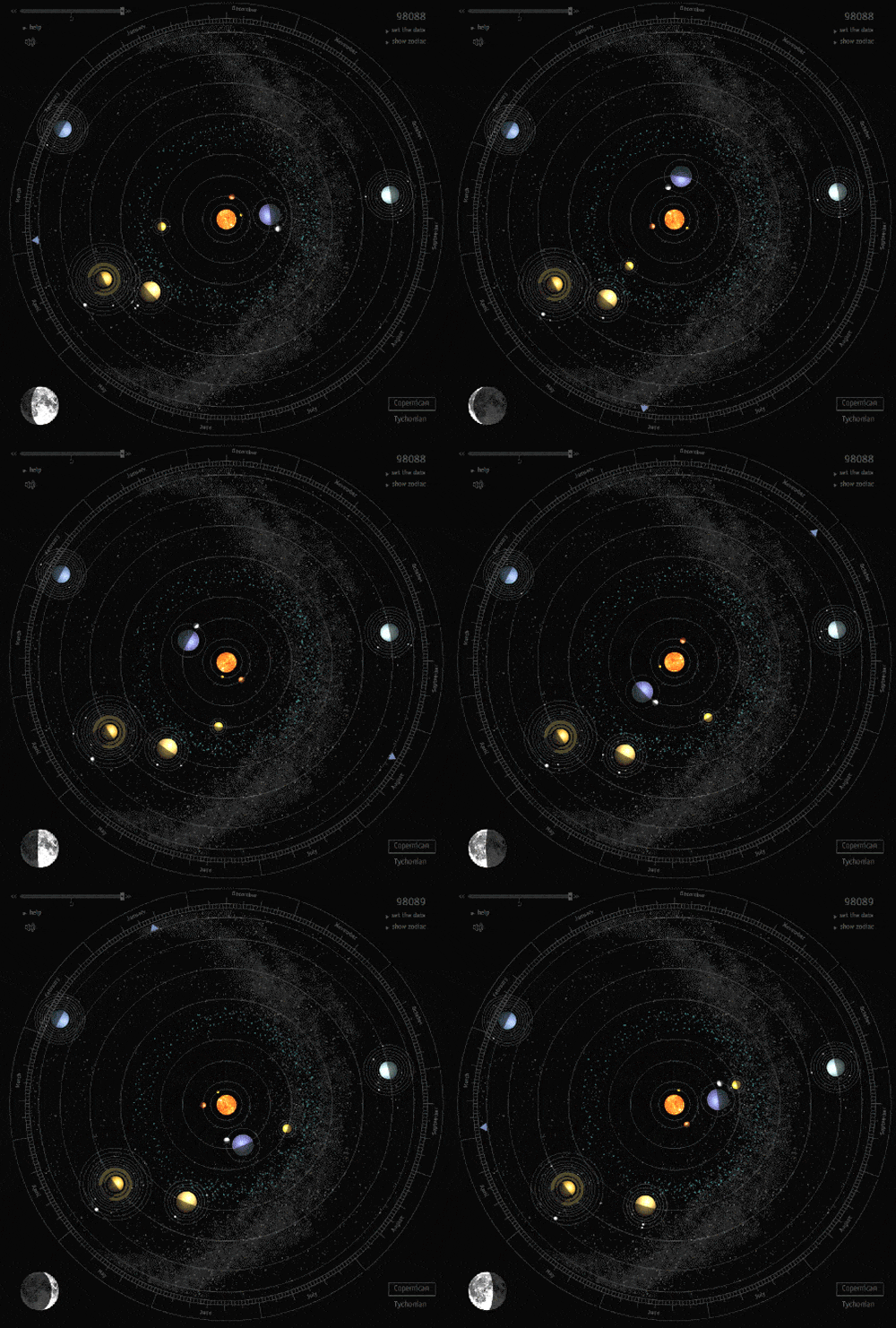
Orbits of the Planets in our Solar System
The orbits of the planets in our solar system are not perfectly circular; they are elliptical (oval-shaped). They
also do not lie on one exact, flat plane, but are instead tilted
relative to each other, though they are all roughly aligned in a single
plane called the ecliptic plane
🪐
Elliptical orbits
The reality: Planets orbit the Sun in ellipses, which are flattened circles, not perfect circles. The Sun is located at one of the two foci of the ellipse, not in the center.
The historical shift: The idea that orbits were circular was disproven by Johannes Kepler, who found that the elliptical shape was necessary to accurately describe the movement of planets, especially Mars, which has the most elliptical orbit of the planets in our solar system.
Variable speed: Because the orbits are elliptical, a planet's distance from the Sun changes. It moves faster when it is closer to the Sun (at perihelion) and slower when it is farther away (at aphelion).
🪐
Orbital inclination
The reality: While planets orbit in a generally flat plane, their orbits are not perfectly flat and are slightly tilted relative to one another.
The ecliptic plane: This nearly flat disk is known as the ecliptic plane, and all planets orbit within a few degrees of it.
The cause: The solar system formed from a spinning disk of dust, which is why the planets all formed in a similar plane and have roughly the same orbital direction.
Variations: Over time, the slight gravitational influences of the planets on one another cause minor variations in their orbits, meaning they are not perfectly aligned on a single, motionless plane.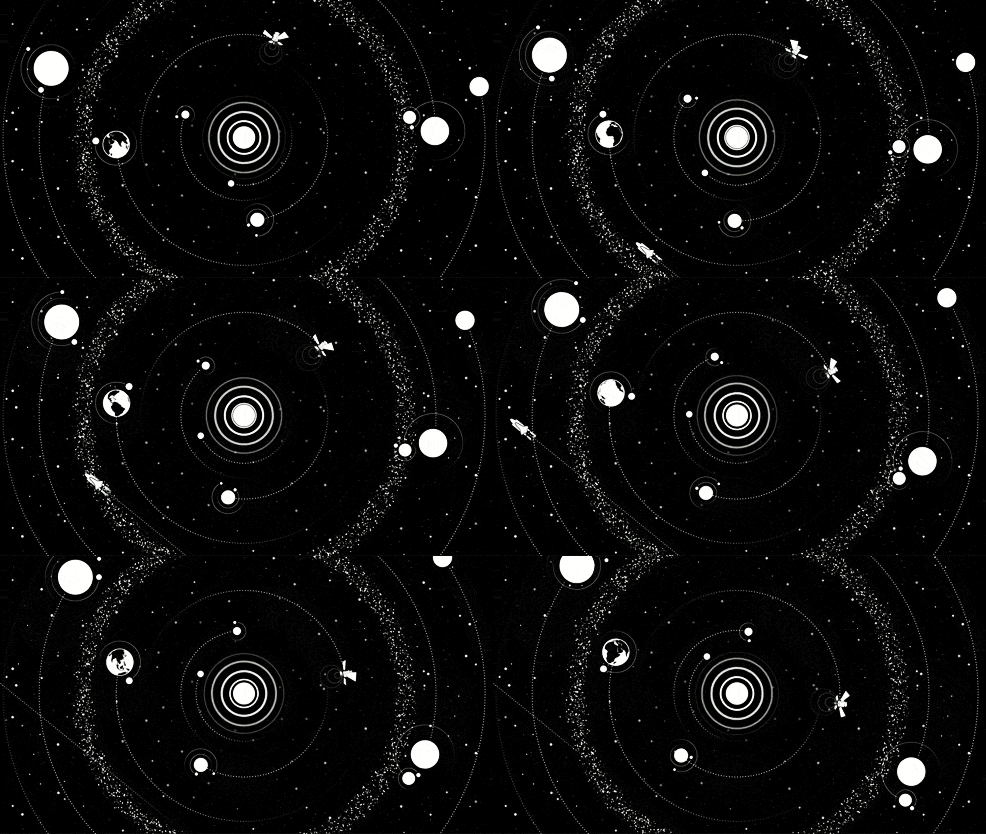
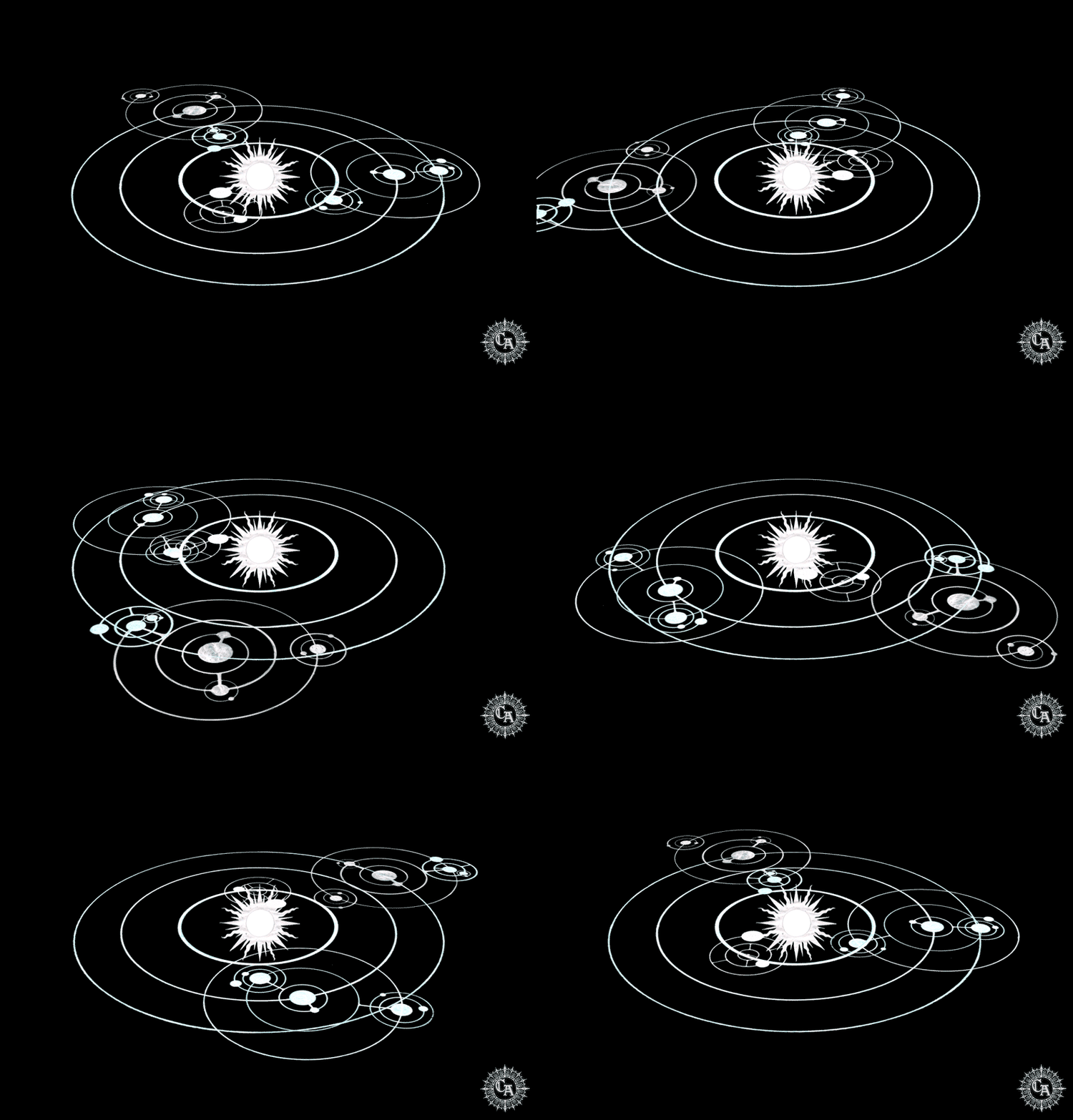
The reality: Planets orbit the Sun in ellipses, which are flattened circles, not perfect circles. The Sun is located at one of the two foci of the ellipse, not in the center.
The historical shift: The idea that orbits were circular was disproven by Johannes Kepler, who found that the elliptical shape was necessary to accurately describe the movement of planets, especially Mars, which has the most elliptical orbit of the planets in our solar system.
Variable speed: Because the orbits are elliptical, a planet's distance from the Sun changes. It moves faster when it is closer to the Sun (at perihelion) and slower when it is farther away (at aphelion).
🪐
Orbital inclination
The reality: While planets orbit in a generally flat plane, their orbits are not perfectly flat and are slightly tilted relative to one another.
The ecliptic plane: This nearly flat disk is known as the ecliptic plane, and all planets orbit within a few degrees of it.
The cause: The solar system formed from a spinning disk of dust, which is why the planets all formed in a similar plane and have roughly the same orbital direction.
Variations: Over time, the slight gravitational influences of the planets on one another cause minor variations in their orbits, meaning they are not perfectly aligned on a single, motionless plane.
No comments:
Post a Comment