Search This Blog

Wednesday, August 23, 2017

Floaters - Mouches Volantes - "Flying Flies"

Mouches Volantes
Floaters

https://68.media.tumblr.com/46bcb5ab2f11e2adb9675e74063e9090/tumblr_ov5xhmUYle1t8vvygo7_r1_1280.jpg
Muscae Volitante
(Latin: "Flying Flies")
https://68.media.tumblr.com/bfa8ea3fc907eacec191263bf12d5cbe/tumblr_ov5xhmUYle1t8vvygo4_500.gif
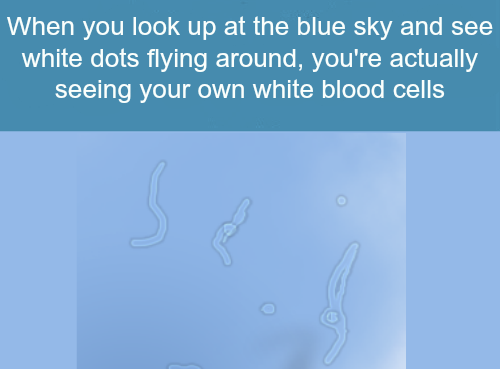
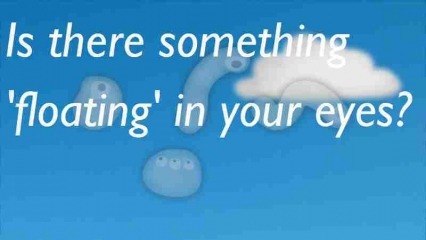
What are so called 'mouches-volantes' or flying flies?
https://68.media.tumblr.com/bd2334b51b27a9b52f5d8cee3e4d679d/tumblr_ov5xhmUYle1t8vvygo8_r1_500.jpg
https://68.media.tumblr.com/b5bd0d63eabee567bb1b0ddba8615da0/tumblr_ov5xhmUYle1t8vvygo6_r1_500.png
Are those a result of ever having watched into the sun?
https://68.media.tumblr.com/713cc7503340ba70ee9105c960128da6/tumblr_ov5xhmUYle1t8vvygo10_r1_500.jpg 

Causes

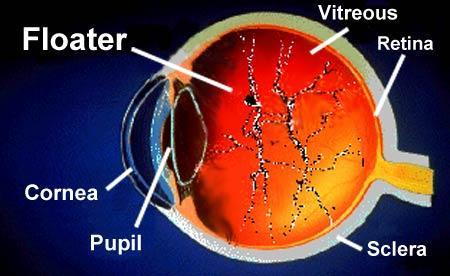
There are various causes for the appearance of floaters, of which the most common are described here. Simply stated, any damage to the eye that causes material to enter the vitreous humour can result in floaters.

Floaters can be a sign of retinal detachment or a retinal tear but in most cases (98% according to the National Health Service)[citation needed] it is simply age-related or due to natural change in the vitreous humour.

They are also called Muscae volitantes (Latin: "flying flies"), or mouches volantes (from the French). Floaters are visible because of the shadows they cast on the retina or refraction of the light that passes through them, and can appear alone or together with several others in one's visual field.


Floaters are deposits of various size, shape, consistency, refractive index, and motility within the eye's vitreous humour, which is normally transparent. At a young age, the vitreous is transparent, but as one ages, imperfections gradually develop. The common type of floater, which is present in most persons' eyes, is due to degenerative changes of the vitreous humour. The perception of floaters is known as myodesopsia, or less commonly as myodaeopsia, myiodeopsia, or myiodesopsia. They are also called Muscae volitantes (Latin: "flying flies"), or mouches volantes (from the French). Floaters are visible because of the shadows they cast on the retina or refraction of the light that passes through them, and can appear alone or together with several others in one's visual field. They may appear as spots, threads, or fragments of cobwebs, which float slowly before the observer's eyes.  As these objects exist within the eye itself, they are not optical illusions but are entoptic phenomena. They are not to be confused with visual snow, although these two conditions may co-exist.
https://68.media.tumblr.com/dd27c3804a80005c54e85e104c7b4d56/tumblr_ov5xhmUYle1t8vvygo2_500.gif

What are those floaty things in your eye?
Michael Mauser


Treatment
While surgeries do exist to correct for severe cases of floaters, there are currently no medications (including eye drops) that can correct for this vitreous deterioration. Floaters are often caused by the normal aging process and will usually disappear as the brain learns to ignore them. Looking up/down and left/right will cause the floaters to leave the direct field of vision as the vitreous humor swirls around due to the sudden movement. If floaters significantly increase in numbers and/or severely affect vision, then one of the below surgeries may be necessary.

Currently, insufficient evidence is available to compare the safety and efficacy of surgical vitrectomy with laser vitreolysis for the treatment of floaters. A 2017
Cochrane Review did not find any relevant studies that compared the two treatments.

Aggressive marketing campaigns are currently promoting the use of laser vitreolysis for the treatment of floaters.[18][19] No strong evidence currently exists for the treatment of floaters with laser vitreolysis. Currently, the strongest available evidence comparing these two treatment modalities are retrospective case series.
https://68.media.tumblr.com/98f48d40dd115b2585d69c1775d6a138/tumblr_ov5xhmUYle1t8vvygo5_500.gif

Surgery 
Vitrectomy  may be successful in treating more severe cases. The technique usually involves making three openings through the part of the sclera known as the pars plana. Of these small gauge instruments, one is an infusion port to resupply a saline solution and maintain the pressure of the eye, the second is a fiber optic light source, and the third is a vitrector. The vitrector has a reciprocating cutting tip attached to a suction device. This design reduces traction on the retina via the vitreous material. A variant sutureless, self-sealing technique is sometimes used.

Like most invasive surgical procedures, however, vitrectomy carries a risk of complications, including: retinal detachment, anterior vitreous detachment and macular edema – which can threaten vision or worsen existing floaters (in the case of retinal detachment).

Tuesday, August 22, 2017

How to Tell If the Solar Eclipse Ruined Your Vision

Here’s How to Tell
If the Solar Eclipse
Ruined Your Vision
https://68.media.tumblr.com/32d4795ee7a5a739e12ecb64925b8693/tumblr_inline_ov3gkx11AZ1rlk3i5_540.gif
So you decided to ignore all the warnings leading up to the 2017 solar eclipse, and stared directly at the sun without wearing protective eyewear.

Chances are you read the warnings, too. Or maybe you had gotten a text from your mom reminding you not to look directly at the sun during the eclipse without protecting your eyes.
F
And right now, you might be feeling a little anxious, wondering if you actually hurt your eyes or you’ll wake up blind tomorrow.
https://68.media.tumblr.com/b9053fde98500e698a8ede4becdab028/tumblr_ov3nrzNpDu1sqsyybo3_r1_500.gif
Many people who claim to have stared directly at the eclipse took to Twitter to express their concerns. And the social media panic probably isn’t helping if you’re legitimately concerned about your eye health.

So if you think you stared at the sun for a bit too long, here’s what you need to know about signs of potential eye damage.
https://68.media.tumblr.com/5ac53cecf61d4a96f936670e81aadb08/tumblr_inline_ov3gm5Ljti1rlk3i5_540.gif
Experts warned us repeatedly that starting directly at the sun without protective eyewear can cause eye damage and result in serious or permanent vision loss. But how can you tell if you’ve actually injured your eyes and which symptoms might require a trip to the doctor?

We spoke to two eye experts to find out: Dr. Joel Schuman, professor and chair of the Department of Ophthalmology at NYU Langone Medical Center, and Dr. Ranya Habash, associate professor of ophthalmology at Bascom Palmer Eye Institute and TopLine MD consultant.
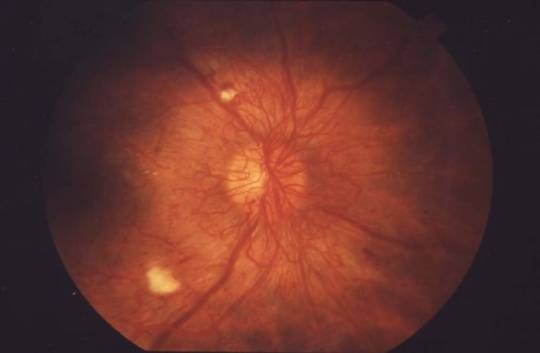
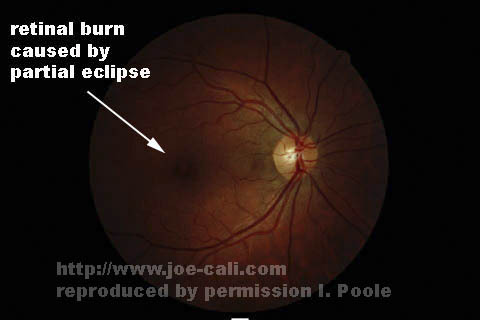
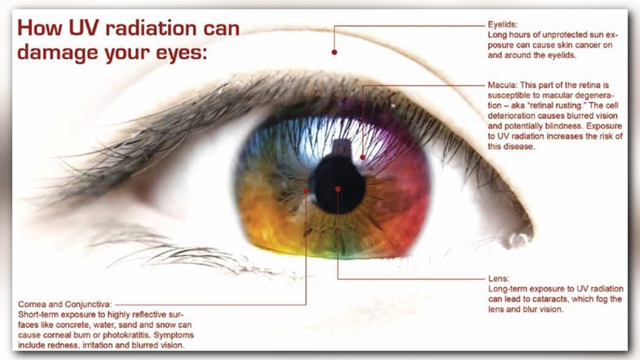
  First, staring directly at the sun can damage a part of the retina — which is responsible for the center of your vision — causing a condition called solar retinopathy..
Solar retinopathy is like a sunburn on the retina, a layer of tissue at the back of your eye, Habash tells BuzzFeed Health. “The part that’s damaged is the macula, the thinnest part of the retina, which controls the sharpest, centermost part of vision,” she says, noting that this part of the eye is also more prone to burning than the rest of it. “It can take a few seconds or a few minutes for damage to be done — everyone is different.” 

As we previously reported, this can cause the center of your vision to turn into a grey or black spot, making it hard to focus on things like reading, driving, or even just seeing the people in front of you. That said, you probably won’t go completely blind from staring at the sun. Although the macula is very important to our eyesight, it’s still only responsible for one part of vision. “You won’t go completely blind from damage to the macula, since you’d still have your peripheral vision,” Schuman tells BuzzFeed Health.

The main signs of retinal damage to look out for are visual disturbances, such as blurriness or loss of vision in the center, color distortion, afterimages, blindspots, and vision loss.
The primary signs of retinal damage are visual disturbances, and they aren’t always associated with pain, the experts say. (More on eye pain next.) So if everything looks kind of dark or you can’t see colors as well, or they look different, these could be signs of retinal damage, Habash says. Afterimages can also occur when you look at something, then look away and still see lingering outlines of the image you saw before, she says. In more serious instances, you might experience blind spots or even vision loss in one or both eyes.

But if you have a headache after watching the eclipse without any vision disturbances, you’re probably fine.
“Some people who have retinal damage may experience a headache in the following hours, but everyone is different,” Schuman says. But many people also don’t experience any pain or headache with retinal injury, says Habash, and it’s more of a silent thing. So if you do have a headache after, make sure to look out for any vision problems in the following days just to be sure. But if after waiting there still aren’t vision problems, then you probably just had a regular headache, and there’s no reason to panic.

The signs of retinal damage can take hours or even days to appear, so it’s hard to tell if you’ve been injured right away
“Some people may notice symptoms immediately, but more often they take a few hours to 24 hours to appear,” says Habash. 

So even if you don’t have any visual disturbances right after staring directly at the sun, you should be vigilant and pay attention to your vision in the following days to see if you notice any changes.

Often, the damage is permanent. But sometimes it can improve over time.
The extent of the damage will depend on how long you stared at the sun and your own eye health. Usually once the cells in the macula are damaged, there isn’t much doctors can do in terms of treatment, and you could end up with permanent vision loss. “Sometimes, the vision problems will just resolve on their own — but it can take a long time,” Habash says. 

“Depending on the type of damage and the severity, a doctor may be able to help restore your vision by prescribing anti-inflammatories and steroids to reduce the swelling that causes the temporary vision problems,” Schuman says. If the damage is milder and the retina hasn’t scarred yet, then he says your doctor might be able to improve or restore your vision faster than it would healing on its own.

The only way to know if you’ve damaged your retina is to get examined by an eye doctor. So if you experience any of these symptoms, go get checked out.
An ophthalmologist or other eye care specialist will have the right tools to examine your eyes and check for any signs of retinal damage, then assess the severity of the damage and treat you as needed. “If you just glanced up for a second or two during the eclipse, chances are you probably haven’t done damage — but everyone is different, so there’s no way to say for sure,” Schuman says. Besides, it never hurts to check and your vision is pretty important.
And now you know to be EXTRA prepared
for the 2024 solar eclipse, right?

https://68.media.tumblr.com/94d37d537c63b7dc866f850b3a2928df/tumblr_ouzwf7PmQ91tvd7rmo1_500.gif

I.S.S. Flying in front of the Solar Eclipse

NASA Recorded the
International Space Station
https://68.media.tumblr.com/5300d872bc706e6c06859c6e95004058/tumblr_ov3kjhhgLv1sqsyybo1_400.gif
Flying in front of the Solar Eclipse


Stunning footage shows the highlights
of the 2017 total solar eclipse

Eclipse - Damaged Your Eyes ?

How To Tell If
Watching The Eclipse
Damaged Your Eyes
https://68.media.tumblr.com/6c54fcca4a8e9946c9faa8d26d3818c9/tumblr_inline_ov3gqzo93k1rlk3i5_540.gif
August 21, 2017
Andrea Hsu
Less than an hour after the Great American Eclipse completed its coast-to-coast show on Monday, people's fascination with the sun and the moon quickly turned to concern about their eyes.

But if you did steal unprotected glances skyward, and especially if your eyes felt funny or hurt a little afterward, you might be wondering how you'll know if you've done any long-term damage.

To answer that question, we once again turned to Ralph Chou, a professor emeritus of optometry and vision science at the University of Waterloo, in Ontario, Canada, and a leading authority on the damage the sun's rays can do to the eye's retina.

This interview has been edited for length and clarity.
 https://68.media.tumblr.com/e29c9c0f7c26d9c4c15f769031445477/tumblr_ov3bwuXNPo1tvd7rmo3_r1_400.gif
Interview Highlights

How would somebody know if they've done any damage?
It takes at least 12 hours before we can tell if anything has happened. The thing is, if people just saw the sun briefly without a protective filter — just a fraction of a second — the chances they've hurt themselves are very low.
If they looked at the display of a camera or a smartphone but didn't look through the optics at the sun, they're in no danger. While it may look bright, it isn't all that bright by comparison. They were not getting direct optical radiation from the sun in that case. It's just a duplicate of whatever the sensors see, and there's no danger in that.
If, for some reason, they forgot to use their filters entirely — well, [permanent damage is] always a possibility, but I would hope that after all the publicity, that that didn't happen.


What might someone's symptoms be if they didn't use any filters and looked at the sun?
It wouldn't be until 12 hours later that they would even notice their vision was changing. It might not be until [the next] morning when they wake up and realize that they can't see that well.
[The symptoms would be] blurred vision, where the very center of the vision might have a spot, or multiple spots, that were missing in their vision — that were very, very blurred. Around it, there might be some clear spots. It really depends on exactly what happened, and what kind of injury there is at the back of the eye. [As Chou told us earlier, this kind of vision loss can get better over several months to a year. But about half the time, it's permanent.]

What should someone do if they're worried there could be damage? Should they stay indoors or wear sunglasses?
Seeing an optometrist is faster than getting to see an ophthalmologist. If there is damage, the optometrist would refer the individual to the ophthalmologist for further assessment and management in any case.
The damage, if any, would not be mitigated by staying indoors or wearing sunglasses, but these are ways to make vision more comfortable as the individual recovers.

I used an eclipse viewer that came from a reputable seller. But even after looking at the sun for a few seconds through that, I felt like my eyes felt weird and needed time to adjust.
The thing is, if you look for a sustained period through the filter, you're stimulating only one set of color-sensitive receptors at the back of the eye. So they'll get more work than, say, the receptors that are responsible for green and blue light. And the result will be that for a brief time, you'll suffer the same kind of after-image effects that you get from looking at a very bright headlight or flash from a camera.
You'll recall how you'll have spots in your vision that are sort of the opposite effect of what you normally see. That kind of thing will happen if you look at the sun for an extended period of time. It'll feel a bit weird as your eyes recover from that. It doesn't mean you've hurt yourself. It's just that you've overloaded some of the photo receptors, and it takes a while to get back to full function. In most cases, it's going to be just a few minutes. There's no lasting damage from that. You would have to be staring at an extremely bright image for minutes at a time before you started to get any clinically significant damage.

So what did you think about the eclipse?
For me, this was Total Eclipse No. 19. It was an extremely good eclipse. We had really beautifully clear sky [in Salem, Ore.]. It was just a beautiful sight. So, wow. It was great.

https://68.media.tumblr.com/90632ee5c1cee1e65c3adf0a5bd44f6b/tumblr_ov3f9giwmq1tkfof5o2_1280.png
Signs of damage to watch for include sensitivity to light, eye pain or loss of vision in one or both eyes, according to vision experts.
Everyone's googling "my eyes hurt" today

However, even in the absence of eye pain, it is still likely that the eyes have experienced some level of damage, said Dr. Howard Purcell, senior vice president of customer development at Essilor of America.

“With some diseases like glaucoma, there’s no pain associated with it,” he said. “The same thing [applies] here; the individual is unlikely to feel any pain at all.”

Following a solar eclipse in the United Kingdom in 1999, public health officials reported a surge of calls from those with apparent eye injuries. A week after the eclipse, at least 14 cases of permanent damage were confirmed. 

It has been stressed countless times that ISO-approved glasses are the only kind that should be worn while viewing the main event.
The American Academy of Ophthalmology and the American Astronomical Society recommend wearing eclipse glasses that are ISO 12312-2 certified.

“Be aware that it doesn't matter if glasses are darker or polarized,” said Dr. Lisa Park, ophthalmologist and associate professor of ophthalmology. 

“The most important criteria is that the wavelengths of light are blocked by the filter, which is why the certification is relevant,” Park said.
The only period in which it’s safe to remove protective eye gear is during the few brief minutes of totality, when the moon eclipses the sun completely.
“Even if there’s an edge of the sun that’s still visible, you’re still at risk,” Purcell said.
While viewing the eclipse without proper eye gear may not completely blind you, the sudden flood of light can cause long-term conditions, including solar retinopathy.
It happens when a sun burns a hole in the retinal tissues.
“This is a permanent damage that can be created on the retina, the back of the eye – kind of [like] the film of the camera, if you will,” Purcell said.

The eyes can also be impacted in the short term by the sunburnlike photokeratitis, which occurs when the cornea is scorched from the intensity of the sun, according to vision experts.
In the wake of recent reports of fake solar eclipse glasses being sold, it’s essential that spectators ensure that their eyes are properly protected.

“There are about 13 different brands that are ISO approved,” said Purcell. “It’s really important that you’re making sure you’re getting them from those particular brands.”
 
Ophthalmologists recommend that those impacted by any sun-related vision damage visit an eye care professional immediately.

https://www.accuweather.com/en/weather-news/recognize-the-signs-symptoms-of-vision-damage-before-the-solar-eclipse/70002475
https://68.media.tumblr.com/94d37d537c63b7dc866f850b3a2928df/tumblr_ouzwf7PmQ91tvd7rmo1_500.gif


So you looked directly at the sun while trying to watch the solar eclipse. Maybe you didn't read the warnings or couldn't get your hands on a pair of eclipse glasses. Or maybe you did have them but couldn't resist, just for a few seconds, staring straight at the sun with your naked eyes, experts be darned.

Did you cause damage to your eyes? It's hard to tell immediately, experts say.
“Short-term issues can include solar keratitis, which is similar to sunburn of the cornea (the front part of the eye)," UnitedHealthcare Vision chief executive Linda Chous told NBC News. “This can cause eye pain and light sensitivity, with symptoms often occurring within 24 hours after exposure.”

Trickier to detect right away is any long-term damage to the retina in the back of the eye. Staring straight at the sun can cause a condition called solar retinopathy, which leads to a decrease or distortion of a person's central vision, said Sveta Kavali, an ophthalmologist and retina specialist at Saint Louis University.

“That damage is typically irreversible, and there's no treatment for this,” Kavali said in a video about viewing the eclipse safely. “The way the damage occurs on a cellular basis is that the UV rays from the sun induces a photochemical reaction that damages the photo receptors of the retina, and the part of the retina that's damaged is the part that's responsible for your central vision.”
However, because the retina has no pain receptors, you may not realize you've damaged your eyes until the symptoms appear, anywhere from a few hours to a few days after the event, according to PreventBlindness.org. Signs to look out for include loss of central vision, distorted vision or altered colors.

Only time can tell if one's retina is permanently damaged. Jacob Chung, the chief of ophthalmology at Englewood Hospital and Medical Center in New Jersey, told USA Today that it doesn't take much time staring at the sun — “10 seconds is probably too long and 20 seconds is definitely too long” — for the sun's rays to damage uncovered or improperly covered eyes. He recounted one particularly egregious case of solar retinopathy.

“I don't know if it was during an eclipse, but he said he was on LSD and looked at the sun for four straight hours,” Chung told the newspaper. “In his retina there was a pigmented spot, and his vision was very poor, needless to say. He was basically legally blind.”

Michael Schecter, an optometrist in Columbus, warned of the dangers of watching the eclipse without proper eye protection two weeks ago in a widely shared Facebook post. He was especially worried about people using phony glasses or children who were tempted to remove their eclipse glasses.
“Just like sunburn to the skin, the effects are not felt or noticed immediately,” Schecter wrote. “I have a great fear that I will have patients in my office on Tuesday, Aug 22 who woke up with hazy, blurry vision that I cannot fix.”
If you're concerned about your vision, experts say, make an appointment with an eye doctor, who will likely immediately be able to tell if you have damage related to the Great American Eclipse of 2017. (We don't recommend trying this tongue-in-cheek “simple test” from the Guardian.)

In the 1960s, Louis Tomososki, then 16, partially blinded his right eye after he and his friend stared at a partial eclipse without wearing proper glasses. More than 50 years later, every eye doctor he has visited has made the same observation a few minutes into the examination.
“The first thing each one of them says is, oh, you looked at a solar eclipse sometime in your life,” Tomososki said.


Read more:
‘20 seconds of burning’: Friends partly blinded after watching solar eclipse warn of dangers

 https://68.media.tumblr.com/0f82e4994d1124b5bf1de10e7f0333a1/tumblr_ov3bwuXNPo1tvd7rmo4_500.gif

Lakme ♪ Flower Duet

Delibes ♪♫ Lakme  ♪♫ Flower Duet
Lakme - Sumi Jo
Mallika - Ah-Kyung Lee


Comments on YouTube:
♪♫ ♪
I still think this is the best version for this duet.
Ah-Kyung Lee is amazing.  Sadly world don't know anything about this amazing voice.   She deserves world stage.
♪♫ ♪
Sumi Jo is absolutely fantastic. One of the best voices alive
♪♫ ♪
It actually scares me that these ladies can open their mouths and that comes out. 
I have no words... sheer beauty.
♪♫ ♪
Just pure beauty and their voices match perfectly. Thank you for this. I just love this.
♪♫ ♪


Dive In !! 💧Explanation

Dive In !!
Tumblr: Image

"Dive in" is an idiom meaning to start doing something with enthusiasm and energy, often without hesitation. It can be used both literally, like jumping into water, or figuratively, like starting a new task or project. 
Here's a more Detailed Explanation:
Tumblr: Image 
Literal Meaning:
💧 "Dive in" can refer to the act of jumping into water with your head and arms going in first.
💧 Example: "The kids dove in to cool off in the pool". 
Tumblr: Image
Figurative Meaning:
👷🏽‍♂️ More commonly, "dive in" is used to mean to start doing something with enthusiasm and energy.
👨🏻‍💼 It implies a willingness to get involved and tackle something head-on.
🖥️ Example: "When the team received the new project, they dove right in". 
https://68.media.tumblr.com/e943c2115c46bf54e8a11704847cb530/tumblr_ov2m40FFVL1uoh1aio2_400.gif
Other Contexts:
🍸 "Dive in" can also refer to a disreputable or seedy bar or club.
🥊 In boxing, it can refer to the act of a boxer pretending to be knocked down or out.
Synonyms:
Some synonyms for "dive in" in its figurative sense include: plunge, start, take up, pitch in, and knuckle down (to). 


Examples of usage:
🥳 "Let's dive in and start planning the party".
🧗‍♀️ "She dived into her new role with great enthusiasm".
👨🏻‍⚕️ "He dove into the research for his thesis". 
Tumblr: Image
The Beginner’s Guide to Diving into a Pool 
(+ More Advanced Options)
Learn the best & safest ways to dive into any pool
Co-authored by Brad Hurvitz and Bertha Isabel Crombet, PhD 
June 23, 2025 ✔️ Fact Checked
During the hot summer months, there’s no better feeling than diving into a cool pool. Diving headfirst feels exhilarating and can help you swim faster and reach further depths, opening up a whole new world when it comes to swimming in a pool. Learning to dive can be a little nerve-wracking at first, but good technique can help you can make the process easier. Keep reading for a step-by-step guide on how to dive, what precautions to take, and new dives to try, including insight from certified swimming instructor Brad Hurvitz and aquatic manager Hayley Church. 
💧
How do you dive into a pool?
Start by placing your lead foot over the rim of the pool. Then, place your lead foot slightly in front of your back foot, making sure that your toes hook over the edge of the pool. Raise your arms above your head, with your elbows straight and upper arms tucked against your ears. Push off and dive into the pool.

Protect your Eyes👀Never Look Directly at Pale Legs!

Protect your Eyes:
Never Look Directly at Pale Legs!!
https://68.media.tumblr.com/64da8a22493964b585d2992a80fae533/tumblr_ov3guuvB561sqsyybo2_r1_400.jpg
https://68.media.tumblr.com/b03f41e35d20595e6605fc20c65d91c5/tumblr_ov3guuvB561sqsyybo7_r1_500.gif
https://68.media.tumblr.com/df36079e53c36b4d57261f109ba01571/tumblr_ov3guuvB561sqsyybo4_r1_400.jpghttps://68.media.tumblr.com/60b3fd3460f029d613e6622caad07a13/tumblr_ov3guuvB561sqsyybo8_r1_400.gif
https://68.media.tumblr.com/5c7dae2d40ac9556c2b5028f8133cabb/tumblr_ov3guuvB561sqsyybo5_r1_500.gif