Meet Angel Blue. She’s an award-winning American operatic soprano, a singing voice that “has the highest vocal range of all voice types,” who’s performed all over the world. In this episode of Kids Meet, Angel Blue demonstrates her craft, talks with kids about her work as an opera singer, and tries to shatter a wine glass with her voice.
🗣️ Comments
🎼 Angel Blue is an amazing woman. she’s so good with kids, a true disney princess indeed
🎼 That Lady doesn't just have a beautiful voice, a beautiful dress, face, she also has an amazing personality
🎼 The singer has a wonderful personality, and Makayla - the girl in the black dress - is just brilliant - her questions and communication skills are just awesome.
The little girl's face completely lit up when she offered to get her and her family tickets, what a magical moment!
🎼 The opera singer Angel is absolutely incredible, so gorgeous and her voice is stunning! And what a heart for kids!
🎼 Makayla - The girl in the black dress should be a interviewer wowie
🎼 Makayla - asked her about why she "Angel" stood out as an opera singer and was able to make it professionally unlike the many who go to school and get good grades and not make it... is mad intelligent, Her questions are so grown right from the start..
🎼 Austin singing choked me up real good. What a precious little lettuce. And I forget her name, but the girl with all the questions gave me so much joy, she was so inquisitive and passionate about opera, it’s awesome to see kids taking an interest in this type of music
OK that little boy who was singing with her and complimenting her voice was absolutely adorable and I just love it.
🎼 The little girl's face completely lit up when she offered to get her and her family tickets, what a magical moment!
🎼 The opera singer Angel is absolutely incredible, so gorgeous and her voice is stunning! And what a heart for kids!
🎼 Makayla - The girl in the black dress should be a interviewer wowie - asked her about why she "Angel" stood out as an opera
singer and was able to make it professionally unlike the many who go to school and get good grades and not make it... is mad intelligent, Her
questions are so grown right from the start..
The kid who sings "ain't no mountain high enough" was raised the right way! (Love that song!)😁
🎼 2:25 that moment melted my heart
🎼 It’s really hard when she asked if she looked like a princess and the girl said “yes but you don’t remind me of one” It’s up to the big media companies to give more representation than just “Maybe Tianna.”
🎼 5:37 interaction was heartwarming..
🎼 Oh my gosh, these kids met ANGEL BLUE ! They're so lucky. She says she's not famous, but she is one of the most impressive opera singers I've seen on stage, her role debut as Tosca was just incredible ! I hope she'll become more and more famous as time goes by. And not only is she crazy talented, she also shows here as such a nice, kind and fun person to be around. Bless this video.
In the video, which was directed by HiHo Kids, Elle Macy answers some seriously sweet questions from the group
“Do you do backflips and spins?
What do your toes look like?
Have you ever been dropped?”
Shows off some pretty pointe work, and encourages each kid to try out some of their own moves (spoiler alert: there are some true prodigies in this group, and I’m not just saying that).
The whole thing is painfully cute, really informational for the kids (Macy made sure everyone knew that yes, tons of boys do ballet 🙌), and the perfect way to cure any lingering Monday blues.
This
Video of Kids Meeting a PNB Ballerina Is All Kinds of Adorable
Olivia Manno For Dance Spirit
May 14, 2018
It’s safe to say that professional ballet dancers all have one thing in
common: getting bit by the ballet bug at a very early age. Pacific
Northwest Ballet corps member Elle Macy is no exception.
Macy, who
joined the company in 2012 as an apprentice, started dancing at age 5,
and turned her childhood passion into a dream career, complete with
perks ranging from traveling the world on tour with PNB, working with
tons of amazing choreographers, and, most recently, introducing a group
of wide-eyed kids to the amazing art form that is ballet.
French
soprano Emma Shapplin's debut album "Carmine Meo" in 1997. The album
brought her worldwide attention, selling over two million copies and
being certified as multi-platinum.
🎼
🎼 🎵 Quel cuor perdesti Per un miraggio Quel cuor tradisti Odiar di più, non puó ! La mia voce, senti Il suo dolor... o no ? La tua sparí E io, pazza, t'aspetto !
Dimenticar... O non più vivere Ormai, salvo... La notte... la notte... la notte... Ah !...
Spente le stelle Col pallido raggio di luna Piange l'amore Che si lancia come l'onda poi se ne va Vuota, la notte E la sua speranza breve Ora sgorga l'amaro pianto Un cuor ferito, disperato passa qua
Dunque fuggisti I sogni vuoti Dunque perdesi I brevi vortici
Dimenticar... O non più vivere Ormai, salvo... La notte... la notte... la notte... Ah !...
Spente le stelle Col pallido raggio di luna Piange l'amore Che si lancia come l'onda poi se ne va Vuota, la notte E la sua speranza breve Ora sgorga l'amaro pianto Un cuor ferito, disperato passa qua
Vuota, la notte E la sua speranza breve Ora sgorga l'amaro pianto Un cuor ferito, disperato passa qua 👄 English 👄 You lost this heart For an illusion, You betrayed this heart It cannot hate any more! This voice of mine, do you feel its pain, or not? Yours vanished and I, madly, awaiting you!
To forget... or live no more? As good as... unless... The night... The night... The night... Ah! The stars are out Along the pale moonlight Love's crying crashing like a wave then receding Void, the night And its brief hope Now the gushing bitter tears with regrets, A desperate wounded heart passes here
Like this you escaped... (like) the empty dreams Like this you're lost... (like) the passing whirlwinds
To forget... or live no more? As good as... unless... The night... The night... The night... Ah!
The stars are out Along the pale moonlight Love's crying crashing like a wave then receding Void, the night And its brief hope Now the gushing bitter tears with regrets, A desperate wounded heart passes here
French poet and dramatist, most famous for his poem Un secret.
🇫🇷 🇺🇸
The sonnet is also known around the world as the Sonnet d'Arvers:
🇫🇷 Un Secret
Mon âme a son secret, ma vie a son mystère
Un amour éternel en un moment conçu:
Le mal est sans espoir, aussi j'ai dû le taire,
Et celle qui l'a fait n'en a jamais rien su.
Hélas! j'aurai passé près d'elle inaperçu,
Toujours à ses côtés et pourtant solitaire;
Et j'aurai jusqu'au bout fait mon temps sur la terre,
N'osant rien demander et n'ayant rien reçu.
Pour elle, quoique Dieu l'ait faite douce et tendre,
Elle suit son chemin, distraite et sans entendre
Ce murmure d'amour élevé sur ses pas.
A l'austère devoir pieusement fidèle,
Elle dira, lisant ces vers tout remplis d'elle:
"Quelle est donc cette femme ?" Et ne comprendra pas!
🇺🇸 My Secret
My soul its secret has, my life too has its mystery,
A love eternal in a moment's space conceived;
Hopeless the evil is, I have not told its history,
And the one who was the cause nor knew it nor believed.
Alas! I shall have passed close by her unperceived,
Forever at her side, and yet forever lonely,
I shall unto the end have made life's journey, only
Daring to ask for naught, and having naught received.
For her, though God has made her gentle and endearing,
She will go on her way distraught and without hearing
These murmurings of love that round her steps ascend.
Piously faithful still unto her austere duty,
She will say, when she shall read these lines full of her beauty,
"Who can this woman be?" and will not comprehend.
Born in Paris, Arvers abandoned his law career aged 30 to concentrate
on theatre. His plays gained moderate success in their own time, but
none were as notorious as Un Secret, dedicated to Marie, the daughter of writer Charles Nodier. This poem was taken from a piece he wrote aged 25, Mes heures perdues (My lost hours).
Felix Arvers found no way to express his unrequited love and alleviate his pain, he had no way but confide his feelings in a sonnet.
The poem was so heart-rending and struck such a success and popularity
with its powerful romantic description of profound feelings among the
frequenters of the Paris literary salons that it was circulated for
recite among them for years before becoming a classic of French romantic
poetry after his death.
Un secret was the only well-known poem in his oeuvre titled Mes heures perdues,
Félix Arvers was referred to in French literature as "The Poet of a
single poem."
Henry Wadsworth Longfellow was an American poet and educator - Harvard scholar versed in several European languages. He was heavily influenced by Romanticism and made a name as a poet and novelist. His original works include "Paul Revere's Ride", Hyperion, Evangeline, Poems on Slavery and The Song of Hiawatha. He was the first American to completely translate Dante Alighieri's Divine Comedy and was one of the fireside poets from New England.
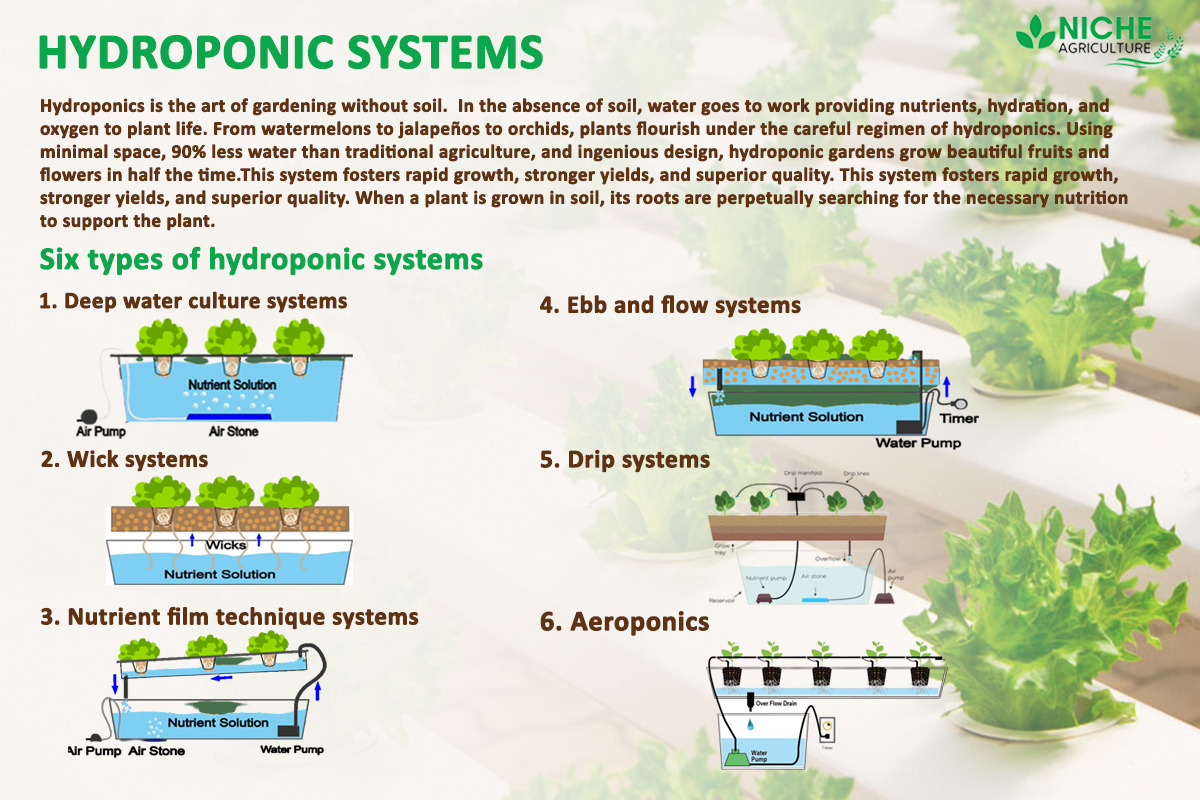
Hydroponics offers many advantages, notably a decrease in water usage in agriculture. To grow 1 kilogram (2.2 lb) of tomatoes using intensive farming methods requires 214 liters (47 imp gal; 57 U.S. gal) of water using hydroponics, 70 liters (15 imp gal; 18 U.S. gal); and only 20 liters (4.4 imp gal; 5.3 U.S. gal) using aeroponics.
Since hydroponics takes much less water and nutrients to grow produce, it could be possible in the future for people in harsh environments with little accessible water to grow their own food.
Hydroponics is not only used on earth, but has also proven itself in plant production experiments in space.
History
The earliest published work on growing terrestrial plants without soil was the 1627 book Sylva Sylvarum or 'A Natural History' by Francis Bacon, printed a year after his death. As a result of his work, water culture became a popular research technique. In 1699, John Woodward published his water culture experiments with spearmint.
He found that plants in less-pure water sources grew better than plants
in distilled water. By 1842, a list of nine elements believed to be
essential for plant growth had been compiled, and the discoveries of
German botanists Julius von Sachs and Wilhelm Knop, in the years 1859–1875, resulted in a development of the technique of soilless cultivation.
To quote von Sachs directly: "In the year 1860, I published the results
of experiments which demonstrated that land plants are capable of
absorbing their nutritive matters out of watery solutions, without the
aid of soil, and that it is possible in this way not only to maintain
plants alive and growing for a long time, as had long been known, but
also to bring about a vigorous increase of their organic substance, and
even the production of seed capable of germination."
Growth of terrestrial plants without soil in mineral nutrient solutions
was later called "solution culture" in reference to "soil culture". It
quickly became a standard research and teaching technique in the 19th and 20th centuries and is still widely used in plant nutrition science.
Around the 1930s plant nutritionists investigated diseases of certain plants, and thereby, observed symptoms related to existing soil conditions such as salinity.
In this context, water culture experiments were undertaken with the
hope of delivering similar symptoms under controlled laboratory
conditions. This approach forced by Dennis Robert Hoagland led to innovative model systems (e.g., green algaeNitella) and standardized nutrient recipes playing an increasingly important role in modern plant physiology. In 1929, William Frederick Gericke
of the University of California at Berkeley began publicly promoting
that the principles of solution culture be used for agricultural crop production.
He first termed this cultivation method "aquiculture" created in
analogy to "agriculture" but later found that the cognate term aquaculture was already applied to culture of aquatic organisms.
Gericke created a sensation by growing tomato vines twenty-five feet
(7.6 metres) high in his back yard in mineral nutrient solutions rather
than soil. He then introduced the term hydroponics, water culture, in 1937, proposed to him by W. A. Setchell, a phycologist with an extensive education in the classics.[1][24] Hydroponics is derived from neologism
υδρωπονικά (derived from Greek ύδωρ=water and πονέω=cultivate),
constructed in analogy to γεωπονικά (derived from Greek γαία=earth and
πονέω=cultivate), geoponica, that which concerns agriculture, replacing, γεω-, earth, with ὑδρο-, water.
Despite initial successes, however, Gericke realized that the time was not yet ripe for the general technical application and commercial use of hydroponics for producing crops.
He also wanted to make sure all aspects of hydroponic cultivation were
researched and tested before making any of the specifics available to
the public.
Reports of Gericke's work and his claims that hydroponics would
revolutionize plant agriculture prompted a huge number of requests for
further information. Gericke had been denied use of the university's greenhouses
for his experiments due to the administration's skepticism, and when
the university tried to compel him to release his preliminary nutrient
recipes developed at home, he requested greenhouse space and time to
improve them using appropriate research facilities. While he was
eventually provided greenhouse space, the university assigned Hoagland and Arnon
to re-evaluate Gericke's claims and show his formula held no benefit
over soil grown plant yields, a view held by Hoagland. Because of these
irreconcilable conflicts, Gericke left his academic position in 1937 in a
climate that was politically unfavorable and continued his research
independently in his greenhouse. In 1940, Gericke, whose work is
considered to be the basis for all forms of hydroponic growing,
published the book, Complete Guide to Soilless Gardening.
Therein, for the first time, he published his basic formula involving
the macro- and micronutrient salts for hydroponically-grown plants.
As a result of research of Gericke's claims by order of the Director of the California Agricultural Experiment Station of the University of California, Claude Hutchison, Dennis Hoagland and Daniel Arnon wrote a classic 1938 agricultural bulletin, The Water Culture Method for Growing Plants Without Soil, one of the most important works on solution culture ever, which made the claim that hydroponic crop yields were no better than crop yields obtained with good-quality soils. Ultimately, crop yields would be limited by factors other than mineral nutrients, especially light and aeration of the medium.
However, in the introduction to his standard work on hydroponics,
published two years later, Gericke pointed out that the results
published by Hoagland and Arnon in comparing the yields of experimental
plants in sand, soil and solution cultures were based on several
systemic errors ("...these experimenters have made the mistake of
limiting the productive capacity of hydroponics to that of soil.
Comparison can be only by growing as great a number of plants in each
case as the fertility of the culture medium can support").
For example, the Hoagland and Arnon study did not adequately
appreciate that hydroponics has other key benefits compared to soil
culture including the fact that the roots of the plant have constant
access to oxygen and that the plants have access to as much or as little water and nutrients as they need.
This is important as one of the most common errors when cultivating
plants is over- and underwatering; and hydroponics prevents this from
occurring as large amounts of water, which may drown root systems in
soil, can be made available to the plant in hydroponics, and any water
not used, drained away, recirculated, or actively aerated, eliminating anoxic
conditions in the root area. In soil, a grower needs to be very
experienced to know exactly with how much water to feed the plant. Too
much and the plant will be unable to access oxygen because air in the soil pores is displaced, which can lead to root rot; too little and the plant will undergo water stress or lose the ability to absorb nutrients, which are typically moved into the roots while dissolved, leading to nutrient deficiency symptoms such as chlorosis.
Eventually, Gericke's advanced ideas led to the implementation of
hydroponics into commercial agriculture while Hoagland's views and
helpful support by the University prompted Hoagland and his associates to develop several new formulas for mineral nutrient solutions, universally known as Hoagland solution.
One of the earliest successes of hydroponics occurred on Wake Island, a rocky atoll in the Pacific Ocean used as a refueling stop for Pan American Airlines.
Hydroponics was used there in the 1930s to grow vegetables for the
passengers. Hydroponics was a necessity on Wake Island because there was
no soil, and it was prohibitively expensive to airlift in fresh
vegetables.
From 1943 to 1946, Daniel I. Arnon served as a major in the United States Army and used his prior expertise with plant nutrition to feed troops stationed on barren Ponape Island in the western Pacific by growing crops in gravel and nutrient-rich water because there was no arable land available.
In the 1960s, Allen Cooper of England developed the nutrient film technique. The Land Pavilion at Walt Disney World's EPCOT Center opened in 1982 and prominently features a variety of hydroponic techniques.
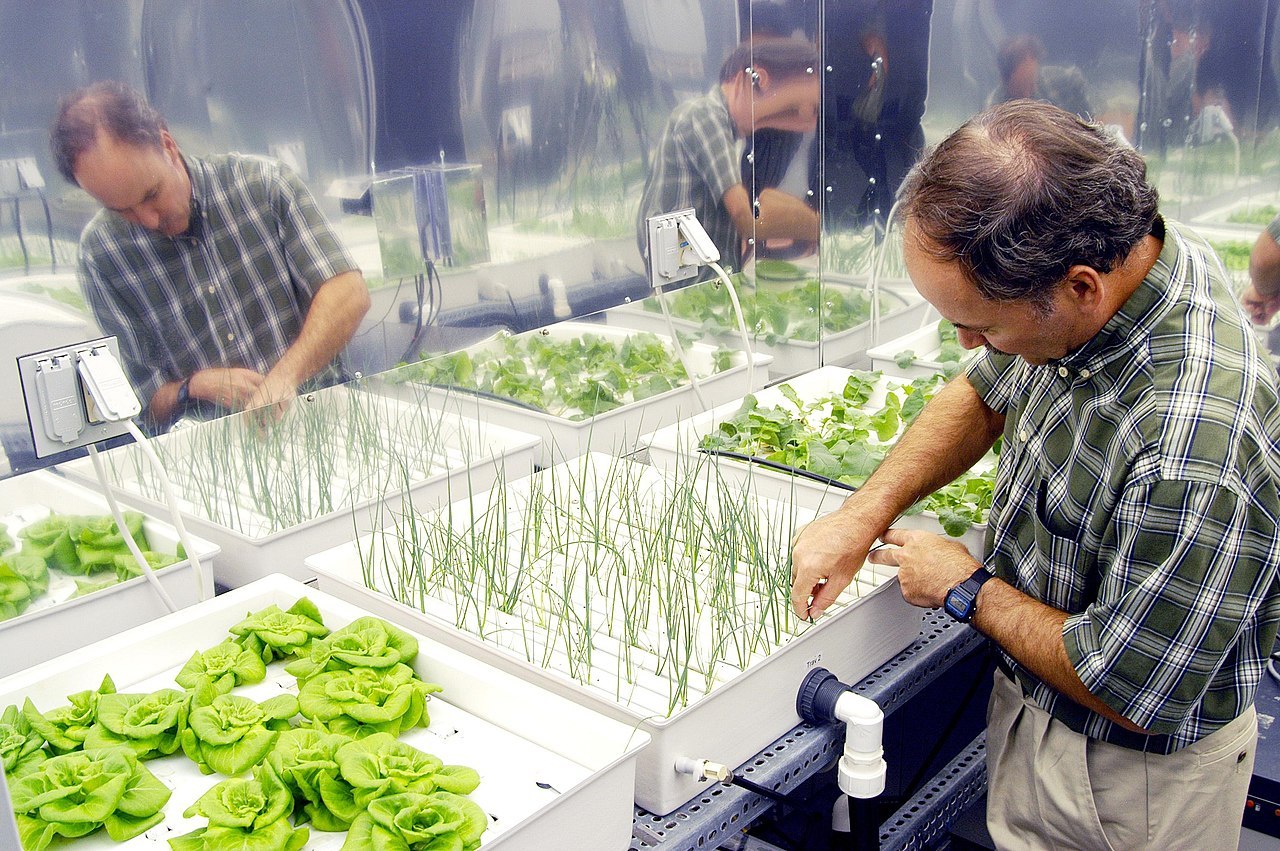
In recent decades, NASA has done extensive hydroponic research for its Controlled Ecological Life Support System
(CELSS). Hydroponics research mimicking a Martian environment uses LED
lighting to grow in a different color spectrum with much less heat. Ray
Wheeler, a plant physiologist at Kennedy Space Center's Space Life
Science Lab, believes that hydroponics will create advances within space
travel, as a bioregenerative life support system.
As of 2017, Canada had hundreds of acres of large-scale
commercial hydroponic greenhouses, producing tomatoes, peppers and
cucumbers.
Due to technological advancements within the industry and numerous economic factors, the global hydroponics market is forecast to grow from US $226.45 million in 2016 to US $724.87 million by 2023.
Techniques
There are two main variations for each medium: sub-irrigation and top irrigation.
For all techniques, most hydroponic reservoirs are now built of
plastic, but other materials have been used, including concrete, glass,
metal, vegetable solids, and wood. The containers should exclude light
to prevent algae and fungal growth in the nutrient solution.
Static solution culture
In static solution culture, plants are grown in containers of nutrient solution, such as glass Mason jars (typically, in-home applications), pots, buckets, tubs, or tanks. The solution is usually gently aerated but may be un-aerated.
If un-aerated, the solution level is kept low enough that enough roots
are above the solution so they get adequate oxygen. A hole is cut (or
drilled) in the top of the reservoir for each plant; if it is a jar or
tub, it may be its lid, but otherwise, cardboard, foil, paper, wood or
metal may be put on top. A single reservoir can be dedicated to a single
plant, or to various plants. Reservoir size can be increased as plant
size increases. A home-made system can be constructed from food
containers or glass canning jars with aeration provided by an aquarium pump, aquarium airline tubing, aquarium valves or even a biofilm of green algae on the glass, through photosynthesis.
Clear containers can also be covered with aluminium foil, butcher
paper, black plastic, or other material to eliminate the effects of
negative phototropism.
The nutrient solution is changed either on a schedule, such as once per
week, or when the concentration drops below a certain level as
determined with an electrical conductivity meter. Whenever the solution is depleted below a certain level, either water or fresh nutrient solution is added. A Mariotte's bottle,
or a float valve, can be used to automatically maintain the solution
level. In raft solution culture, plants are placed in a sheet of buoyant
plastic that is floated on the surface of the nutrient solution. That
way, the solution level never drops below the roots.
What is Hydroponics? History of Hydroponics explained Merits & Demerits of Hydroponics
UPSC Civil Services Examination is the most prestigious exam in the country. It is important to lay a comprehensive and strong General Studies foundation for the exam. Both Prelims and Mains can’t be cleared without a strong Foundation. Time is running out and seats are limited for the batch.
UPSC IAS (Pre + Mains) LIVE Foundation Weekend Batch
Batch Starting on 22nd October'22 | 11:00 AM