Search This Blog

Monday, April 18, 2022

Spring Holidays 🎉Celebrating Together 2022

🎉 Celebrating Together 🎊
2022 Spring Holidays
Festivals and Religious Practices
Sheridan Ruiz & Religion & Society Program
https://64.media.tumblr.com/c6af4949a512571ab2c09f3a0f7d1b76/6a1a16b72405b15c-e5/s1280x1920/20c5dca8448416dbd85d1a297a839c996cb214b8.jpg
 
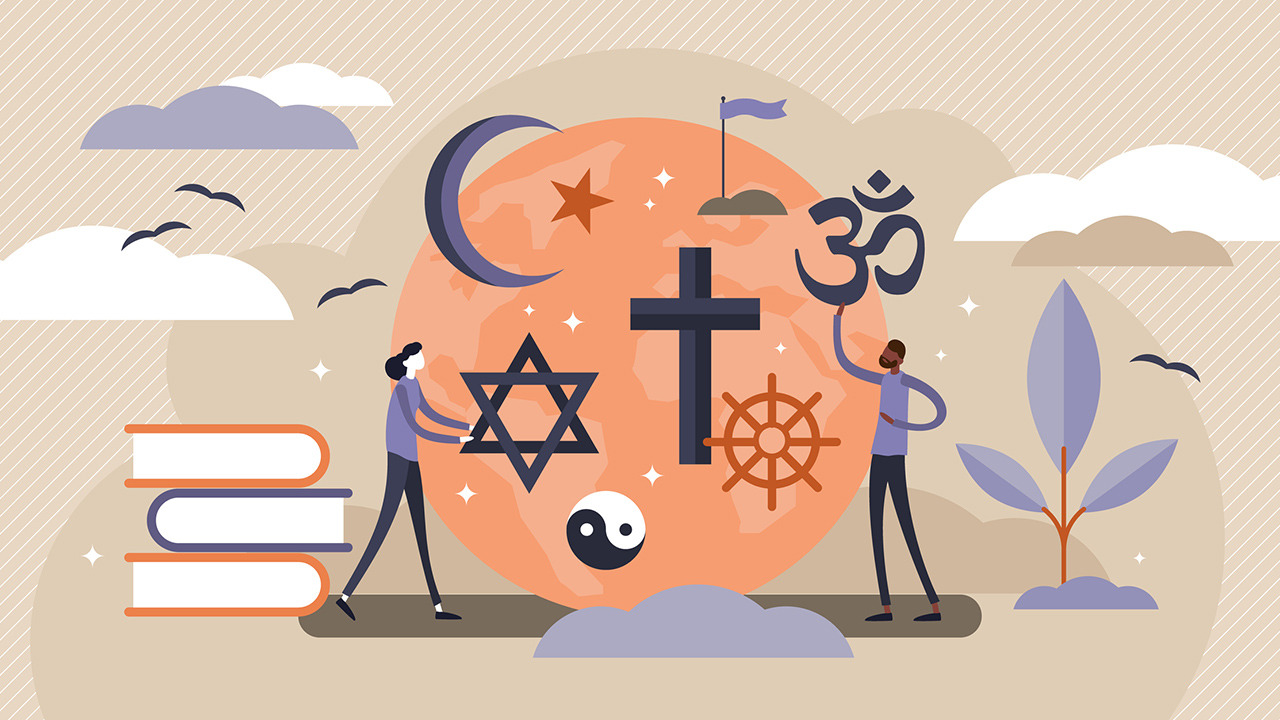
For the first time in over 30 years, Muslims, Jews, Christians, Sikhs, Buddhists, Hindus, and Baha’is will celebrate their spring holidays at the same time. Ramadan, Passover, Easter, and Vaisakhi are overlapping for the first time since 1991. Purim, Naw Ruz, Vesak Day, Holi, and the season of Lent also fall within the three-month span of March through May. This is a unique opportunity to expand our personal and collective religious literacy, to promote understanding and curiosity during our shared time of observance.
 
Easter
April 17, 2022;
Lent: March 2-April 16, 2022

The Easter holiday celebrates the resurrection of Jesus after his crucifixion and is one of the most important to the Christian faith. Easter is preceded by the season of Lent, 40 days of observance, beginning on Ash Wednesday (March 2) and ending on April 16. Most Christians who observe this season draw inspiration from and mirror Jesus Christ’s sacrifice and withdrawal into the desert for 40 days by giving up something of importance to them during this period (often food).

Lent comes to a close with the observance of Holy/ Maundy Thursday, observance of the last supper, Good Friday, the day of Jesus’ crucifixion, and finally, Easter Sunday, the day of resurrection.

Though most western Christians will observe Easter and Lent from March 2 through April 17, Eastern Orthodox communities will observe from March 7 to April 24.

Fun Fact: Mardi Gras is French for “Fat Tuesday,” the party-like atmosphere of the famous parades and celebrations reflects the practice of indulging on the last day before the Lenten season of sacrifice.

Purim
March 16-17, 2022
The Jewish holiday of Purim celebrates the rescue of the Jewish people from the Ancient Persian Emperor Haman’s plot to kill all the Jews in his kingdom as told in the Book of Esther. The holiday will start on the evening of March 16 and continue through March 17.

To celebrate this holiday, many Jews join their families or communities to share a meal (Seudah), wine and/or Hamantaschen, triangular cookies filled with jam, poppy seeds, and other fillings. Communities often reenact the story of Esther and dress up in costume to mark the joyful occasion.

Fun Fact: If you’d like to greet your colleague or friend during Purim, you can greet them in Hebrew by saying “Chag Purim Sameach.”

Holi
March 18, 2022

Holi is a spring festival celebrated by Hindus around the world. Originating in northern India, Holi has become a global festival known by many names — in the Caribbean, the festival is known as Phagwah. The festival is a celebration of spring and focuses on harmony, new beginnings, and the renewal of social bonds.

Holi is particularly well known for throwing colors as an element of celebration. The holiday is also closely associated with God as Krishna (the god Krishna), because of his playful and lively nature and his love of music and dance. This playfulness is encouraged during Holi because the social hierarchies are deprioritized during its celebration.

Fun Fact: One of the largest Holi gatherings in North America is hosted by the International Society of Krishna Consciousness and regularly attracts nearly 70,000 participants to Spanish Fork, Utah.

Naw Ruz
March 21, 2022

Naw Ruz, meaning “the new day,” is the Bahá’í New Year festival. Naw Ruz traditionally falls on the spring equinox but is fixed on March 21 for those celebrating outside Iran, where many Persians also observe the holiday following the Zoroastrian calendar.

In the Bahá’í tradition, days begin at sunset, so the holiday will begin on the evening of March 20. Naw Ruz marks the first day of the month Baha (or Glory), which is the first month in the Bahá’í calendar. The New Year is a joyous day of celebration, typically filled with prayer, celebration, and music.

Fun Fact: During the Persian observance of Naw Ruz (also called Nowruz), you will often find a table filled with seven items starting with the Farsi letter “S”, called a Haft-sin, that symbolize hopes for the new year. These items include: sabzeh, senjed, sib, seer, samanu, serkeh, and sumac.

Ramadan
April 2- May 1, 2022

The holy month of Ramadan is observed by Muslims throughout the ninth month of the Islamic calendar, ending with Eid al-Fitr, the festival of the breaking of the fast. The holiday’s dates are determined by the Islamic lunar calendar but will fall between approximately April 2 to May 2 this year.

Fasting is one of the most important practices when observing Ramadan. During Ramadan, Muslims fast from dawn until sunset. During this month, Muslims ask forgiveness for past sins, pray for guidance, and use the time to recenter on their faith by practicing self-restraint and carrying out good deeds.

Fun Fact: In recent years, many Muslim communities have hosted interfaith iftars, evening meals that break fast, to connect with their neighbors of other faith traditions.
Vaisakhi
April 13, 2022

Vaisakhi commemorates the creation of the Khalsa Panth, an order of initiated Sikhs devoted to serving the One Creator and humanity. The Khalsa Panth was established by Guru Gobind Singh in 1699 CE and built on the effort of Guru Nanak (1469-1539 CE) who started the process of forming the Sikh community nearly two centuries earlier. Many Sikhs choose to be initiated into the Khalsa Panth on Vaisakhi, following the example of the five disciples who were initiated by Guru Gobind Singh.

Before 1699, Vaisakhi was celebrated as the beginning of the harvest festival in the Punjab region in India. It is still celebrated in this way and many observe Vaisakhi as both a cultural and religious holiday. Vaisakhi is an occasion for celebrating the Sikh community’s growth and in both its cultural and religious context, is fundamentally about community, progress, and celebration.

Fun Fact: Nearly ten years ago, our Executive Director Simran Jeet Singh wrote about Vasiakhi in the Daily Beast and educated many on this cultural and religious holiday.

Passover
April 15- April 23, 2022

Passover is one of the most important Jewish holidays. During the eight-day festival celebrating the Jewish liberation from slavery in Egypt, Jews observe this period in many ways. These include abstaining from leavened foods, keeping strict kosher, observing days of rest, and retelling the story of the exodus from Egypt.

Seder, the traditional Passover meal, is held after nightfall on the first and second nights of Passover. The ceremonial foods included on the seder plate (ka’arah) include bitter herbs dipped into charoset (a paste of nuts, apples, pears, and wine), egg, and shank bone. The ritual also includes four cups of wine, washing of participants’ hands to ensure they are purified, and readings from the youngest family member.

Fun Fact: During the Seder meal, some Jews include an orange on their plate. The orange represents the fruitfulness for all Jews when their communities are diverse and inclusive, particularly of women and the LGBT community.

Vesak Day (Buddha Day)
May 15, 2022

Vesak Day commemorates the birth of Siddhartha Gautama, his Enlightenment, and when he died and passed into parinirvana. The holiday is considered the most important Buddhist holiday in Southeast Asia and in the Theravada and Tibetan traditions. It is also appropriately referred to as Buddha Day because it celebrates many of the milestones of the Buddha’s life and spiritual journey.

Like many of the other holidays celebrated during this time, the date of observance is determined by a solar and lunar calendar, meaning that it shifts year to year and typically falls in April, May, or early June.

During Vesak Day, observers focus on three values: giving, virtue, and cultivation. The carrying out of these values may include meditation, good deeds, or focusing time on recommitting to one’s faith.

Fun Fact: In many countries, you might see Buddhist flags flying during Vesak celebrations. The flag is made up of six vertical bands representing the 6 auras emanating from the Buddha after his enlightenment.

Many religious traditions will observe holidays during March, April, and May, however, we acknowledge that not all have been included. We are always open to learning and growing. If you noticed that a holiday of importance is not included, please email Sheridan Ruiz with a short paragraph on the holiday at sheridan.ruiz@aspeninstutute.org.

https://www.aspeninstitute.org/blog-posts/celebrating-together-2022-spring-holidays/
 
https://64.media.tumblr.com/c6af4949a512571ab2c09f3a0f7d1b76/6a1a16b72405b15c-e5/s1280x1920/20c5dca8448416dbd85d1a297a839c996cb214b8.jpg

Saturday, April 16, 2022

Making World’s Best Matzo

Making Some of the World’s
Best 
April 13, 2014
Matzo is an important part of any Passover Seder. Nancy Giles visits Streit’s Matzo / Matzah  Factory on New York’s Lower East Side and learns the true meaning of making Matzo. 
👇    📺    👇

COMMENT 
In the segment on Streits Matzo, it was said that even though there are many types of Matzo, ONLY the plain is Kosher for Passover.
THIS IS VERY DISTURBING TO MANY OBSERVANT AND TRADITIONAL JEWS THAT HAVE BEEN EATING ALL MATZOS FOR MANY YEARS.
For example, the Streits box of Egg Matzo SAYS KOSHER FOR PASSOVER. What is this about??
RESPONSE 
Kosher dietary laws are observed all year round, not just during Pesach.
There are additional dietary restrictions during Pesach and many foods that are kosher for year-round use are not "kosher for Passover." A bagel for example can be kosher for year-round use but is certainly not kosher for Passover. Foods that are kosher for Passover however are always kosher for year-round use.
Consult the Orthodox Union for further details.

Passover, Ramadan, and Easter in April 2022

In 2022
Easter ⛪ Passover 🕍 Ramadan🕌
All fall in April
A coincidence that happens only about every 33 years
 https://64.media.tumblr.com/1bafbd3db2e278950ca229a782f9c154/79d0538f03bde8d2-00/s1280x1920/106f0a5a31669a6b8511073b1bb4115aaef44393.jpg
🕍 Passover (April 15–23) 
Each year Passover is celebrated in the Hebrew month of Nisan, the first month in the Jewish calendar. Nisan typically falls in March or April and depending on where you are in the world the celebration lasts seven or eight days.

According to Vines, Passover is the oldest tradition of the three, and represents a renewal of Jewish identity. The story traces back to a battle fought by God in the Biblical books of Genesis and Exodus, which freed the Hebrew people from slavery under the Egyptian empire.

“All of that history stands behind the Passover, which celebrates the moment during the Egyptian battle when God claimed the firstborn of all Egyptians and the Hebrew people avoided that fate by putting the blood of a lamb on their doors so that the angel of death would pass over them,” Vines said. “When Jews celebrate Passover today, they remember in the first-person plural ‘we were slaves in Egypt, and God liberated us.’ The annual celebration of Passover is this tangible reminder that they belong to God in this special way because of the deliverance he provided for them.”

Jews celebrate this time of year by practicing certain dietary restrictions, such as refraining from consuming leavening in bread and other foods. A special family meal called a seder is traditionally held on the first night of Passover.

“At the seder, foods of symbolic significance commemorating the Hebrews’ liberation are eaten, and prayers and traditional recitations are performed,” Britannica notes. Some of these foods include karpas (celery or other raw vegetables dipped in vinegar or salt water), a shank bone, and a hard-boiled egg.

Each year the Jewish people renew their faith on Passover, and this theme of renewal is one that is shared with the closely related Christian holiday of Easter.

⛪ Easter (April 17)

The Christian celebration of Easter is celebrated around the same time as Passover each year. Ranging anytime from March 22 to April 25, Easter is celebrated on the first Sunday following the Paschal Full Moon, or the first full moon after the spring equinox. The holiday commemorates the resurrection of Jesus Christ, who served as a sacrifice so that the sins of Christians may be forgiven.

“The Christian story of Easter is related to Passover, but in ways that are really kind of hard to untangle. The Christian celebration of Easter is about the sacrificial death, and eventual resurrection of Jesus, making him the Messiah that provides salvation to all people,” Vines said. “In that context, Jesus’ death allows the angel of death to pass over Christians in the same way the blood on the door post does with Passover. The substitutionary death of Jesus is death on behalf of many that is celebrated on Easter and is of course preceded by the time that we’re in right now, Lent.”

Lent is a 40-day period where Christians prepare for Easter. Today this tradition most widely includes the giving up of a vice, whether that be chocolate, fast food, or social media. This individual sacrifice is designed to remind the Christian about the sacrifice that God made for them.

Rules around Lent are traditionally much stricter, however. According to Britannica, “In the early centuries, fasting rules were strict, as they still are in Eastern churches. One meal a day was allowed in the evening, and meat, fish, eggs, and butter were forbidden. The Eastern church also restricts the use of wine, oil, and dairy products.”

🕌 Ramadan (April 2–May 1)
The older, more traditional restrictions for Lent are much more similar to the Islamic tradition of Ramadan. Ramadan is a lunar month in the Islamic calendar where Muslims acknowledge the fourth pillar of Islam, which is to fast throughout the entire month.

“Ramadan is a lunar month in the Islamic calendar, and for that month faithful Muslims who have committed their lives and submitted their will to Allah demonstrate that by refraining from eating or participating in sexual activities from dawn to dusk,” Vines said.

Like the sacrifice of a vice during Lent, Vines said that fasting during Ramadan serves to allow a Muslim to focus their attention on the deep commitment they have made to submit every aspect of their life to the will of Allah, and to give themselves time to meditate on that commitment due to the constant reminder of it via their hunger.

“The second component of the fast has to do with the social component of Ramadan, which is to remind a Muslim what it’s like to experience hunger and not have enough food. This builds solidarity with those in the Islamic community who regularly don’t have enough to eat,” Vines said. “I tell my students there is a very strong communitarian focus in Islam that is a little different than Christianity, which can tend to be quite individualistic. It’s about the individual saving their soul from hell, but in Islam it’s about building a community of faithful people who are obedient to the will of Allah.”

While Muslims fast during the day, Ramadan also includes feasts after dusk where traditional food like kibbeh, stuffed vegetables, and more is served. It is traditional to break a day’s fast with dates, a teaching that comes from the Islamic Prophet Muhammad.

While each of these holidays has different religious significance to their practitioners, they all serve as a reminder to the followers of each religion of their commitment to their faith and to the God they worship. It is a time for people of each religion to become renewed in their faith, a theme that aligned with the spring season in which each holiday takes place.

According to preemptivelove.com, “For those who identify with one of these three faith traditions, the closeness of our holy days should remind us of our connection to each other - the ways in which our stories and cultures overlap.”
🕍 🕎  ⛪ ✝️  🕌 ☪️ 🕍 🕎  ⛪ ✝️  🕌 ☪️
https://64.media.tumblr.com/3f0d429c9b570085b17300df9c45fdc6/e44ead6e7ddec35f-b1/s1280x1920/c9d2fa7843683ae963452335fccf5411d3326af4.jpg

Michelangelo's Pietà 🙏 Things You Should Know

Things You Should Know About
Michelangelo's Pietà

https://66.media.tumblr.com/be651cef2c5b2c2c365bf8ec349e6b0a/tumblr_pq7pnpLMkR1t8vvygo2_500.jpg
BY Kristy Puchko - May 11, 2015
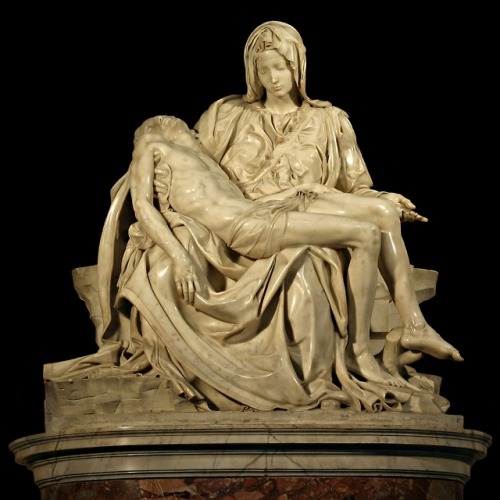
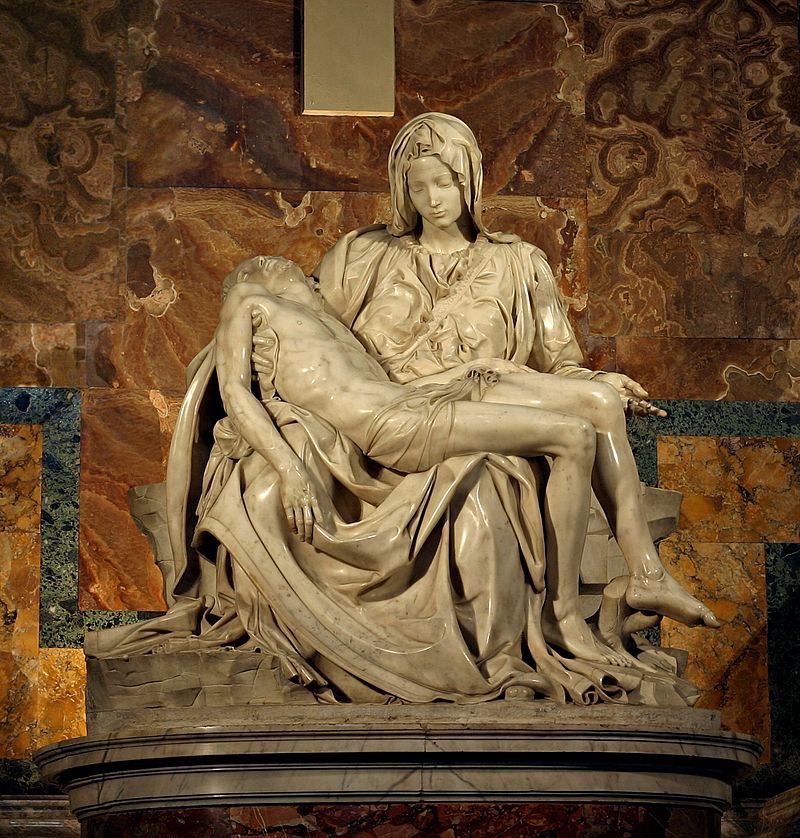
Since its creation in 1499, Michelangelo's Pietà has inspired emotion, faith, and imitation through its elegant depiction of the Virgin Mary and Jesus Christ. Yet few know the secrets that are still being uncovered about this centuries-old statue.

1. A French cardinal commissioned it for his own funeral.
French cardinal Jean de Billheres, who served the church in Rome, wanted to be remembered long after he'd died. To achieve this goal, he hired Michelangelo to make a memorial for his tomb that would capture a scene that was popular in Northern European art at the time: the tragic moment of the Virgin Mary taking Jesus down from the cross.
Actually, that undersells de Billheres’s request. Michelangelo's exact job description for the project was to create "the most beautiful work of marble in Rome, one that no living artist could better." While other sculptors might have balked at such an intense demand, Michelangelo was confident he could complete such a task. The Pietà is considered by many to be his greatest work, besting even David and the ceiling of the Sistine Chapel.

2. After more than 200 years, the Pietà was moved to St. Peter's Basilica.
The Late Renaissance church houses the religious monument within the first chapel to the right of its entrance. There, countless Vatican City tourists have viewed it. You can visit it virtually here.

3. Michelangelo carved it from a single slab of marble.
Specifically, he used Carrara marble, a white and blue stone named for the Italian region where it is mined. It's been a favorite medium of sculptors since the days of Ancient Rome.

4. Pietà is the only work Michelangelo every signed.
If you look closely, the sculptor’s signature can be found across Mary's chest. Sixteenth century art historian Giorgi Vasari told the tale of how Michelangelo made his mark:
One day Michelagnolo [sic], entering the place where it was set up, found there a great number of strangers from Lombardy, who were praising it highly, and one of them asked one of the others who had done it, and he answered, 'Our Gobbo from Milan.' Michelagnolo stood silent, but thought it something strange that his labors should be attributed to another; and one night he shut himself in there, and, having brought a little light and his chisels, carved his name upon it.
Michelangelo later regretted the vanity of this act, and resolved never to sign another piece of his work.
 
5. The piece made Michelangelo famous when he was only 24.
Thanks in part to putting his name in plain sight on the Pietà, Michelangelo's reputation grew as the public's love of the statue did. The artist lived to the age of 88, enjoying decades of acclaim and appreciation for his works.

6. The sculpture has been criticized for Michelangelo's depiction of Mary.
Some church observers sneered that the artist made her look too youthful to have a son who was 33 years old, as Jesus was believed to be at his death. Michelangelo defended this choice to his biographer Ascanio Condivi:
Do you not know that chaste women stay fresh much more than those who are not chaste? How much more in the case of the Virgin, who had never experienced the least lascivious desire that might change her body?

7. It’s a mash-up of sculpting styles.
Michelangelo has long been praised for marrying Renaissance ideals of classical beauty with poses that favored naturalism. Another nod to Renaissance influence is a structure that ultimately resembles a pyramid, formed by Mary's head, flowing down her arms and to the bottoms of her robes.

8. Mary's robes hide a creative compromise.
If you look closely, you can see that Mary's head is a bit too small for her very large body. When designing Mary's measurements, Michelangelo could not impose realistic proportions and have her cradle her adult son as he envisioned. So, he had to make her - the statue's support - oversized. To play down this poetic license on her form, Michelangelo carved out sheets of gentle draping garments, camouflaging Mary's true fullness.
 
9. The Pietà was brutally attacked.
Michelangelo had a habit of shouting at his sculptures and even occasionally lashing out at them with his tools. But it was an unemployed geologist from Hungary who won infamy on Pentecost Sunday of 1972 by leaping over the railings at St. Peter's Basilica to attack the Pietà with a hammer. With 12 blows, Laszlo Toth knocked off Mary's left arm, snapped off the tip of her nose, and damaged her cheek and left eye.

10. Its destruction was not deemed a criminal offense.
The authorities chose not to criminally prosecute Toth for his destruction of the priceless work of art. However, a Rome court deemed him "a socially dangerous person," and committed the man to a mental hospital for two years. After he was released, Toth was deported.

11. Its restoration was a matter of debate.
When a work of art is damaged in this way, its exhibitors are forced to debate what's best—leaving it as it is (like Cleveland's The Thinker that was mangled in a bombing) or altering the original to restore it. The Vatican heard three arguments on this matter.
The first declared that the Pietà's damage was now a part of its meaning, speaking to the violence of our modern age. Others proposed that the sculpture be repaired, but with visible seams as a reminder of this grave assault. Ultimately, a seamless restoration was chosen, with the goal of making it impossible for observers to know that Toth had even touched Michelangelo's masterpiece.
 
12. THE RESTORATION TOOK 10 MONTHS.
Master craftsmen picked through the 100 bits of marble broken off of the Pietà and puzzled them back together. In a makeshift lab built around the statue, these workers spent five months identifying pieces as small as fingernails. Next, they used an invisible glue and marble powder to affix the pieces back onto the Pietà and filled any gaps with replacement pieces. And once the integral restoration was completed, the final step was securing the restored work behind bulletproof glass.

13. This was not the first time it was behind bulletproof glass.
In 1964, the Vatican loaned the Pietà to the United States, where it was displayed as part of the 1964 New York World's Fair. To ensure the safety of this statue, organizers erected a barrier of seven massive sheets of plexiglass that collectively weighed more than 4900 pounds. Then, to make sure crowds would safely pass by the sculpture, conveyor belt-style mobile walkways were installed.
 
14. The Pietà's attack had an unexpected silver lining.
During its diligent restoration, workers discovered a secret signature on the piece. Hidden in the folds of Mary's left hand was a subtle "M" believed to stand for Michelangelo.

15. Michelangelo’s Model for The Pietà may have been discovered.
In November 2010, American art historian Roy Doliner claimed that a restored 12-inch statue from the late 15th century is a long-misidentified Michelangelo piece that served as the test run for his Pietà. The small sculpture of Mary and Jesus was previously attributed to celebrated 15th century sculptor Andrea Bregno. But Doliner believes this piece was a sort of proof of concept given to cardinal de Billheres to secure the commission.

http://mentalfloss.com/article/63602/15-things-you-should-know-about-michelangelos-pieta
The Pietà (Italian: [pjeˈta]; English: "The Pity"; 1498–1499) is a work of Renaissance sculpture by Michelangelo Buonarroti, housed in St. Peter's Basilica, Vatican City. It is the first of a number of works of the same theme by the artist. The statue was commissioned for the French Cardinal Jean de Bilhères, who was a representative in Rome. The sculpture, in Carrara marble, was made for the cardinal's funeral monument, but was moved to its current location, the first chapel on the right as one enters the basilica, in the 18th century. It is the only piece Michelangelo ever signed.
This famous work of art depicts the body of Jesus on the lap of his mother Mary after the Crucifixion. The theme is of Northern origin. Michelangelo's interpretation of the Pietà is unprecedented in Italian sculpture. It is an important work as it balances the Renaissance ideals of classical beauty with naturalism.
https://64.media.tumblr.com/da3ea9eb51d005782ecca0f032c11262/9aa636848557d5d1-17/s1280x1920/5f81dbff4a29abf110d6339a951f0f6151a54355.jpg 

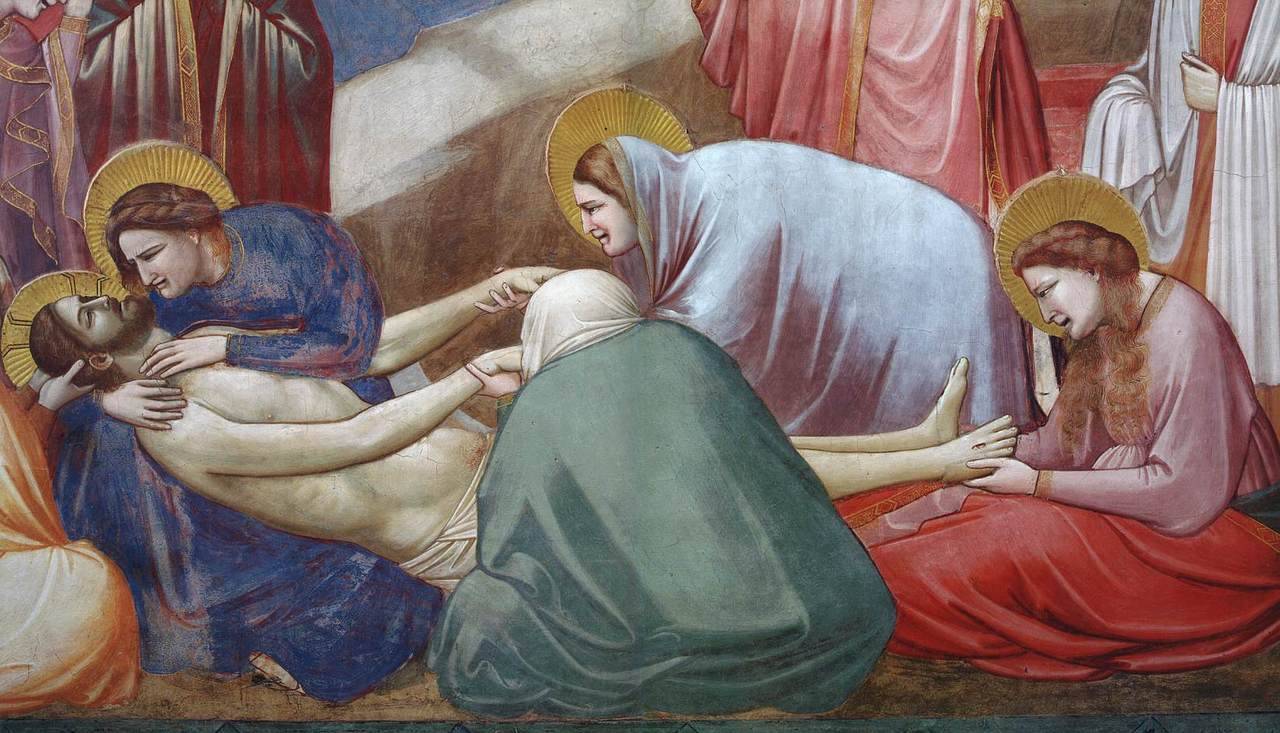
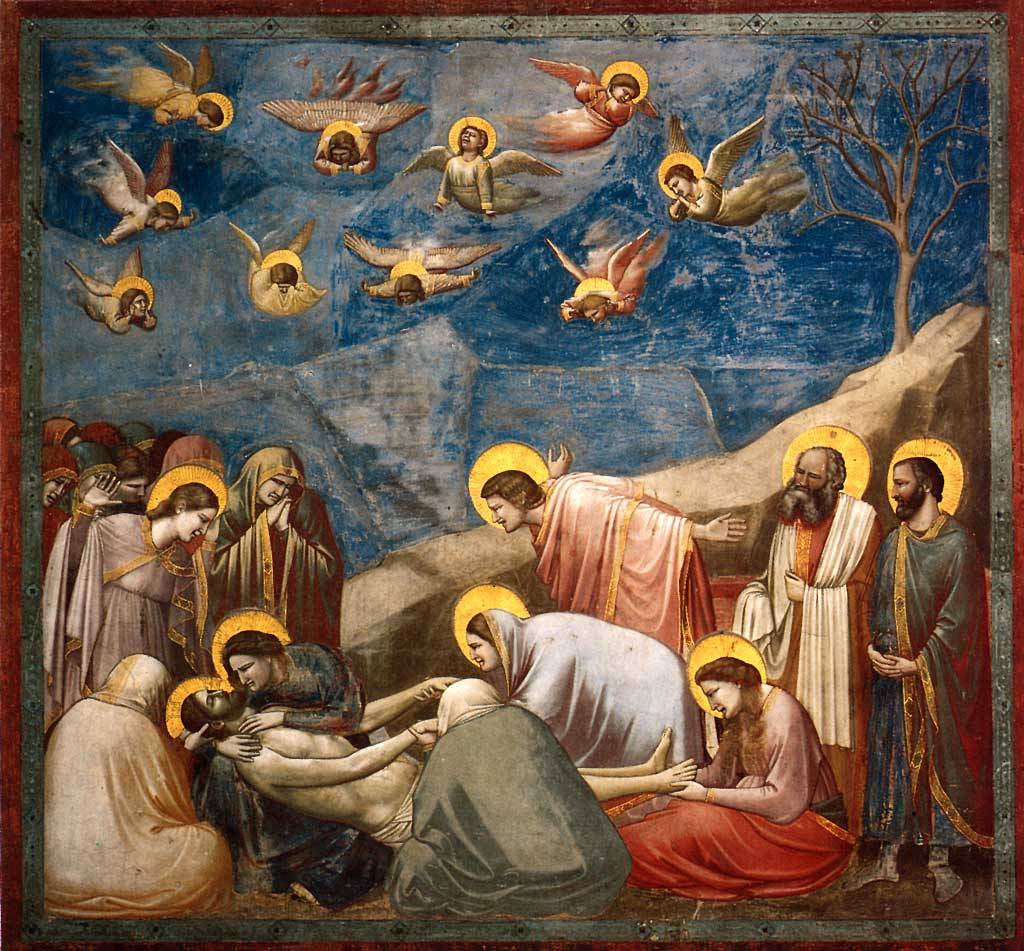
Lamentation of Christ 🙏 by Giotto

Looking at a Masterpiece:
The Lamentation of Christ
https://66.media.tumblr.com/4ea3bfe2c2795958cd7b668dd266962a/tumblr_pq7ktg8CHy1t8vvygo4_r1_540.jpg
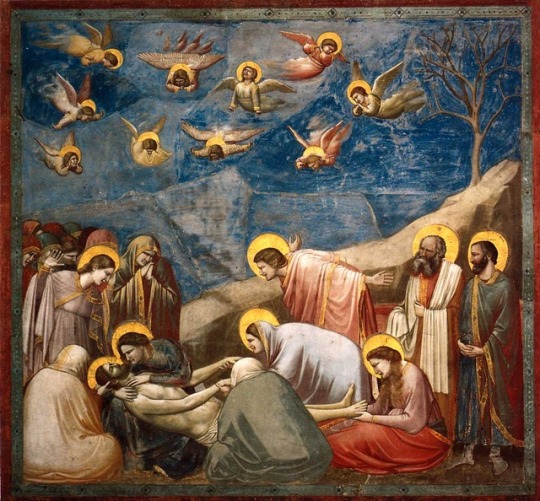
This fresco by Giotto di Bondone
 Scrovegni Chapel in Padua  c.1305

Giotto's style heralded a new development in the art of the late Middle Ages.  The sacred art of the Byzantine period which preceded it had a solemn and holy beauty of its own, but was two-dimensional, immobile, and largely symbolic.  Giotto initiated a more natural, emotionally expressive human style, which was — it seems — inspired by the spirituality of St. Francis of Assisi, Giotto being a third order Franciscan himself.

St. Francis brought a new focus on, and a richer perception of, the great mystery of the Incarnation - God becoming flesh - into the spiritual treasure house of the Church. This had a huge impact on artistic expression, notably on the vision of Giotto.

Basically, it made the divine more accessible to us humans, and transformed the human through the touch of the divine. Humanity with all its varying emotions of joy and sorrow can be quickened by God's grace, and in communion with the living God.  
Consequently these human emotions, purified through grace of sinful inclinations, are transformed, acquiring an unheard of depth and sublimity.  Thus this great art challenges us to reach to another level.  We start to see everything in the light of Christ.
https://66.media.tumblr.com/064f030e67c1f8a6057fa44969f1095c/tumblr_ppx3buU3vo1smcgh0o2_1280.jpg
  • Why, if Christ has risen, should we enter so deeply into mourning over His passion and death?  
  • Why does St. Francis, and Giotto in his footsteps, contemplate it so profoundly? 
First, because the Resurrection, and the great joy it brings, makes no sense without it.  We must live through all the stages.  
 
Second, because "the clearest proof of the reliability of Christ's love is to be found in his dying for our sake . . . in that hour the depth and breadth of God's love shone forth . . ." and "love is always lived out in body and spirit."

In many lamentation paintings the predominant note is sorrow, for instance in a truly moving one by Rogier van der Weyden.  
Though this Giotto fresco depicts the disciples' deep sorrow over Christ's death, their aching pain over parting from Jesus, it is not desolate.  Its spirit is not so much primarily of sorrow.  
Rather its surpassing theme is love, the overwhelming love of Jesus, His laying down His life for the disciples, and their love for Him.  "God loved us first (cf. Jn 4:10) that we might love Him.  This is the explanation of it all."
Giotto's frugal style, while being passionate, is unrestrained and flowing.  He contemplates this boundless love and draws us into it.   
Who is this man who loves us even unto death and who has this power to draw all things to Himself?  (Jn 12:32) It is the slain Lamb, Jesus Christ, Son of God, Savior.

Even the artist's masterful composition expresses this: all lines, the rocky ledge, the figures, all converge and tend toward the Sacred Head of Jesus.  

All eyes, Mary's above all in their poignancy, Mary Magdalen's at His feet, especially St. John with his arms thrown open, the intensity of love in that gesture, and the other disciples, all evidence profound love for the Beloved, coming from their burning hearts, and their desire to share in His suffering.  Nothing else matters but this pierced Jesus in His sacred humanity.

As a result their and our hearts are transfixed.  "Thou hast wounded my heart" (Song 4:9).  His Love engenders passionate love.  "Deep calls upon deep." (Ps 42:7) Our sins have wounded Him.  "Those wounds were to be the doors to heaven — even for those who had made them . . . He loved us to the utmost limit.  St. John finds only these words: 'He loved them to the end.' (Jn 13:1)"

The angels in heaven weep over Christ's suffering for our sins.  It is said that angels do not have dry hearts.  Their love vibrates with our joy and grief; how much more with Christ's passion.

The salient point here is that an immense event has taken place and has changed the universe.  Heaven and earth are throbbing.  Giotto's masterpiece unites simplicity and force.  It expresses mystical love: the cor ad cor of divine love.

Giotto di Bondone (c. 1266-1337)
The Lamentation  (1305)
https://66.media.tumblr.com/4ea3bfe2c2795958cd7b668dd266962a/tumblr_pq7ktg8CHy1t8vvygo4_r1_1280.jpg

Friday, April 15, 2022

The Last Supper 🍽️

🍞 The Last Supper 🍷
https://68.media.tumblr.com/4999832a33c87f7f3df888b1915d9f16/tumblr_ooempejGPF1sqsyybo1_540.jpg
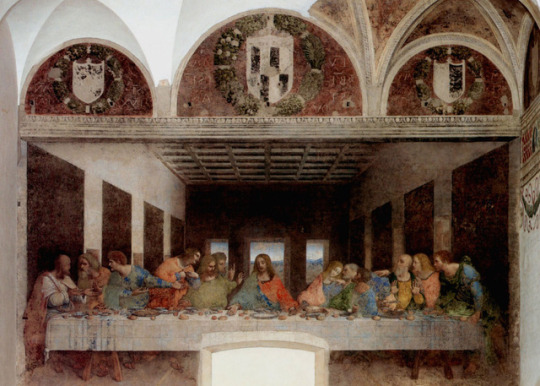
Learn about the history and meaning of the Last Supper, which depicts the Last Supper of Jesus with his disciples. Oil, tempera, fresco, 1495-98 (Santa Maria delle Grazie, Milan). Created by Beth Harris and Steven Zucker.
   

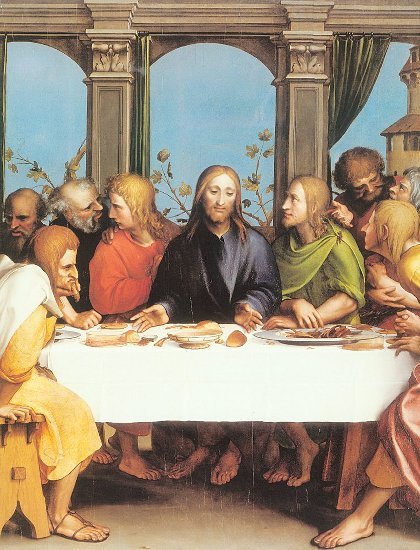
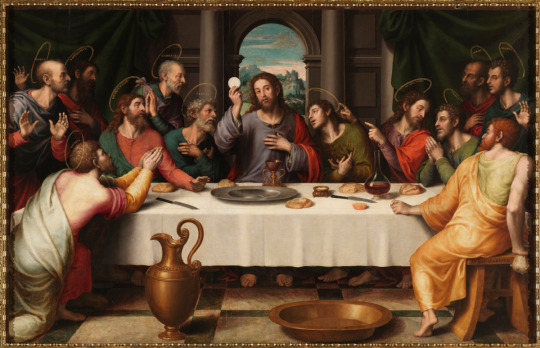
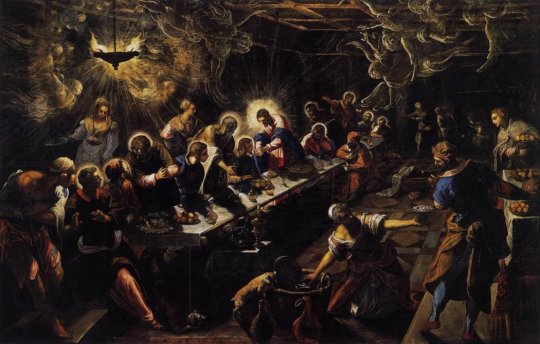
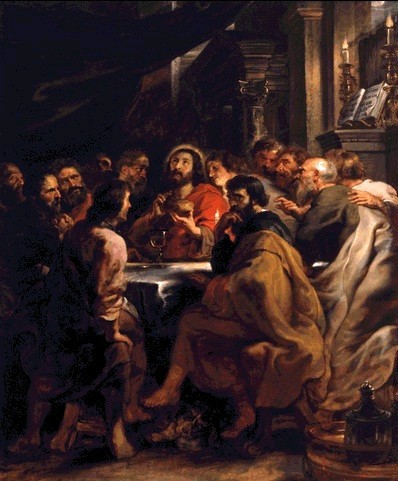
On the evening before his death, Jesus calls his disciples together for supper, which will be his last. Before the meal he washes the feet of everyone attending. During the meal Jesus discloses the fact that he will be betrayed by one of his twelve followers. He shares the bread and wine, generally considered symbols for his body and blood. The Last Supper is described most clearly in the Gospels of Mark, Matthew and Luke.

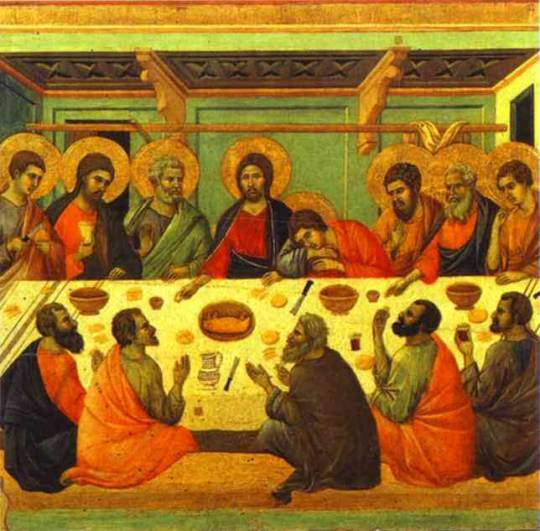
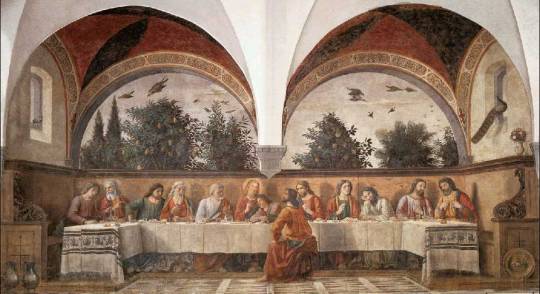
This dramatic gathering has been a source of inspiration for the visual arts. The first paintings of The Last Supper were quite static - as can be seen in the works of Duccio (1308-11) and Ghirlandaio (1480). All figures are nicely seated in their chair, despite the fact that they have just learned of their master's coming betrayal.

A difficult problem for all painters of the tableau is the grouping of the figures. Duccio chose a reasonably credible one: everyone is seated around a table. A drawback of this grouping is that the faces of some of the followers are not visible. Ghirlandaio has them seated behind a long table opposite the traitor Judas, who sits alone.

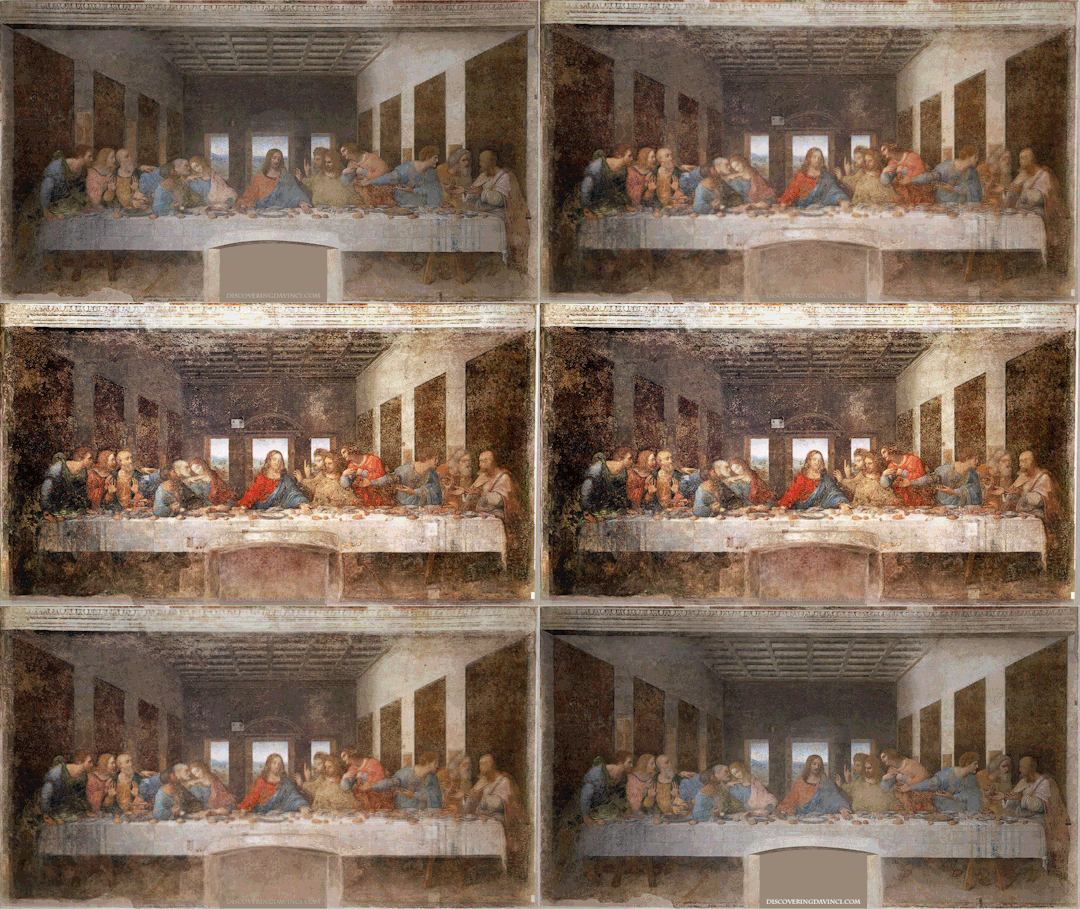
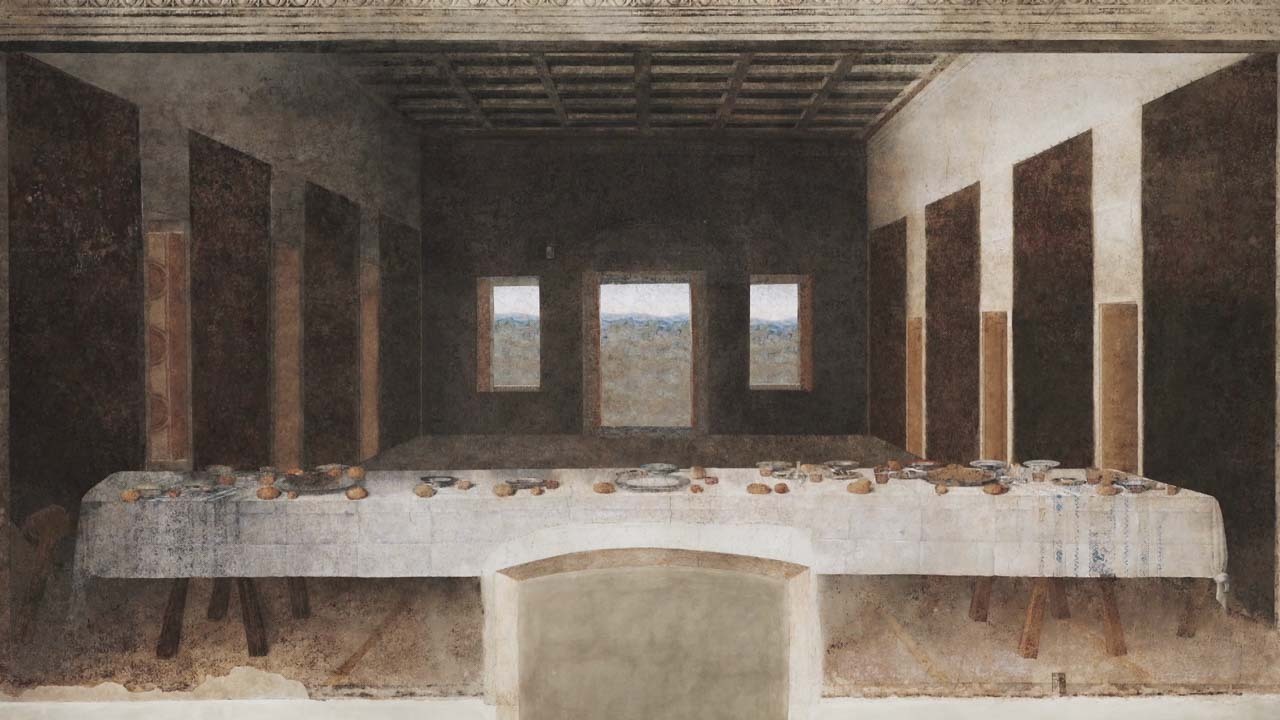
Leonardo da Vinci effected a breakthrough with his Last Supper (approx. 1495-98). Not only is Judas fully included in the group, but the figures are engaged in lively interaction. Da Vinci's fresco inspired numerous Renaissance artists and Baroque painters. Despite many restorations, the most recent in 1999, the work is in bad condition, due to the technique used on the wall, which has insufficient sticking power. In addition, the hall was used as a stable for some time, and bombed during World War II.
https://64.media.tumblr.com/a45c447c88faa47bdbd70fa55d383c67/69c3ab16576f4024-2c/s1280x1920/1c6d94c8bb6c378a719f59931c47abe591db7d7e.jpg


The Catholic Church annually commemorates the Last Supper as the Holy Supper, on Maundy Thursday.
The Last Supper in other languages:
https://68.media.tumblr.com/fa4498000bafbb5549892dffe3ab42aa/tumblr_inline_ooelrpcbBS1rlk3i5_540.jpg
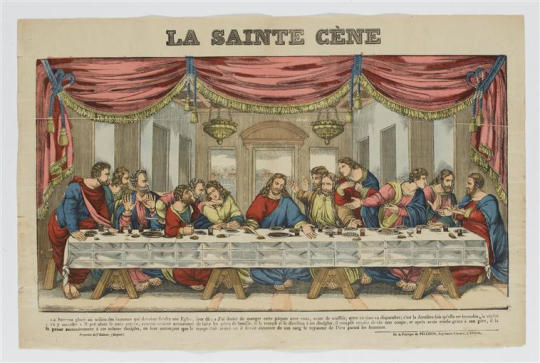
🇫🇷 French: La sainte cène
Le mot "cène" vient du latin "cena" qui signifie "repas du soir". Ce mot "cena" se retrouve d'ailleurs en espagnol et en italien, et, dans ces deux langues, signifie couramment "souper". Voici la définition qu'en donne le Dictionnaire Larousse :  "1- La Cène : dernier repas de Jésus-Christ avec ses apôtres, la veille de sa Passion, au cours duquel il institua l'eucharistie. 2- La sainte cène : communion sous les deux espèces (pain et vin), dans le culte protestant." 


🇮🇹 Italian: Il Cenacolo
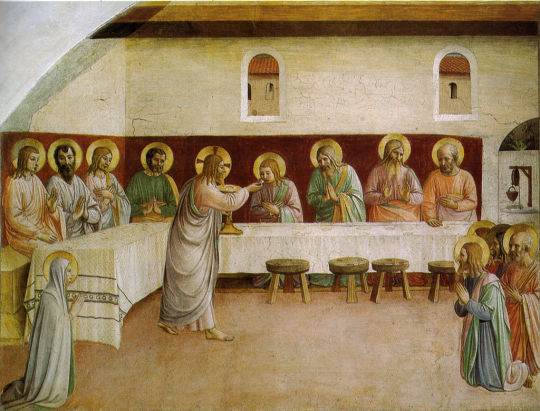
Communion of the Apostles, by Fra Angelico, with donor portrait, 1440–41
 
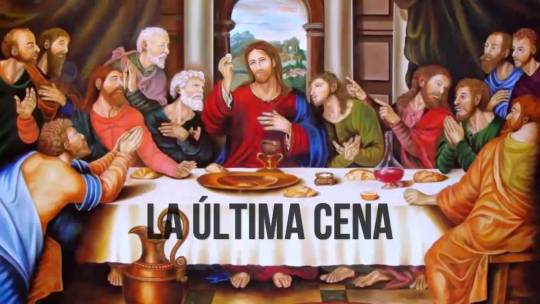
🇪🇸 Spanish: La Última Cena
 
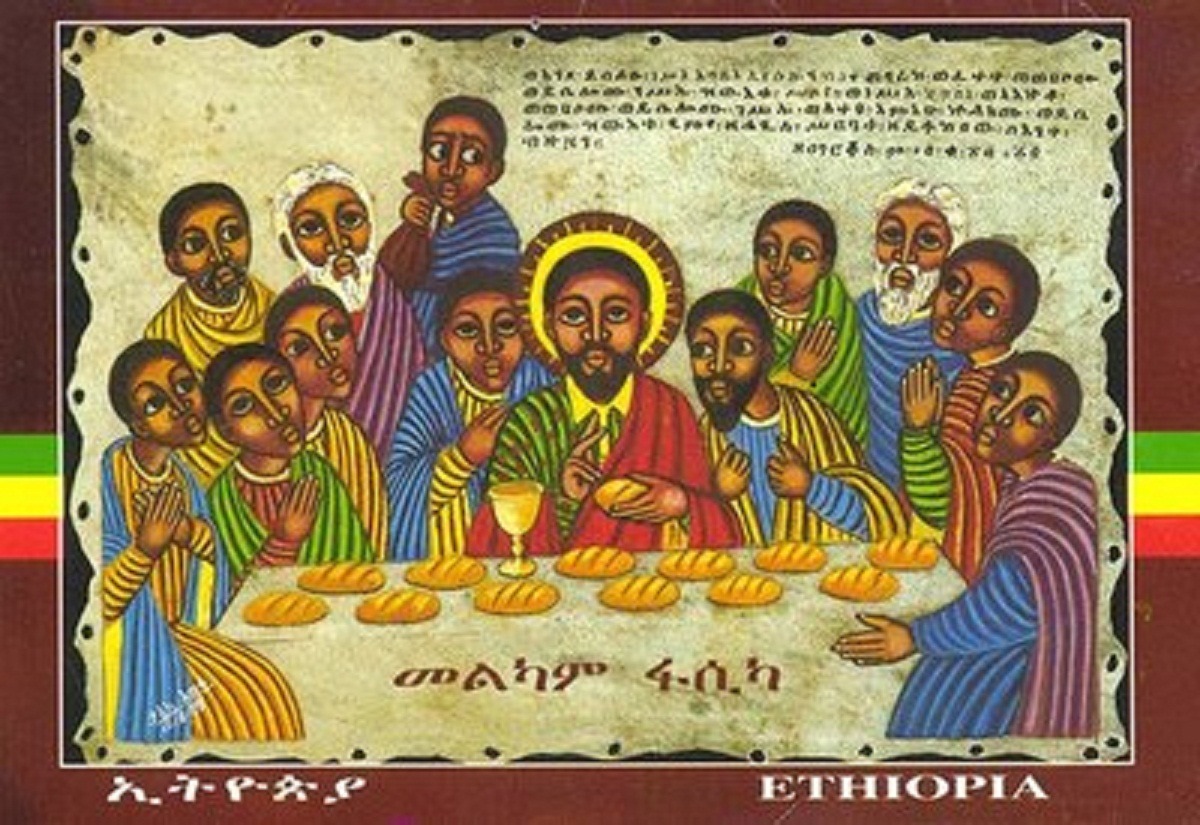
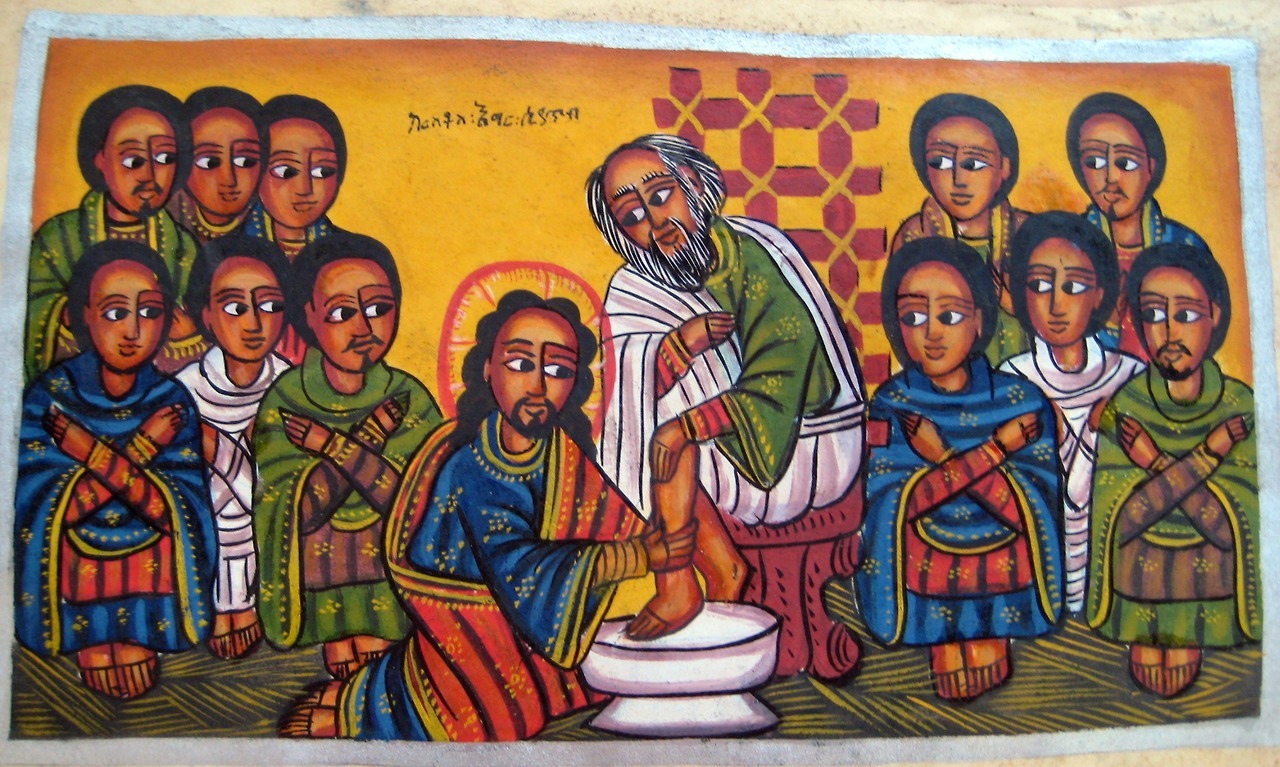
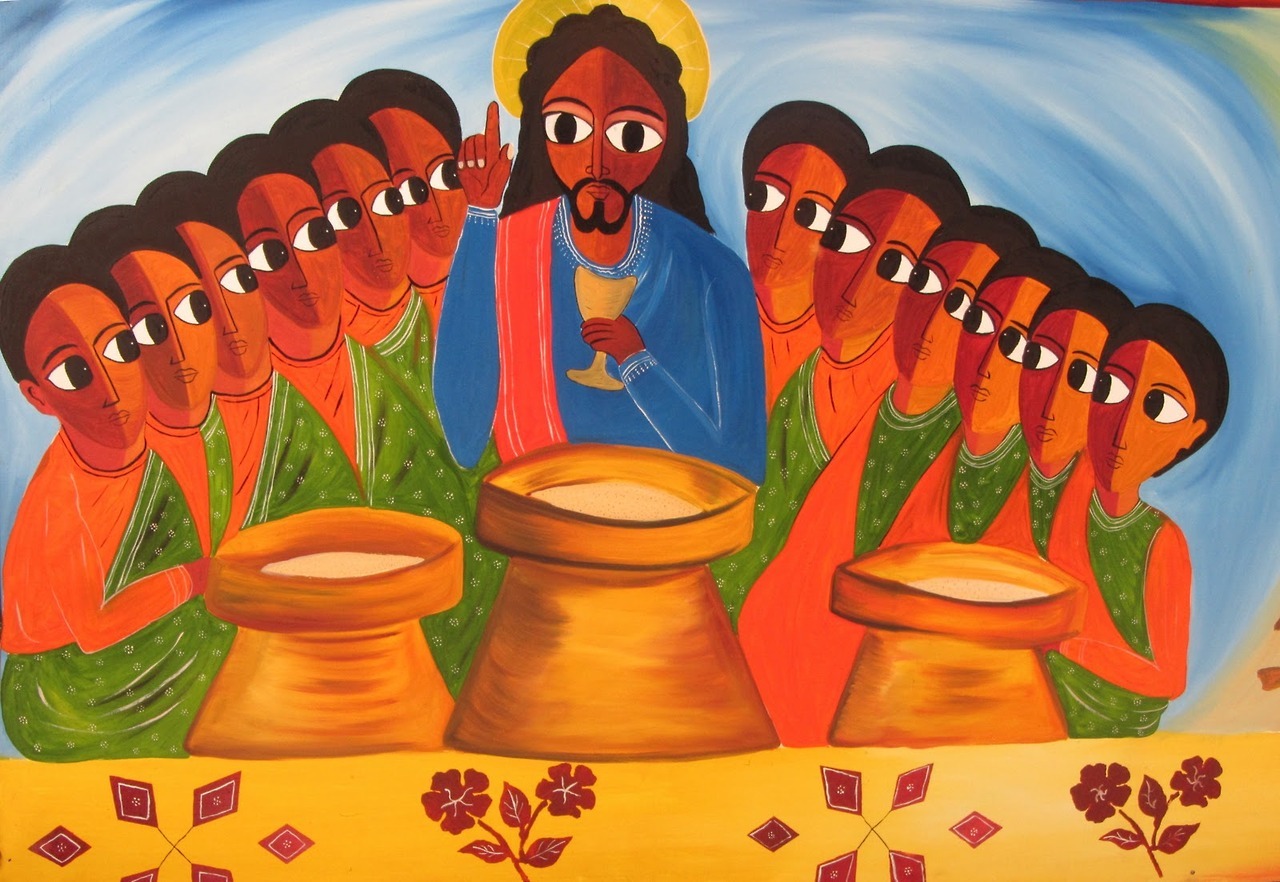
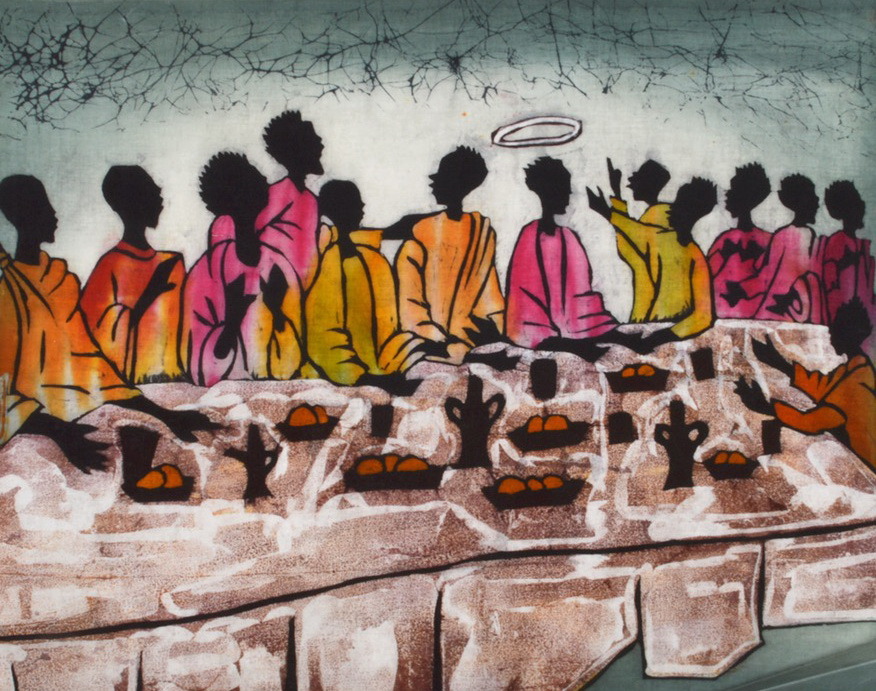
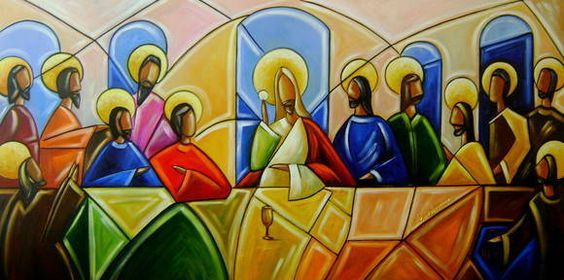
🇪🇹 The Last Supper- Ethiopia
https://68.media.tumblr.com/557cdb3097c7820dfc1cdfcf485be8a3/tumblr_ooepy76Km81sqsyybo2_r1_1280.jpg
https://68.media.tumblr.com/74bd97d0a38ecc6a2cb52f48a48c88d0/tumblr_ooeruogvJG1sqsyybo4_1280.jpg
https://68.media.tumblr.com/dfb1bcb21627bc02fad05e55bd5b51b3/tumblr_ooeruogvJG1sqsyybo3_1280.jpg
https://68.media.tumblr.com/acab13d20ccfd1fe298e658b0ca35865/tumblr_ooerrtbIyx1sqsyybo2_1280.jpg
https://68.media.tumblr.com/2969e7a51dd20a05c63b69834b9701d9/tumblr_ooeruogvJG1sqsyybo2_1280.jpg
🇧🇷 Brazilian Painting of the Last Supper (2013)

Wednesday, April 13, 2022

The Last Supper 🎬 Alive

The Last Supper Alive
https://64.media.tumblr.com/647fe1a6805eaf05195ed7f9096869b0/b9ff2af70845cfce-eb/s1280x1920/d5ee6cf0afcf9bbae2ab9ffa36dc469f72372925.jpg
Rino Stefano Tagliafierro
A video installation exposed in Osaka (Japan), 2018
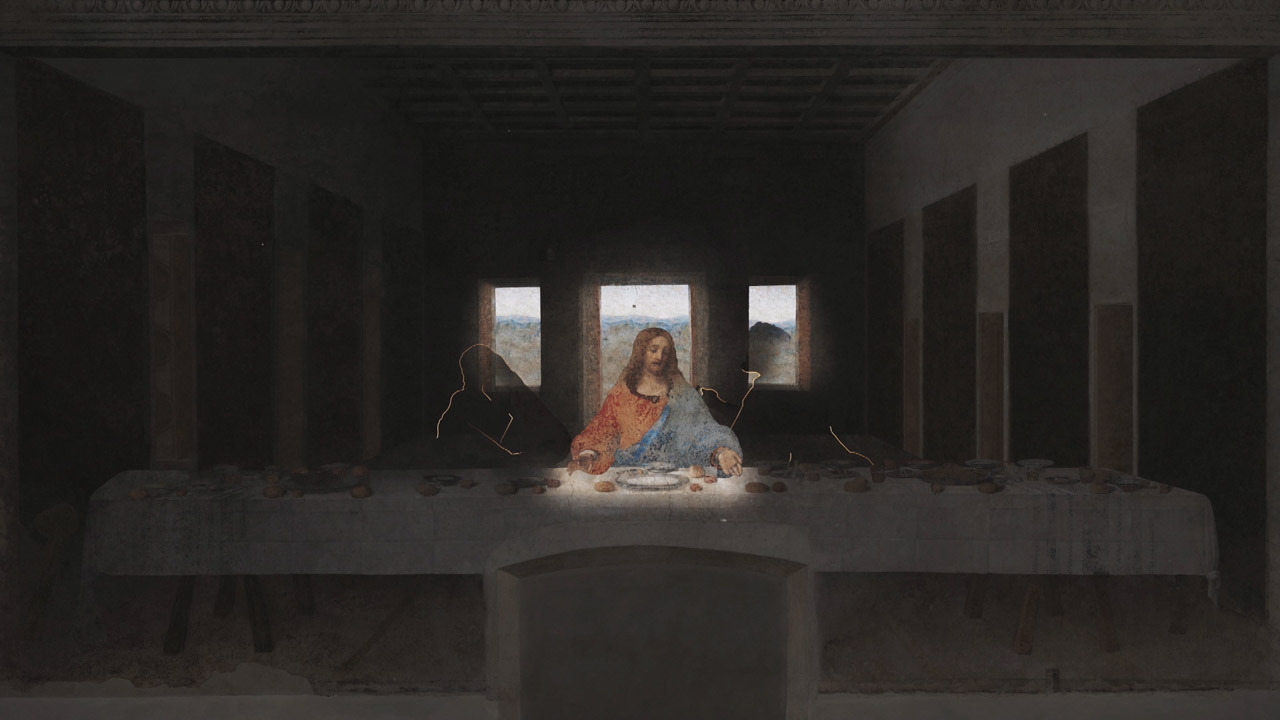
A six minute video installation that brings to life the famous late 16th century work by Leonardo Da Vinci.
👇    📺    👇

          
THE LAST SUPPER ALIVE
by Rino Stefano Tagliafierro
The most famous last supper in the world comes to life thanks to digital art
The slight movements of the figures enhance the choral nature of the Last Supper, with a very measured and meticulous direction that overcomes the fixity of the painting adorning the wall of the refectory of the Convent of Santa Maria delle Grazie in Milan, bringing it back to life and providing it with a new spatial context.

  • Directed by Rino Stefano Tagliafierro  (Karmachina Srl)
  • Creative Director  Makita Ryosuke
  • General Producer  Hideiki Kashio (Northshore Inc.)
  • Post-Production Assistant   Giulia Formica
  • Music by    Shinichiro Iwano
  • Lenght    06:00
  • Year    2018
Tumblr: Image
Tumblr: Image