In
response to the inevitable avalanche of tweets asking why there isn’t an
International Men’s Day, the answer is: YES, THERE IS. It’s on Nov. 19.
It
seeks to highlight discrimination against men and boys, and celebrate
positive male role models. It’s not a zero-sum game; we can fight for
equal rights for women as well as recognizing that men have challenges,
stigmas and inequalities to overcome, too.
It sounds new. Doesn’t it? Most of us are not even aware of this day. For a society, which is fighting hard to equalize the rights of women as same as the men, it’s quite a tough challenge to remember this day. Thanks to the internet era, someone or the other reminds us of this 🙂
Wishing all the men, who have been a help to the society a very happy men’s day. We can’t dream of a happy nation without you.
What is International Men’s Day? International Men’s Day is a day to celebrate the achievements and contributions of men for the society, family, and child care. The objective of International Men’s Day is to focus on improving gender relations, promoting gender equality, discrimination between men and boys, improvement of men’s and boys’ health and also to promote the humanitarian values. It evokes the responsibility to work together to improve the lives of men and boys all over the globe.
When was this started? International Men’s Day was Inaugurated in 1999 in Trinidad and Tobago and now it is observed in Jamaica, United States, Australia, Argentina, India, China, United Kingdom and in more than 40 countries.
What is the theme of International Men’s Day? The theme of International men’s Day is to Work Together for Men and Boys.
What can Men Do? Here is an answer for all the men who asked me, “why a special day for women and why not for men.” Share this article and let the other people know about it 🙂 Well, keeping my selfishness apart, I request you to wish others, spread the news and be kind enough to listen to their problems in life and help them as you could.
What Women can do? First thing, wish the men. They deserve it. And on this day, let’s rewind this line in our minds that “All men are not the same.” Sometimes, as we undergo bad experiences with the men, we tend to believe that all are the same. but they aren’t. Let’s respect them for their individuality and let’s appreciate them for their presence in our lives. We know life is never as beautiful without them.
On this day, let’s appreciate the beautiful creation of nature. Let’s respect both men and women equally and build a remarkable society for our future generation. We have to agree by the words of Ban Ki-Moon, “Achieving gender equality requires the engagement of women and men, girls and boys. It is everyone’s responsibility.”
Recognizing the contribution of men to the society and family besides intensifying awareness about their well being and health, International Men’s Day is going to be celebrated on 19 November. Improving gender relations, highlighting male role models, promoting gender equality and advocating basic human values are the soul causes of celebrating the day.
😎
International Men’s Day
The International Men’s Day theme for 2017 is Celebrate Men and Boys. We know that Men’s health is worse than women’s the world.Recent statistics of World Health Organization (WHO) shows that, globally, male life expectancy at birth in 2015 was 69 years; for females, it was 74 years. Women on a worldwide basis live five years longer than men. We know that over 95% of workplace fatalities are men and that 99% of combat deaths are men.
According to the global website of International Men’s Day theme 2016 is “Stop Male Suicide.” The rate of men suicide took a threefold comparative to women, and life expectancy of males had continued to be lower than women. “So let’s work together to turn the tide of male ill-health & suicide,” the website insists on.
Presently, International Men’s Day is celebrated in more than 70 countries which include India. Save Indian Family organization is been spearheading the celebration over the years in India.
International Men’s Day Quotes
“Men always want to be a woman’s first love – women like to be a man’s last romance.“
“A man’s face is his autobiography. A woman’s face is her work of fiction.”
“All men who have turned out worth anything had the chief hand in their own education.”
“Men are like steel. When they lose their temper, they lose their worth.”
“Here’s all you have to know about men and women: women are crazy, men are stupid. And the main reason women are crazy is that men are stupid.”
“You know… There is a name for people who are always wrong about everything all the time… Husband!!!.”
“Sometimes I wonder if men and women really suit each other. Perhaps they should live next door and just visit now and then.”
“Women are never disarmed by compliments; men always are.”
“A real man does not care about what others think about him, he just does what he has to for the good of his family.”
“It is foolish and wrong to mourn the men who died. Rather we should thank God that such men lived.“
“We can easily forgive a child who is afraid of the dark; the real tragedy of life is when men are afraid of the light.“
“Men are like wine – some turn to vinegar, but the best improve with age.“
“The superior man is distressed by the limitations of his ability; he is not distressed by the fact that men do not recognize the ability that he has.”
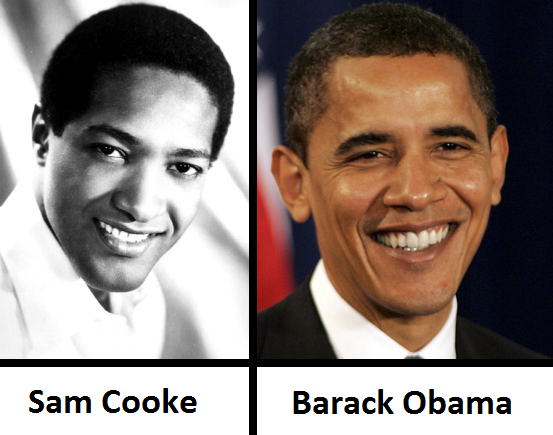
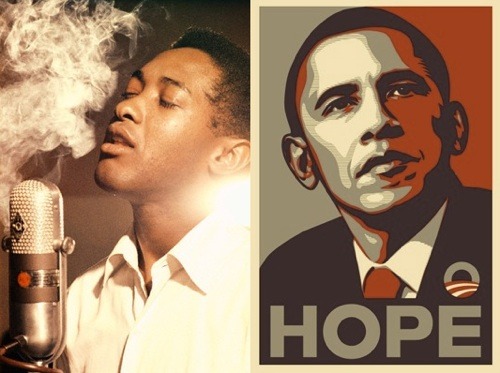
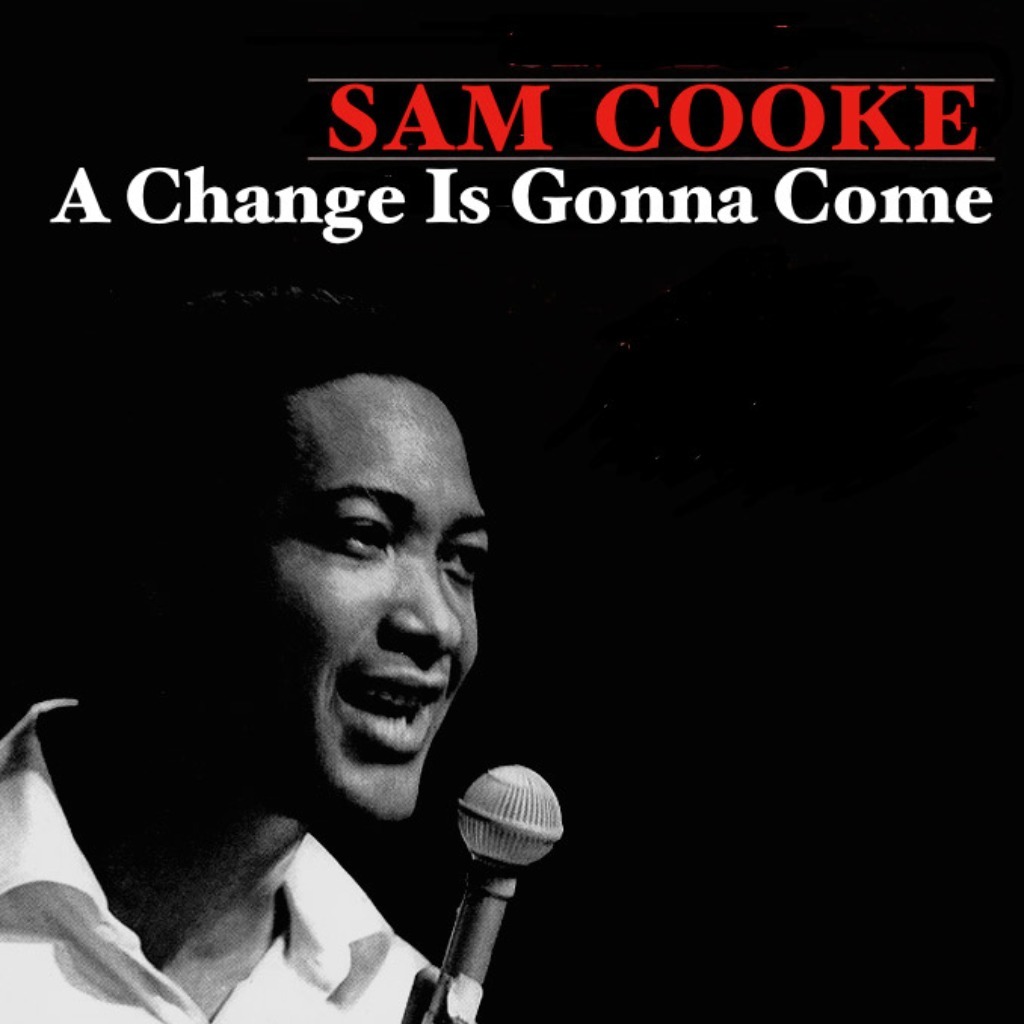
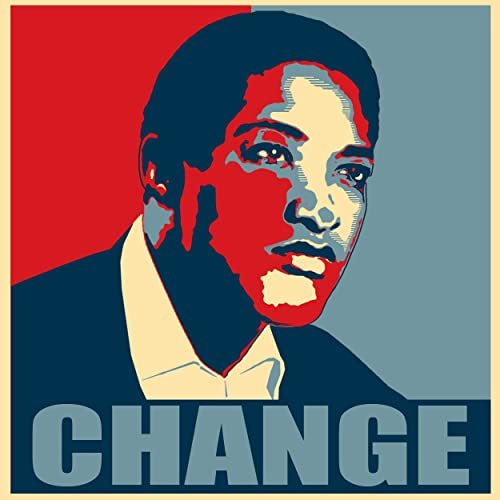
"A Change Is Gonna Come" is a song by American recording artistSam Cooke. It initially appeared on Cooke's album Ain't That Good News, released mid-February 1964by RCA Victor; a slightly edited version of the recording was released as a single on December 22, 1964. Produced by Hugo & Luigi and arranged and conducted by René Hall.
The song was inspired by various personal events in Cooke's life,
most prominently an event in which he and his entourage were turned
away from a whites-only motel in Louisiana. Cooke felt compelled to write a song that spoke to his struggle and of those around him, and that pertained to the Civil Rights Movement and African Americans. The song contains the refrain, "It's been a long time coming, but I know a change is gonna come."
Though only a modest hit for Cooke in comparison with his
previous singles, "A Change Is Gonna Come" is widely considered Cooke's
best composition and has been voted among the best songs ever released
by various publications. In 2007, the song was selected for preservation
in the Library of Congress, with the National Recording Registry deeming the song "culturally, historically, or aesthetically important.
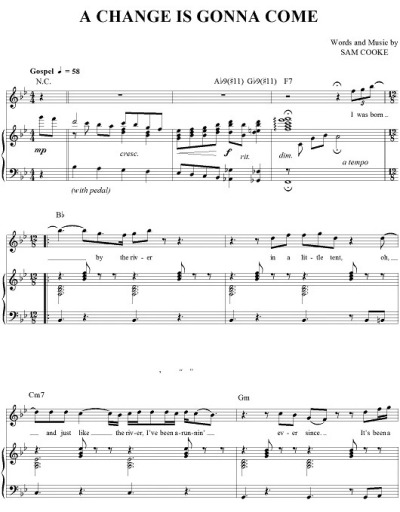
Lyrics: I was born by the river in a little tent Oh, and just like the river I’ve been a-runnin’ ever since. It’s been a long, a long time comin’, but I know, oh-oo-oh, a change gon’ come, oh yes, it will. It’s been too hard living but I’m afraid to die ‘Cause I don’t know what’s up there beyond the sky It’s been a long, a long time comin’, But I know, oh-oo-oh, A change gonna come, oh yes, it will. I go to the movie and I go downtown Somebody keep tellin’ me don’t hang around. It’s been a long, a long time coming, but I know, oh-oo-oh, A change gon’ come, oh yes, it will. Then I go, oh-oo-oh, to my brother and I say, brother, help me please. But he winds up knocking me back down on my knees, oh. There’ve been times that I thought I couldn’t last for long But now I think I’m able to carry on It’s been a long, a long time comin’, But I know, oh-oo-oh, a change gonna come, oh yes, it will.
Aretha Franklin
A Change Is Gonna Come 👇 🎥 👇 There's an old friend that I once heard say Something that touched my heart And it began this way
I was born by the river in a little tent Oh, and just like the river I’ve been a-runnin’ ever since. It’s been a long, a long time comin’, but I know, oh-oo-oh, a change gon’ come, oh yes, it will.
Background
On October 8, 1963, en route to Shreveport, Louisiana, Cooke called ahead to the Holiday Inn North to make reservations for his wife, Barbara, and himself, but when he and his group arrived, the desk clerk glanced nervously and explained there were no vacancies. While his brother Charles protested, Sam was furious, yelling to see the manager and refusing to leave until he received an answer. His wife nudged him, attempting to calm him down, telling him, "They'll kill you," to which he responded, "They ain't gonna kill me, because I'm Sam Cooke." When they eventually persuaded Cooke to leave, the group drove away calling out insults and blaring their horns. When they arrived at the Castle Motel on Sprague Street downtown, the police were waiting for them, arresting them for disturbing the peace.The New York Times ran a UPI report the next day, headlined "Negro Band Leader Held in Shreveport," but African-Americans were outraged. In 2019, then-Shreveport mayor Adrian Perkins apologized to Cooke's family for the event, and posthumously awarded Cooke the key to the city.
In addition, upon hearing Bob Dylan's "Blowin' in the Wind" in 1963, Cooke was greatly moved that such a poignant song about racism in America could come from someone who was not black, and was also ashamed he had not yet written something like that himself. However, his image and fears of losing his largely white fan base prevented him from doing so Cooke loved the song so much it was immediately incorporated into his repertoire.
Composition
Each verse is a different movement, with the horns carrying the first, the strings the second, and the timpani carrying the bridge.The French horn present in the recording was intended to convey a sense of melancholy.
Cooke incorporated his own personal experiences as well into the song, such as encounters in Memphis, Shreveport and Birmingham, to reflect the lives and struggles of all African-Americans of the time. The lines "I don't know what's up there / Beyond the sky" could refer to Cooke's doubt for absolute true justice on earth.[10] The final verse, in which Cooke pleads for his "brother" to help him, is a metaphor for what Alexander described as "the establishment". The verse continues, 'But he winds up knocking me / back down on my knees."
🎼 ♪♫ 🗣♪♫ ♫ 🎹♪♫ ♪♫ ♫🎷 ♪🎻♪♫🎺 ♪♫ ♫ 🥁♪♫ ♪♫🎸 ♫ ♪
Otis Redding
A Change Is Gonna Come 👇 📽️ 👇
Comments
Jake Thompson: Sucks that this song is relevant with its social message in 2020.
benjamin21:
The sheer fact that this song was written in 1964 and is still relevant
especially in 2020 tells you all you need to know. This has to stop.
Legacy
"A Change Is Gonna Come" became an anthem for the Civil Rights Movement, and is widely considered Cooke's best composition. Over the years, the song has garnered significant praise and, in 2005, was voted number 12 by representatives of the music industry and press in Rolling Stone magazine's 500 Greatest Songs of All Time, and voted number 3 in the webzine Pitchfork Media's The 200 Greatest Songs of the 60s. The song is also among three hundred songs deemed the most important ever recorded by National Public Radio (NPR) and was selected by the Library of Congress as one of twenty-five selected recordings to the National Recording Registry as of March 2007. Acclaimed Music ranked it as the 46th greatest song of all time, as well as the third best song of 1964. NPR called the song "one of the most important songs of the civil rights era."
In 2007, the song was selected for preservation in the Library of Congress, with the National Recording Registry deeming the song "culturally, historically, or aesthetically important."
In 2019, then-Shreveport mayor Adrian Perkins apologized to Cooke's family for the Shreveport event (see above under Background), and posthumously awarded Cooke the key to the city.
"A Change is Gonna Come" was featured in the Spike Lee-directed movie, Malcolm X, for the scene near the end in which Malcolm X (played by Denzel Washington) walks into the ballroom where he is about to be assassinated.
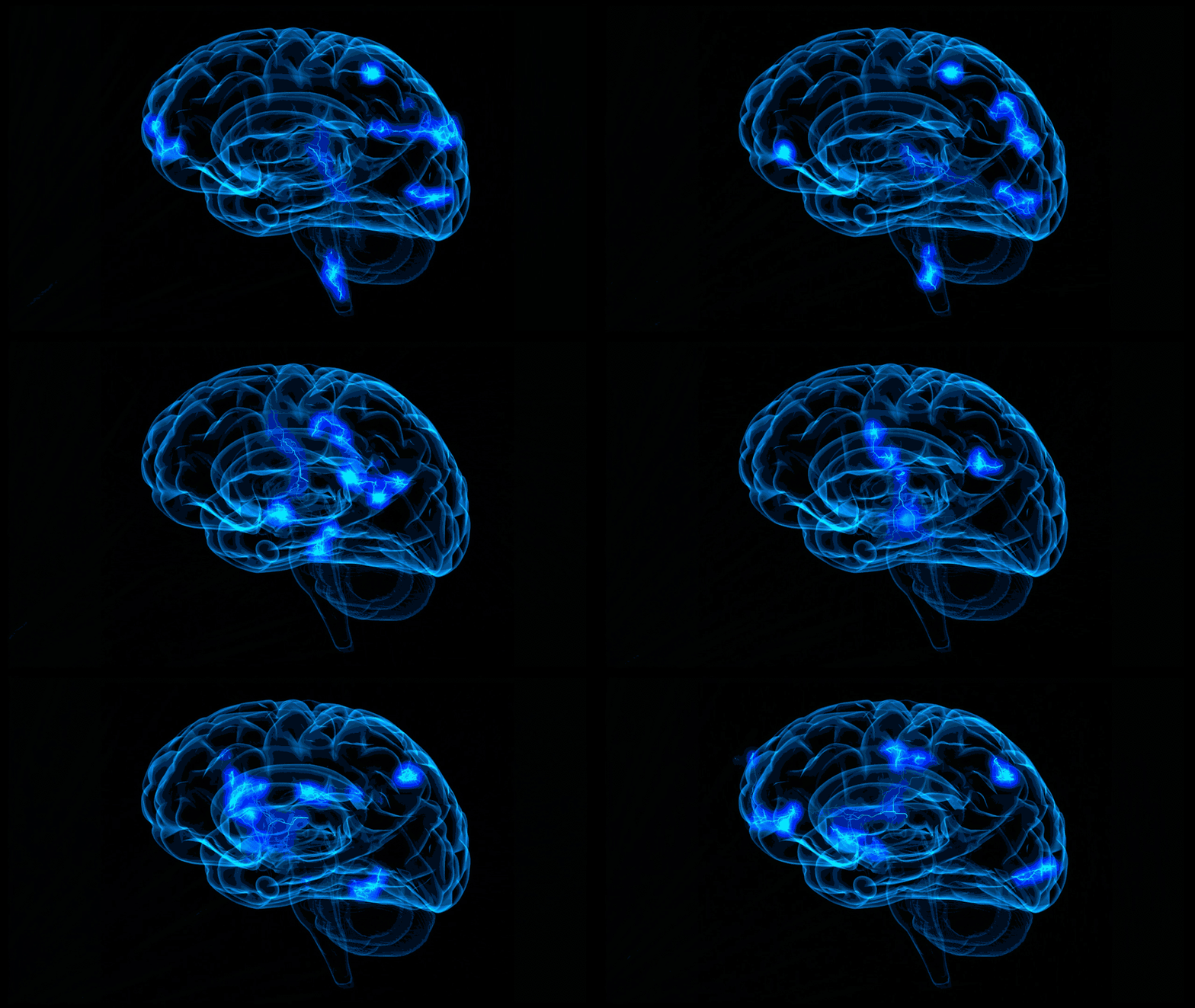
The human brain is a remarkable achievement in evolution.
Unfortunately, the brain activity that kept the human species alive for millions of years is the same brain activity that keeps us from achieving equality today.
Author, speaker and CEO, Valerie Alexander, explains how the human brain instinctively reacts when encountering the unexpected, like saber-toothed tigers or female tech execs, and proposes that if we have the courage to examine our own behavior when faced with the unfamiliar, we can take control of our expectations, and by doing so, change the world.
Valerie Alexander is the Founder and CEO of Goalkeeper Media, maker of communication bots to amplify happiness, including the Happy Couples Bot. Valerie has extensive experience in corporate and start-up arenas, but left Silicon Valley to find success as a screenwriter in Los Angeles. Valerie wrote, produced and directed more than 50 shorts, commercials and PSAs, including the award-winning, anti-bullying short film, “Ballpark Bullies”, and the groundbreaking commercial, “Say I Do”, in support of marriage equality. As author of the Amazon #1 seller, “Happiness as a Second Language”, and a nationally known speaker on happiness in the workplace and the advancement of women, Valerie is a recognized expert on the topics.
In addition to “Happiness as a Second Language”, Valerie’s books include “Success as a Second Language” and “How Women Can Succeed in the Workplace (Despite Having “Female Brains)”.
She holds an honors certificate in the Science of Happiness from the Greater Good Science This talk was given at a TEDx event using the TED conference format but independently organized by a local community.
Just when you thought
things couldn’t get any worse: It’s Friday the 13th. For the
superstitious among us - or for anybody with paraskevidekatriaphobia,
the fear this unlucky
date in particular - that’s really bad news. But here’s the thing:
Friday the 13ths are super commonplace. Actually, Friday the 13th is one
of the most common dates on the entire calendar.
It’s
rare that you won’t have a Friday the 13th mar your yearly schedule.
The longest that the Gregorian calendar can ever go between Friday the
13ths is 14 months. That will be the case in 2018, when after a Friday
the 13th in July, there won’t be another until September of 2019. This
instance occurs whenever a normal year starts on a Tuesday, or when a leap year starts on a Saturday.
The
shortest time between Friday the 13ths occurs during normal years that
start on a Thursday, like 2015 or 2026. When that happens, February and
March have back-to-back Friday the 13ths. The maximum number of Friday
the 13ths possible in a single year is three,
which happens in February, March, and November whenever a normal year
starts on Thursday. This threepeat also happens whenever a leap year
starts on a Sunday, like in 2012 (the year the world was supposed to end, according to superstition).
The
real bummer for paraskevidekatriaphobics, though, is that Friday that
13th is actually more common than almost all the other possible day and
date combinations. The epoch for the Gregorian calendar is 400 years -
after that, the whole thing repeats itself. There are 146,097 days in
that epoch, and of those days, according to a detailed analysis,
there are 28 day and date combinations that appear slightly more often
than the others. One of those is Friday the 13th. Not just that, but the
13th is slightly, slightly more likely to fall on a Friday than any other day.
(If you’re wondering, Wednesday the 31st is the least common day and date combo.)
In other words, Friday the 13th is an extremely common date, so the world must just be full of bad luck.
Deal with it.
Here are the next Friday the 13ths, just for reference.
😎
Friday, 13 September 2024 Friday, 13 December 2024 😎 Friday, 13 June 2025
😎
Friday, 13 February 2026 Friday, 13 March 2026 Friday, 13 November 2026 😎 Friday, 13 August 2027 😎 Friday, October 13, 2028 😎 Friday, April 13, 2029 Friday, July 13, 2029
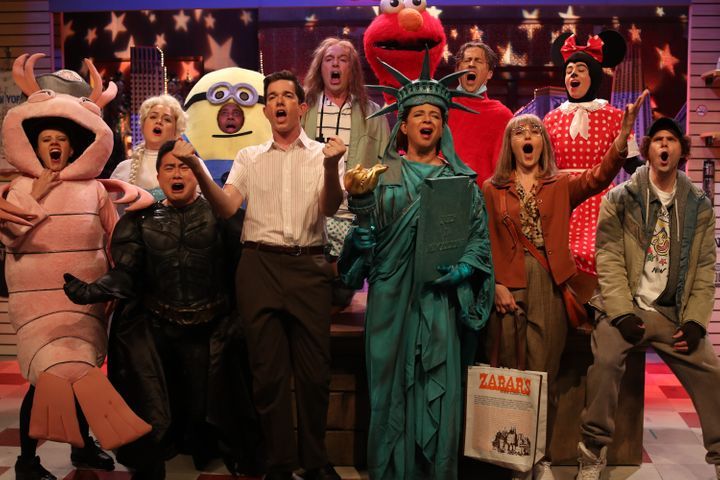
New York City never looked more alive than during an all-star musical tribute on this weekend’s “Saturday Night Live.”
Returning as host for a fourth time in four seasons, John Mulaney expanded his NYC-themed theatrical universe to showcase a Times Square souvenir shop in all its gritty and unheralded glory, following in the footsteps of the now-iconic sketches “Diner Lobster,” “Bodega Bathroom” and “Airport Sushi.”
This time around, however, the eight-and-a-half-minute sketch titled “New York City Musical” packed an extra punch after President Donald Trump labeled the city as a “ghost town” during the final presidential debate in October.
While the costumed characters that populate the typically bustling tourist district have certainly fallen on some hard times during the COVID-19 pandemic, they proved resilient as ever in a song-and-dance number.
It all began when a customer played by Pete Davidson asked to try on a used pair of “I ❤️NY” underwear much to Mulaney’s shop clerk’s surprise, as the fitting room happened to be in “the back of the store where the people of Times Square habitate.”
Cue Kenan Thompson as a “Times Square Minion” launching into a rendition of the Broadway classic “Luck Be a Lady” called “Mascots Be Shady,” in which he’s joined by a downtrodden Elsa from “Frozen” and a singing Minnie Mouse.
Not deterred by the display, however, Davidson, nearly breaking character, said he still wanted to make the purchase, joking, “I love New York, and I want my modest bulge to show that.”
So out came a can-can line of characters to the tune of “One” from “A Chorus Line,” and then Kate McKinnon as Shrimp Louie, the Bubba Gump Shrimp mascot, who delivered a devastating “Send in the Clowns” parody, “Send in the Crowds.”
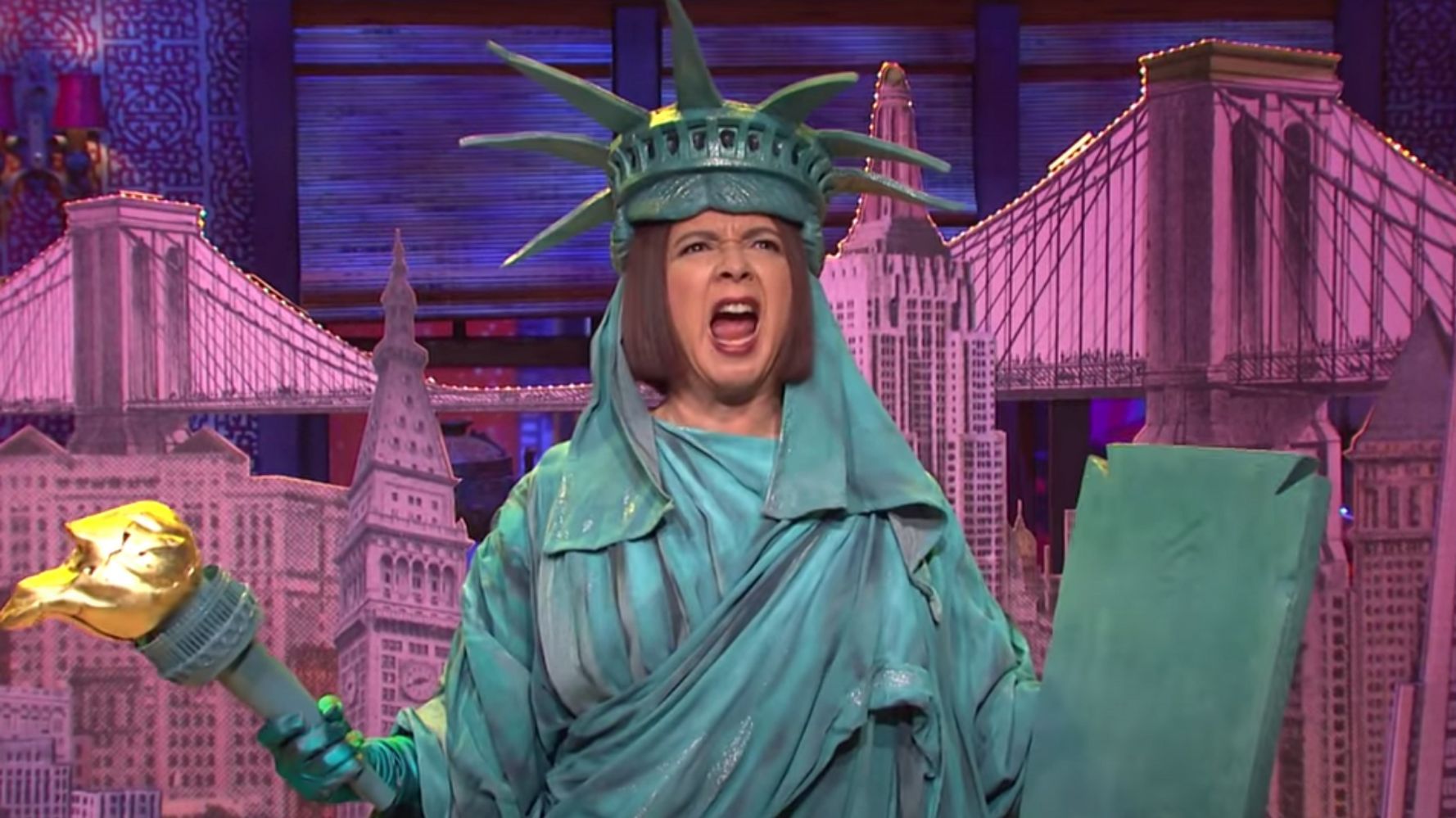
But the real show stopper was Maya Rudolph as a beleaguered Lady Liberty.
“Fools, you don’t give up on my city that easy,”
She said before performing a reworked version of Stephen Sondheim’s “I’m Still Here.”
“I lived through Times Square filled with whores and now they’re on ‘Sex & The City’ tours.
My first apartment was a drawer, but I’m here.”
Maya Rudolph singing Sondheim's "I'm Still Here" but with changed lyrics that included a Bethenny Frankel reference, all while dressed as the Statue of Liberty.
After a brief appearance from Chloe Fineman as a woman from Westchester with “visible” COVID-19 signs, Mulaney explained that the underpants are ultimately a symbol for a divided America.
“Sure, these underpants are riddled with ugliness and disease, but they still stand for something: love,” he said, before launching into an election-themed final number. “That’s why I didn’t want to sell them; because they give me hope.”












 😳