Joy Reid, MSNBC host of AM Joy joined BuzzFeed’s Another Round podcast to talk media literacy, Elmo and… well, what a time to be alive, you know? She also shared her experience of President Trump’s inauguration, President Obama’s media legacy and gave us some great advice for keeping your eyes on the facts.
Facts are having a rough time at the moment.
In a media environment that makes it hard to know what is true, here are some best practices from Joy Reid and the Another Round team to keep you awake and informed:
1. Verify. Clarify.
“I’m big on multiple sources of information. You can’t just believe one source that you read. You need to read backup sources.” Joy says that If you read something and it checks out with *multiple* reputable news sources, then it’s probably true.
2. Know your sources.
For an added layer of analysis, take into consideration where on the liberal-conservative bias spectrum
your news sources lean. Understanding the orientation of your sources
for information can help you to understand how stories are framed. Try
to read a wide range of work so you can understand more than one side of an issue.
3. Inform yourself with the work of investigative journalists.
“Investigative journalists are the people to follow on Twitter, to follow on social media and read right now,” Joy says. “Because they’re not getting info from a press conference with Sean Spicer. They’re digging.” For starters, you can read Nikole Hannah-Jones’ incredible piece from June 2016, BuzzFeed News’ own investigation into #fakenews, or this ProPublica investigation into the temp economy.
4. Get a handle on breaking news.
If you find yourself near a TV or follow lots of news on Twitter, it may seem like the sky is falling. All. The. Time. That’s a lot for anyone’s blood pressure, so try to develop a process for responsibly consuming news when it breaks to minimize contributing to the social media chaos. And follow On The Media’s excellent advice so you don’t move too fast and then feel like a dope as news is breaking.
5. Tweet responsibly. Don’t just retweet unverified information or things you haven’t even read. Know what information you are sharing to avoid helping to spread misinformation. And remember: once untrue information goes viral it’s hard to undo the false message.
6. Know your blind spots and biases, fact check, then trust your judgment.
“At a certain point, people who talk about authoritarianism are going to sound crazy,” says Joy. “You’re going start to feel crazy, there’s a gaslighting that starts to happen in these regimes where you start to think you’re going insane. The bad things you see are really happening. Don’t panic, but believe it.” But as these things happen, make sure you follow up with a fact check.
7. Study up on current authoritarian regimes.
I.e., Russia. “The regime that we should most be studying and American should be reading up on is the current authoritarian regime in Russia,“ says Joy. Because Trump, in a lot of ways is emulating Vladimir Putin, who came back to power in 2011—who, oddly enough— by throwing a sex tape out on a rival of the then-president of Russia.”
8. Consider the relationship between media, power and politics. Joy says that now, more than ever, sources and leaks within the
government will be important for a free press. “Having relationships is
not the way that you’re going to get the facts and information,” she
says. “ You need sources, you need leaks, people to talk internally.
This is going to become very dangerous for people in the government.”
Start with the free pdf of the Hannah Arendt book above!
9. Twitter *can* be a great source for news. But you have to do the work of curating the information you consume, such as making customized twitter lists.
“If you follow good people, you’ll get good stuff,” Joy says. “It’s
easy to economize your reading,” she says, adding that she finds new
people to follow by looking at the feeds of people she already trusts.
This list of political journalists to follow may be a good place to start.
10. But Facebook has some work to do, so be wary of your feeds.
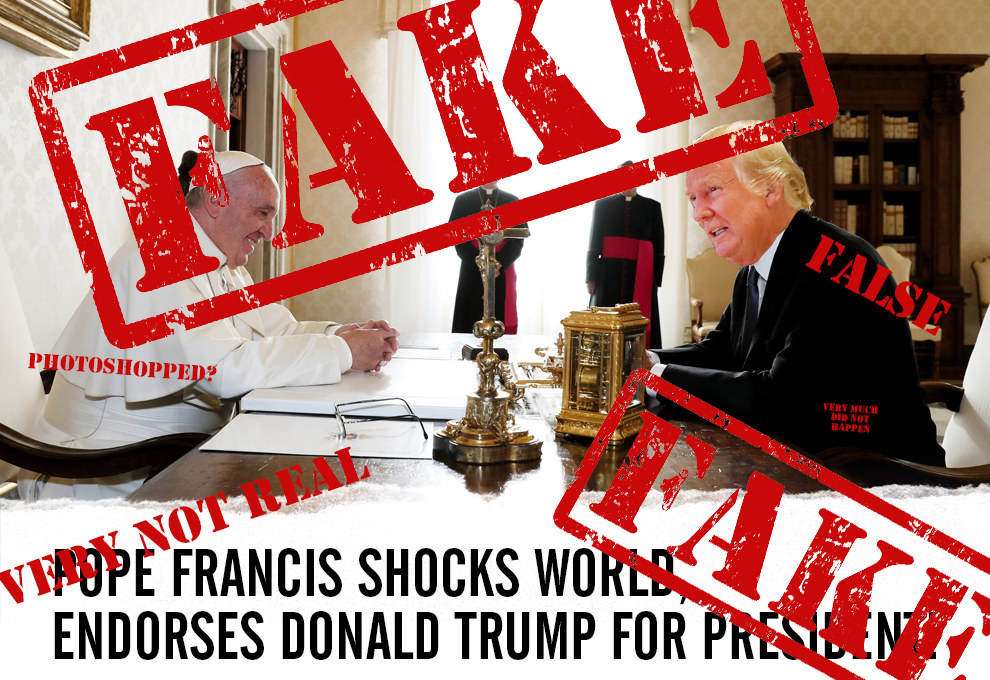
"people who cite Facebook as a major source of news are more likely to view fake news headlines as accurate"
Most Americans Who See Fake News Believe It, New Survey Says An exclusive Ipsos poll conducted for BuzzFeed News found that 75% of American adults who were familiar with a fake news headline
Try to have a well-rounded media diet to help keep some perspective. No
one outlet is going to tell you everything you need to know, so reach
beyond your circle as much as you can. And take breaks! Be sure to give
yourself respite from the endless stream of information by taking time
to relax, kick it with some movies, binge watch your fave show…listen to
fun podcasts or maybe even go outside. It’s okay to take a break.
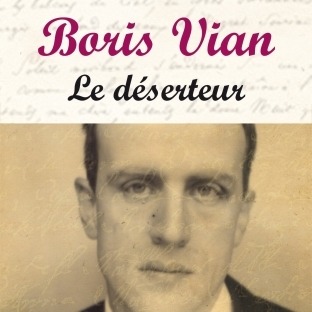
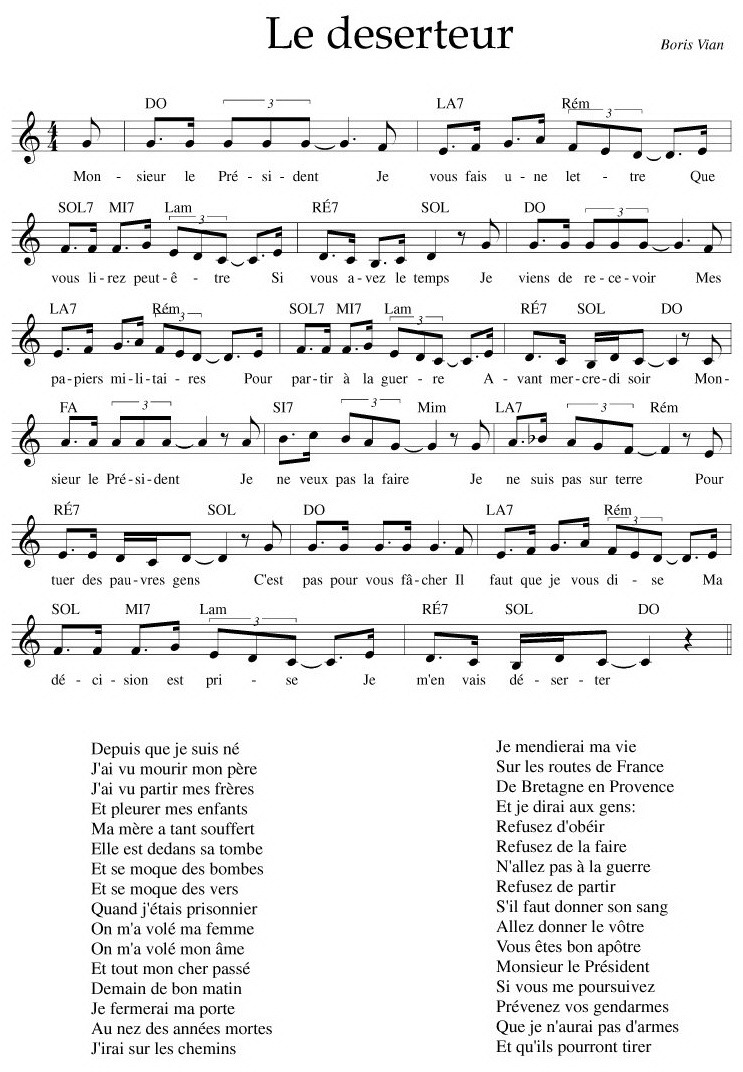
Le Déserteur (The Deserter) par (by) Boris Vian et (and) Harold Berg
Boris Vian (1920-1959), a French
engineer by education, gifted with amazing talents, was at any one time a
poet, a novelist, a musician, a jazz trumpeter, a singer, an actor; he
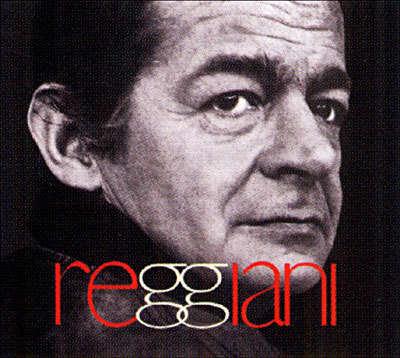
also was a pacifist, an anti-power genius with une sensibilité à fleur de peau. He is remembered for tantalizing finesse, sensitivity, creativity, and originality. From L'Ecume des Jours and L'Arrache-cœur, to L'Automne à Pékin, Boris Vian exemplifies humaneness and solidarity. To listen to a beautiful rendition of Le Déserteur, try Serge Reggiani or Mouloudji, two famous anti-militarist singers.
For the purists and other aficionados, Joan Baez and Peter, Paul and Mary have had a
slightly modified version of the song in their repertoire, that was
originally interpreted by Mouloudji (1922-1994) in 1954. Peter sang it
in solo and in French. The song was censored/banned in France during the
Indochina War. It is also said that the last two verses of the song
originally read, "que je serai en arme/et que je sais tirer" (that I'll
be armed/and I know how to shoot) but that it was changed to reflect the
pacifist and anti-militarist character of the song.
Swans' English translation of Le Déserteur: Gilles d'Aymery & Jan Baughman.
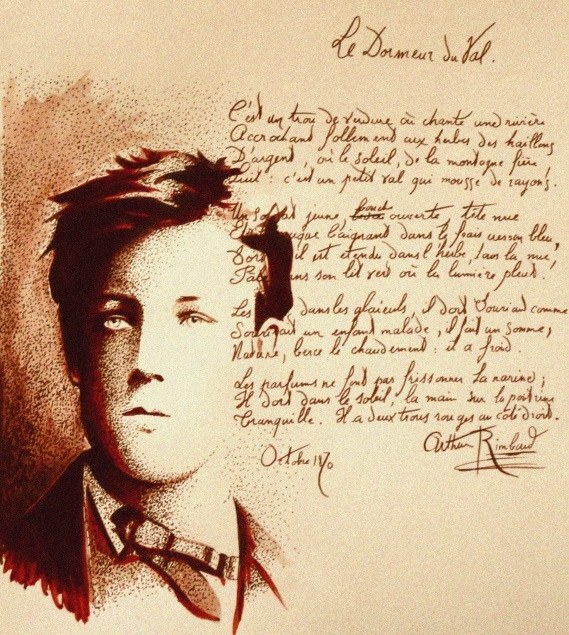
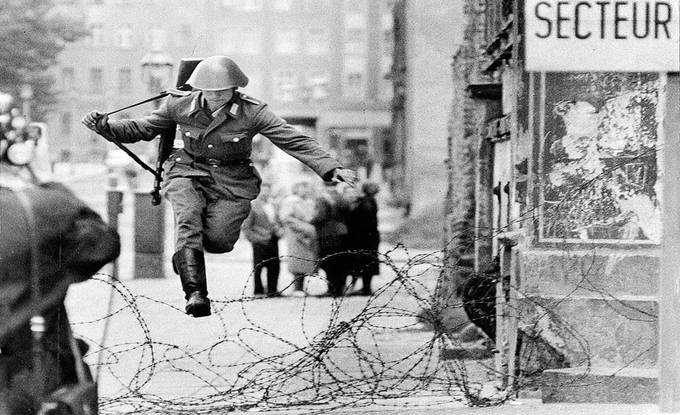
The poem, "Dormeur du Val" by Arthur Rimbaud and the song "Le Déserteur", written by Boris Vian and sung by Serge Reggiani, make a strong pacifist statement on the ravages of war.
Boris Vian- Le Déserteur
Monsieur
le Président
Depuis que je
suis né
Je mendierai ma
vie
Je vous fais
une lettre
J'ai vu mourir mon
père
Sur les routes de
France
Que vous lirez
peut-être
J'ai vu partir mes
frères
De Bretagne en
Provence
Si vous avez
le temps
Et pleurer mes
enfants
Et je dirai aux gens:
Je viens de
recevoir
Ma mère a tant
souffert
Refusez d'obéir
Mes papiers
militaires
Elle est dedans sa
tombe
Refusez de la faire
Pour partir à
la guerre
Et se moque des
bombes
N'allez pas à la
guerre
Avant mercredi
soir
Et se moque des vers
Refusez de partir
Monsieur le
Président
Quand j'étais
prisonnier
S'il faut donner son
sang
Je ne veux pas
la faire
On m'a volé ma femme
Allez donner le vôtre
Je ne suis pas
sur terre
On m'a volé mon âme
Vous êtes bon apôtre
Pour tuer des
pauvres gens
Et tout mon cher
passé
Monsieur le Président
C'est pas pour
vous fâcher
Demain de bon matin
Si vous me poursuivez
Il faut que je
vous dise
Je fermerai ma porte
Prévenez vos
gendarmes
Ma décision
est prise
Au nez des années
mortes
Que je n'aurai pas
d'armes
Je m'en vais
déserter
J'irai sur les
chemins
Et qu'ils pourront
tirer
The
Deserter
English Translation
Mr
President,
Since I was born
I will beg for my life
I am writing you a letter
I saw my father die
On the roads of France
That you will read, perhaps
I saw my brothers leave
From Brittany to Provence
If you have the time
And my children cry
And I will say to people
I've just received
My mother has suffered so much
Refuse to obey
My military papers
That she is in her grave
Refuse to do it
To go to the war
And she mocks bombs
Don't go to war
Before Wednesday night.
And she mocks their targets
Refuse to go
Mr President
When I was a prisoner
If you must give your blood
I don't want to do that
They stole my wife from me
Go to give yours
I am not on this earth
They stole my soul from me
You are a good apostle
To kill these poor people
And my treasured Past
Mr President
It's not to make you angry
Early tomorrow morning
If you chase me
I must tell you
I will shut my door
Tell your policemen
My decision is made
on these dead years
That I am not armed
I am going to desert
I will take to the road.
And that they can shoot
"Le Dormeur du Val" Arthur Rimbaud
Ce n'est qu'au dernier vers que Rimbaud évoque explicitement le décès du soldat : les deux trous rouges, qui sont les marques de la baïonnette ou de l'arme à feu, rappellent le « trou de verdure » du vers 1, au sens où celui-ci serait un tombeau, on peut donc dire que dès le début du poème, il y a une préparation à cette triste réalité. À ce propos on remarque que certaines expressions contribuent à amorcer cette thématique de la mort (vers 6) « la nuque baignant dans le frais cresson bleu ». C'est un sommeil éternel. La description du visage annonce la morbidité. « il a froid », le corps est déjà sans vie. Au fil du poème se crée une impression de malaise comme au vers 12 « Les parfums ne font pas frissonner sa narine » qui montre qu'il ne respire plus. Enfin, Rimbaud a placé un rejet au dernier vers du mot « Tranquille ». Allitération en « r » suggère initialement le rêve, le ronflement du dormeur mais finalement le râle et la mort
Le Dormeur du val est un sonnet en alexandrins d'Arthur Rimbaud.
“Le Dormeur du Val” d’Arthur
Rimbaud
English
Translation of the French Poem
C’est un trou
de verdure, où chante une rivière
It’s a green hollow,
where a river is singing
Accrochant
follement aux herbes des haillons
Crazily hanging on
the grasses rags
D’argent; où
le soleil, de la montagne fière,
Of silver; where the
sun, from the proud mountain,
Luit: c’est un
petit val qui mousse de rayons.
Is shinning: it’s a
little valley bubbling with sunlight.
Un soldat
jeune, bouche ouverte, tête nue,
A young soldier, his
mouth open, his head bare,
Et la nuque
baignant dans le frais cresson bleu,
And the nape of his
neck bathing in cool blue watercress,
Dort; il est
étendu dans l’herbe, sous la nue,
Is sleeping; he is
stretched out on the grass, under the skies,
Pâle dans son
lit vert où la lumière pleut.
Pale in his green bed
where the light falls like rain.
Les pieds dans
les glaïeuls, il dort. Souriant comme
Feet in the
gladiolas, he is sleeping.Smiling like
Sourirait un
enfant malade, il fait un somme:
A sick child would
smile, he takes a nap:
Nature,
berce-le chaudement: il a froid.
Nature, rock him
warmly: he is cold.
Les parfums ne
font pas frissonner sa narine;
Fragrances do not
make his nostrils quiver;
Il dort dans
le soleil, la main sur sa poitrine,
He sleeps in the sun,
hand on the breast,
Tranquille. Il
a deux trous rouges au côté droit.
Peacefully. He has
two red holes in his right side.
This poem, written by the 16-year old Rimbaud,
is partially in the classic form but already announces his future
avant-garde poems. When he wrote this piece, France was at war with
Prussia, and Rimbaud was frequently running away from home and traveling
by foot.
It is therefore possible that the scene described in the poem is a real scene.
For the purists and other aficionados, Joan Baez and Peter, Paul and Mary have had a
slightly modified version of the song in their repertoire, that was
originally interpreted by Mouloudji (1922-1994) in 1954. Peter sang it
in solo and in French.
Marcel
André Mouloudji (16 September 1922 – 14 June 1994) was a French singer and actor who was born in Paris and died in Neuilly-sur-Seine. He sang Boris Vian and Jacques Prévert. Mouloudji was born to Kabyle Saïd Mouloudji and Breton Eugénie Roux. Mouloudji had two children: Grégory Mouloudji with Lilia Lejpune and Annabelle Mouloudji with Nicolle Tessier. Chanteur, auteur-compositeur-interprète, peintre et acteur français d'origine algérienne par son père.