Search This Blog

Tuesday, June 7, 2016

Watering Planters Using Soda Bottles

https://68.media.tumblr.com/50ed28739bf68e53105a6843c92eedb8/tumblr_otyjgcDNIy1uoh1aio1_1280.jpg
The Difference Between Direct Watering Planters
& Using Soda Bottles?
Less Water

Soda Bottle Watering Sistem
Make a Sustainable Drip Water Irrigation


https://68.media.tumblr.com/bbe5e0f42c37e4142f484613a25e1831/tumblr_otyjgcDNIy1uoh1aio2_1280.jpg
How to Make a Drip Irrigator from a Plastic Bottle
Three Methods:

Making a Slow-Release IrrigatorMaking a Quick-Release IrrigatorMaking an Adjustable Irrigator

Some plants require frequent watering that not everyone has the time for. If you find yourself with lots of thirsty plants and not enough time to water them in, you may want to set up a drip irrigation system. Buying pre-made ones from the store can get expensive, but luckily it is fairly cheap and easy to make one at home using plastic bottles. Best of all, you will be helping the environment by recycling plastic bottles.


Method 1
Making a Slow-Release Irrigator

1  Get a plastic bottle. A 2-liter bottle will work the best, but you can use a smaller one for a smaller plant. Clean the bottle thoroughly with water, and remove the label.

2  Poke 4 to 5 holes in the cap. Remove the cap and set it down on a piece of scrap wood. Use a drill or a nail and hammer to poke several holes into it. The more holes you poke, the faster the water will flow out. Place the cap back onto the bottle when you are done.
Avoid making the holes too small, or they may get clogged up by the soil.

3  Cut the bottom off of the bottle. You can do this with a serrated knife or a pair of sharp scissors. Plan on cutting the bottom inch (2.54 centimeters) off of the bottle.[3] If your soda bottle has a molded line around the bottom, you can use that as a guide instead.

4  Dig a hole into the soil. It needs to be deep enough so that you can fit your bottle halfway into it.[4] Plan on making the hole about 4 to 6 inches (10.16 to 15.24 centimeters) away from the plant's stem. If you are digging next to an established plant, be careful not to cut through the roots.

5  Place the bottle into the hole, cap-side-down. If you have not already, screw the cap back onto the bottle. Flip the bottle upside down, and insert it cap-side-down into the hole. Gently pat the soil down around the bottle.
You can insert the bottle deeper into the soil, but you will need at least 1 inch (2.54 centimeters) sticking out of the soil. This will prevent soil from getting into the water.

6  Fill the bottle with water, and invert the bottom of the bottle so it rests on the water, ready to catch any debris that would otherwise sink and clog the system. Leave your drip irrigation to do its work. Make as many drip irrigation as you need for all of your plants.


Method 2

Making a Quick-Release Irrigator

1  Get a plastic bottle. A 2-liter soda bottle will work the best, but if you are only watering a small plant, you may be able to use a smaller one. Clean the bottle thoroughly inside-out with water and remove the label.

2  Poke holes in the sides of the bottle. Focus on making the holes in the bottom two-thirds of the bottle. You can make as many or as few holes as you want; the more you make, the faster the water will flow. If you are only going to be watering one plant, place the holes on the same side of the bottle.
Make the holes using a nail or a metal skewer.
You may have to heat the nail or skewer up over a flame first.

3  Poke holes in the bottom of the bottle. This is very important as it will allow the water from collecting in the bottom and growing stagnant. If your bottle has a segmented bottom (ie: most 2-liter soda bottles), you will need to poke a hole in each segment.
The bottom of most bottles is typically made from thicker plastic. You will need to use a drill or a hot nail to do this.

4  Dig a hole into the soil next to the plant. The hole needs to be deep enough to insert the bottle about two-thirds of the way, or where the straight walls start to curve into a dome.

5  Insert the bottle into the soil. If you places the holes on one side of the bottle, rotate the bottle until the holes face the plant. Gently pat the soil around the bottle.

6  Fill the bottle with water. Remove the cap first, then use a hose to fill the bottle with water; you can also insert a funnel into the neck to make filling easier. Leave the cap off, otherwise the water won't flow out.
If the water is flowing out too fast, you can put the cap on loosely. The tighter you close it, the slower the water will flow out.[9]
You can also cut the top, domed portion of the bottle off, invert it, and use it like a funnel.


Method 3

Making an Adjustable Irrigator


1  Create a hole in the side of your bottle. The hole needs to be big enough to fit the rubber gasket and the flexible aquarium tubing. You can create the hole using a drill and drill bit or with a nail.[10]
The hole needs to be about 2 to 3 inches (5.08 to 7.62 centimeters) up from the bottom of the bottle.
If you are using a nail, heat it up over a flame first, then make the hole. Widen the hole with a craft blade.

2  Cut off a short piece of flexible aquarium tubing. The tubing needs to be only 2 to 3 inches (5.08 to 7.62 centimeters) long. You will be using this to attach the aquarium fitting to the bottle.

3  Fit a small rubber gasket around the tubing. The gasket needs to be big enough to fit into the hole, but small enough to fit around the tubing. If the gasket is too big for the tubing, you can cut a segment out of it to make it smaller, then wrap it around the tubing.

4  Insert the gasket into the hole, then adjust the tubing. Push the assembled gasket and tubing into the hole. Next, push the tubing into the hole that that about 1 inch (2.54 centimeters) of it is inside the bottle. The rest of the tubing should be sticking out of the bottle.

5  Seal the area around the gasket and tubing. Purchase a small tube of sealant meant for fixing aquariums, or other leaks. Pipe a thin band around the joint between the gasket and the bottle. If you need to, use a popsicle stick or a toothpick to smooth the sealant down. Allow the sealant to cure.
You may need to seal the area between the gasket and the tubing itself.

6  Insert an aquarium fitting into the other end of the tubing. You can purchase aquarium fittings in aquarium supply stores and online. They look a little like a faucet, with an opening on each end, and a knob on top. One of the opens is usually pointed. You want to insert the non-pointed opening into the tubing.

7  Cut the top part off of the bottle, if desired. You don't really have to do this, but it will make filling the bottle easier. You can also cut it off only partway so that it's still attached to the rest of the bottle by a "hinge." This will allow you to partially close the opening.

8  Add some hanging holes to the top, cut edge. Use a hole puncher to punch 3 to 4 holes along the top, cut edge of the bottle. Make the holes straight across from each other so that they form a triangle (for three holes) or a square (for four holes).
If you want to stand the irrigator on a table above your plant, fill the bottom inch (2.54 centimeters) or so with pebbles. This will help keep it stable.

9  Thread wire or sturdy string through each of the holes. Cut 3 to 4 long pieces of thin wire or strong string. Thread and tie each string to a punched hole. Gather all of the strings together, then tie them into a knot at the other end.
Skip this step if you are standing the irrigator up.

10  Set the irrigator up an fill the bottle with water. Hang the irrigator from a hook above your plant. Close the knob on the aquarium fitting first so that no water leaks out. Fill the bottle with water.
You can also stand the irrigator on a table or wall above your plant instead.

11  Open the knob and make any adjustments, if needed. If the water won't reach the plant because something is in the way, cut another piece of aquarium tubing. Secure one end to the pointed tip of the aquarium fitting, and set the other end on top of the soil, right next to the plant.

  • The more you unscrew the knot, the faster the water will flow.
  • The tighter you screw the knob, the slower the water will flow.


http://www.wikihow.com/Make-a-Drip-Irrigator-from-a-Plastic-Bottle


https://68.media.tumblr.com/50ed28739bf68e53105a6843c92eedb8/tumblr_otyjgcDNIy1uoh1aio5_1280.jpg
https://68.media.tumblr.com/560607fd5724e361aae2ee7bb4c01e9e/tumblr_op3kfa5tY91uoh1aio1_1280.gif

Monday, June 6, 2016

Meet the Transforming Mobile Homes

This is a Luxury Home.
And a Truck
https://66.media.tumblr.com/ff493d2e1fd458495f39b65acd4bcece/tumblr_inline_o8j3tcaNOP1sqnfhp_540.jpg

Meet the Transforming Mobile Homes


This is an incredible video of a truck that can transform into a full-size house or building structure. The video was created by Dahir Insaat, and is unfortunately only a concept.
While this particular demonstration seems a bit far-fetched considering the house would have to be completely devoid of furnishings to fold correctly, the idea itself is very interesting. There are increasing amounts of people who want to own a home without the burden of possessing a large house on permanent real estate. This has led to the explosive tiny house movement where people not only seek to reside in smaller homes, but many also choose for their homes to be mobile.

http://blitzlift.com/amazing-truck-can-transform-full-size-house/


https://www.facebook.com/sharer/sharer.php?u=https%3A%2F%2Fwww.facebook.com%2Ffuturism%2Fvideos%2F577857875726749%2F&display=popup&ref=plugin&src=video


Sunday, June 5, 2016

Glass Harp Orchestra

Für Elise by Ludwig Van Beethoven
Played on Glass Harp 
by Robert Tiso

New Album "CRYSTAL SOUND" is now available.
For info visit http://www.cdbaby.com/cd/roberttiso2

The score was not published until 1867, 40 years after the composer's death. The discoverer of the piece, Ludwig Nohl, affirmed that the original autographed manuscript was dated 27 April. This manuscript has been lost.

It is not certain who "Elise" was. Max Unger suggested that Ludwig Nohl may have transcribed the title incorrectly and the original work may have been named "Für Therese", a reference to Therese Malfatti von Rohrenbach zu Dezza (1792--1851). She was a friend and student of Beethoven's to whom he proposed in 1810, though she turned him down to marry the Austrian nobleman and state official Wilhelm von Droßdik in 1816. According to a recent study by Klaus Martin Kopitz, there is flimsy evidence that the piece was written for the German soprano singer Elisabeth Röckel (1793--1883), later the wife of Johann Nepomuk Hummel. "Elise", as she was called by a parish priest (she always called herself "Betty"), had been a friend of Beethoven's since 1808. In the meantime it has been proven that Rudolf Schachner, who in 1851 inherited Therese von Droßdik's musical scores, was a relative of Babette Bredl who in 1865 let Nohl copy the autograph in her possession. Thus Kopitz's hypothesis is definitely refuted.

The pianist and musicologist Luca Chiantore argued in his doctoral thesis and his recent book "Beethoven al piano" that Beethoven might not have been the person who gave the piece the form that we know today. Chiantore suggested that the original signed manuscript, upon which Ludwig Nohl claimed to base his transcription, may never have existed. On the other hand, the musicologist Barry Cooper stated, in a 1984 essay in the Musical Times, that one of two surviving sketches closely resembles the published version. It has also been suggested that Elise simply refers to a term at this point in history which simply meant 'sweetheart', therefore suggesting this piece was written for Elise (Theresa Malfatti)


Ave Maria by Franz Schubert
played on glass harp by Robert Tiso.

This song is No. 6 of Schubert's Liederzyklus vom Fräulein vom See (Song-cycle from 'The Lady of the Lake'), composed in 1825. It is listed as Ellens Gesang. III. Hymne an die Jungfrau (Ellen's song, III. Hymn to the Virgin), and it is often referred to as Elles dritter Gesang (Ellen's third song).

The original source is The Lady of the Lake by Sir Walter Scott ( 1771-1832), in the German translation (published 1819) by Adam Storck (1780-1822) in 1819 (the name Adam Storck is a pseudonym for Philipp Adam). The seven songs that form the song-cycle were published in 1826 as Schubert's Op. 52, with both Storck's German texts and the original English texts by Scott, under the title Sieben Gesange aus Walter Scotts Fräulein vom See (Seven Songs from Walter Scott's Lady of the Lake).

Often sung in Latin with an adaptation of the Roman Catholic Ave Maria text, this song is often referred to as "Schubert's Ave Maria", popular as both a wedding song and a funeral song.


Bolero Glass Harp Orchestra

Robert Tiso plays Bolero by M. Ravel on Glass Harp.
Recorded at "Porto Banana" - Italy by Robert Tiso.
Mixed and mastered at "La Sauna" - Italy by Giuio Ragno Favero.

Saturday, June 4, 2016

How Air Traffic Between Europe And North America Looks

How Air Traffic
Between Europe And North America Looks
http://66.media.tumblr.com/eea7f3319b44632d182087062bfd9513/tumblr_o8icnsEjGf1tvd7rmo1_r1_400.gif
It Is Absolutely Mind-Boggling... 


An incredible new video, created by NATS (the National Air Traffic Services), tracks every single aircraft which flew through the five major air spaces over the North Atlantic during a 24 hour period in August of last year, condensing the movements to two minutes. And the resulting picture simply boggles the mind!

Every day, between two and three thousand airplanes fly between Canada, the United States and Europe. The sheer number of flights requires that air control systems maintain complex routes, so that planes flying between North America And Europe don't crash into one another all the time.

The visualization you are about to see shows 2,524 flights crossing the North Atlantic. Of that total, 1,273 pass through the Shanwick Oceanic Control Area. At the busiest times, traffic can peak at 1,500 flights a day in the summer. Paul Beauchamp, NATS spokesman said:

Airspace is an incredibly valuable asset -- just as important as the rail, road and utility networks that everyone relies on every day. However, most people aren't aware of the work that goes into managing and safely guiding aircraft through our skies.

Well, here is a chance for us to plug the knowledge gap.

Story at http://www.viralspell.com/air-traffic....
x

Thursday, June 2, 2016

These Glass Speakers Work Like Magic

https://67.media.tumblr.com/9bf1581275fe7ffcc655ca7bcb59a1a5/tumblr_inline_o8ihfokGuR1rlk3i5_540.png


These Glass Speakers
Work Like Magic

Click below for VIDEO


Turtle Beach’s Hypersound Glass speakers use a sheet of transparent glass to drive sound in a highly focused beam directly in front of them while being inaudible outside the beam’s range. Welcome to never knowing why you’re hearing ads all the time—our Blade Runner hell future has arrived.

The exact means the Glass uses to generate a tight beam of sound isn’t specifically disclosed, but according to the company, the glass is layered with transparent films. Like other highly directional speakers, what’s being generated isn’t audible sound waves but rather ultrasonic waves. Based on other products of this nature, it’s safe to guess that as those ultrasound waves pass through the glass/film sandwich they’re modulated in such a way that they become audible again while traveling in a straight line, though the details on specific improvements will likely remain trade secrets. Acoustics is, to put it mildly, a bizarre science.


While these see-through speakers probably won’t replace more traditional options for the home market, there are some interesting applications for the technology. According to a press release, Turtle Beach may try to integrate the technology into things we already make out of glass, like computer monitors and car windshields—things that are already easy to break and expensive to fix. But heck, being able to crank a laptop to full volume without bothering the person sitting next to you would be worth it.


Similar to other Hypersound products, the Glass might also be useful for people with hearing loss. Because the sound that directional speakers produce is so focused it’s more like wearing headphones than what you would think of as “speaker sound.” For that same reason, Hypersound Glass might find its way into things like ATM screens, where privacy is key.

Highly directional sound isn’t a particularly new concept—with early entrants in the market like Holosonic producing commercial models since 2000—it just never quite caught on at a consumer level. Glass also isn’t a novel material for driving sound: We’ve seen plenty of glass speakers in the past. But the two existing technologies have never been combined successfully before. Turtle Beach is mainly known for its gaming-focused products, but the company appears to be putting serious resources behind these laser-like speakers.

We’ll know more about the Hypersound Glass when a prototype model debuts at E3 this year.


http://gizmodo.com/these-glass-speakers-work-like-magic-1781257777
 x

Wednesday, June 1, 2016

Amazing Animals Are Really People Covered in Body Paint

https://66.media.tumblr.com/421977eefc9f76dd4d45dbace465245b/tumblr_o8he3gOPAt1tkfof5o1_1280.jpg
These Amazing Animals
Are Really People
Covered in Body Paint

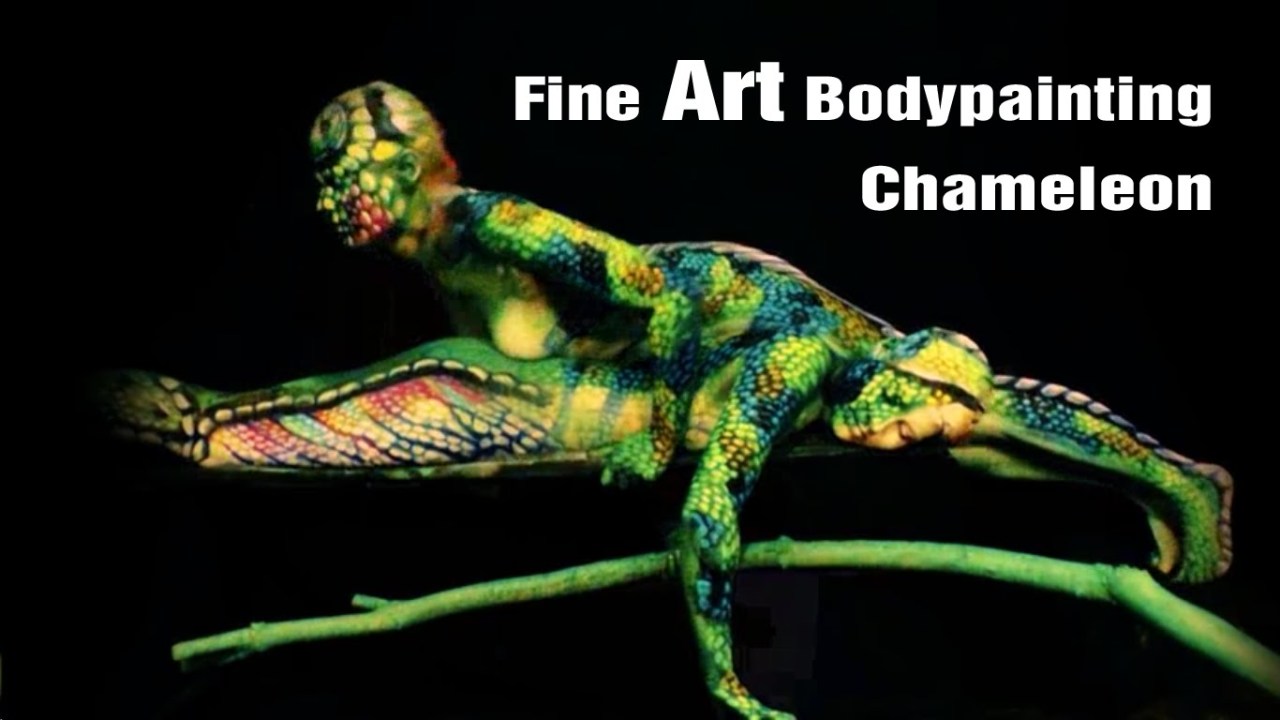
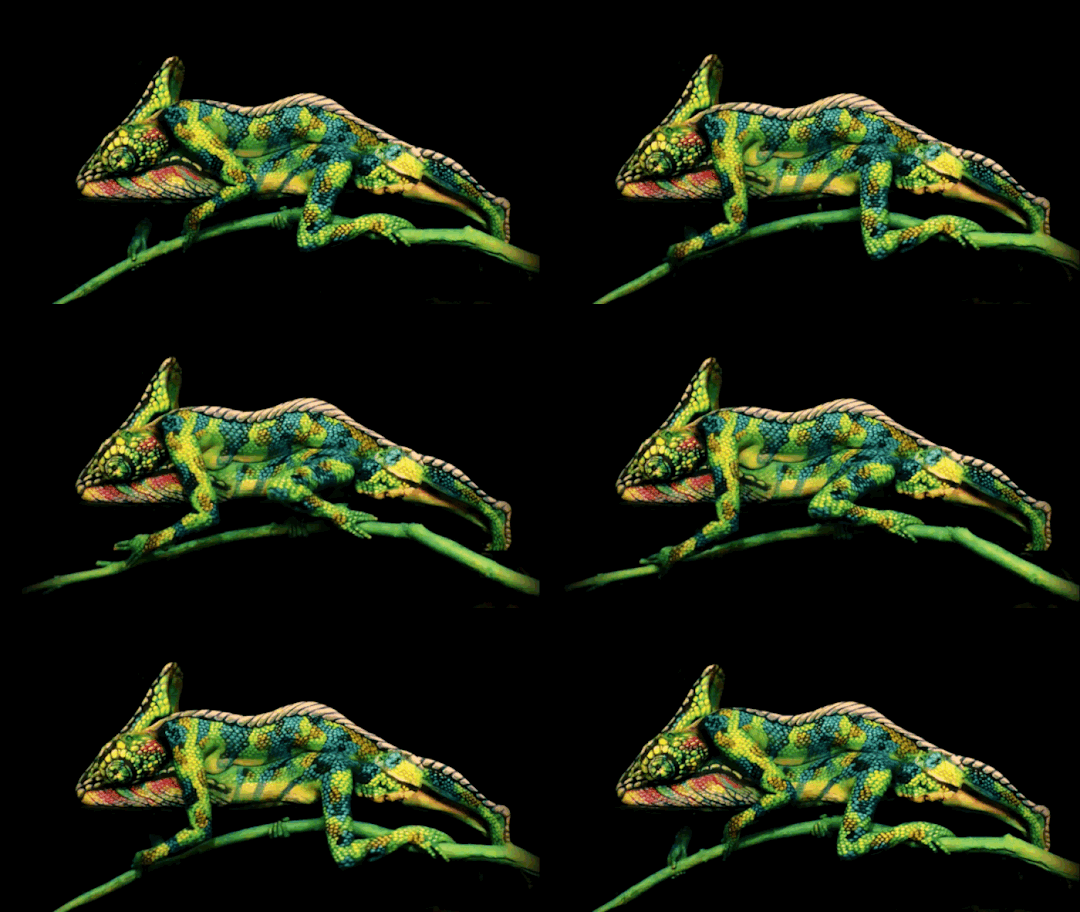
That's not a fish or a Chameleon or a Frog.

 https://66.media.tumblr.com/7a7ae47088d9e306f3417afc8f4bac3e/tumblr_o8he3gOPAt1tkfof5o2_540.gif


Italian artist Johannes Stoetter creates creatures using painted human bodies. His art truly comes to life.
VIDEO


Artist Johannes Stoetter has gained worldwide attention for using body paint to create stunning animal creations. In this video created by Stoetter, you may think you're seeing a frog and a chameleon -- but in fact you're seeing human beings, painted and intertwined to create an incredible illusion. 

https://66.media.tumblr.com/a66230875c88aa25982a8af488a8c2f1/tumblr_o8he3gOPAt1tkfof5o3_500.gif

You can see more of Stoetter's work at these websites: http://www.wb-production.com/en/ 


VIDEO


https://67.media.tumblr.com/1fe8052ced7e9ce57a18b7e2b864124d/tumblr_o8he3gOPAt1tkfof5o4_r1_400.gif

Saturday, May 21, 2016

Watch this CAT Meet 50 Dogs at a Dog Show

Watch this CAT
Meet 50 Dogs at a Dog Show 


Watch what happens when 50 different dogs go nose to nose with Boomer (a CAT) The reaction of the dogs is priceless.
 
Thanks for subscribing and sharing our videos. FYI - I have 34 years experience as a professional animal trainer, please do not try this at home. If you'de like to learn how to teach your cat, watch my tutorials here on my YouTube channel (MORE BELOW)


Boomer is a (well trained) Bengal and although the breed is amazingly beautiful, they are not for everyone, 1st they are not lap cats & generally don't like to be held, as kittens they are extremely mischievous and a lot of time everyday has to be put in to exercise this breed. 


They are also escape artists and they are known to meow louder and more frequently than most breeds. I have a Bengal for professional purposes, after all I have over 34 years as a professional animal trainer. 

Many of the cat tricks or other behaviors you see in my videos I spent many hours, days, and months perfecting, don't try this at home.

Didga is a Moggy/Tabby from the shelter and is an amazing kitty and was easier to teach then Boomer. I'm not saying don't get one, just know the commitment that will be needed when bringing this breed into your home. or just live vicariously through me and my posts of Boomer. 

(Think before you buy)

It's BEST to ADOPT     DON'T SHOP.