Are your supplements safe - or could they be secretly harming you?
I strongly advocate for evidence-based supplements. But when a patient arrived for surgery carrying 16 bottles of supplements, I knew we needed to be extra cautious. Everything seemed fine until the last moment - just before anesthesia, their heart suddenly went into a dangerous rhythm. The surgery had to be canceled, and the patient needed emergency cardiac intervention.
7:44 – (3) the most important question to ask your doctor!
Your
health is too important to gamble with. Watch now to learn what you
need to do to make sure your supplements are working for you - not against
you.
👇 👇
I'll discuss the hidden dangers of contaminated supplements, including microbial contamination, toxic heavy metals, and even mislabeled or illegally altered ingredients. Some supplements have been found to contain unapproved pharmaceuticals without warning, creating serious health risks. I break down the evidence behind these risks and explain why so many people unknowingly expose themselves to dangerous substances every day. But it’s not all bad news. I believe in safe, effective supplements that truly support health. That’s why I’m sharing three essential steps to protect yourself before putting anything into your body. From verifying third-party testing to questioning the necessity of a supplement, these tips can help you make informed decisions and avoid costly, potentially harmful mistakes.
As a nurse working ICU we would ask about meds and supplements. I had one pt deny taking anything. She had surgery and we could not control oozing post op. Her friend came in with a large bag of natural supplements. I asked why they did not tell me about these when asked. Response they are "natural supplements" so cannot hurt you. I went through and found 3 that had blood thinning effect. Called the surgeon and we made a game plan to make it past the 4 to 5 days it would take for them to clear her system. Then when she was better reviewed the issue of not reporting "natural supplements" as medicine to the MD or us.
The
most dangerous supplements are those linked to severe, irreversible
organ damage, life-threatening drug interactions, or acute toxicity from
"megadosing." Because the FDA does not regulate supplements as strictly as medications, many products remain on the market despite documented health risks.
👇
1. Highly Hazardous Herbs (Severe Organ Risk)
Several botanical ingredients are associated with organ failure and cancer:
💊 Aristolochic Acid:A potent carcinogen linked to permanent kidney failure and urinary
tract cancers; it has been banned in many countries but sometimes
appears in unregulated herbal products. 💊Kava:
While used for anxiety, it is linked to severe liver injury, hepatitis, and cirrhosis, sometimes requiring liver transplants.
👇
2. Dangerous Common Nutrients (Toxicity from Overdose)
"Megadosing" or long-term high intake of standard vitamins can be fatal:
💊 Vitamin D: Excessive amounts (typically over 4,000 IU/day) can lead to hypercalcemia (toxic calcium levels), causing kidney stones, heart arrhythmias, kidney failure, and death. 💊 Vitamin A: A fat-soluble vitamin that accumulates in the body; chronic high doses can lead to liver impairment, bone loss, birth defects, and even coma. 💊 Vitamin B6: Taking high doses (over 100mg-200mg/day) for extended periods can cause severe nerve damage (peripheral neuropathy), which may result in a permanent loss of bodily movement control.
💊 Iron:One of the leading causes of supplemental poisoning in children; in adults, excess iron causes organ failure and tissue death in the intestines.
👇
3. Supplements with High Interaction Risks
Some supplements are dangerous primarily because of how they interact with vital medications:
💊 St. John’s Wort: Can render birth control pills, heart medications, and HIV drugs
ineffective. When mixed with antidepressants (SSRIs), it can cause life-threatening serotonin syndrome. 💊 Vitamin K: Significantly reduces the effectiveness of blood thinners like Warfarin, increasing the risk of clots. 💊 Ginkgo Biloba & Vitamin E: Both have blood-thinning effects that can lead to internal bleeding if combined with aspirin or prescription anticoagulants.
👇
4. Adulterated and Contaminated Products
The supplement industry often struggles with quality control issues:
💊 Weight Loss & Sexual Enhancement: These categories frequently contain hidden prescription drugs, steroids, or banned stimulants (like Ephedra, which was linked to over 100 deaths). 💊 Contamination: Some products, including certain protein powders and herbal extracts, have tested positive for toxic heavy metals like lead, arsenic, and mercury.
Doctors warn about risk of lifelong damage from over-the-counter vitamin supplement. Doctors are warning that patients are risking lifelong damage from the use of common, over-the-counter supplements.
1. Most healthy adults and children with balanced diets do not benefit from routine multivitamin supplementation.
The US Preventive Services Task Force found that multivitamin supplementation showed no benefit for preventing cardiovascular disease or all-cause mortality in healthy adults, with only a very small reduction in cancer incidence (absolute risk reduction of 0.2-1.2%). [1-2] Similarly, research consistently shows that healthy children consuming adequate diets gain little to no benefit from vitamin supplementation beyond meeting nutritional needs. [3-4]
2. The Recommended Dietary Allowance (RDA) is designed to exceed most people's actual needs The RDA is set at 2 standard deviations above the Estimated Average Requirement (EAR), meaning it's designed to meet the needs of 97.5% of healthy individuals in a population group. [4-5] The EAR represents the median requirement—the amount needed by only 50% of people. This means the RDA intentionally overshoots individual needs as a safety margin for population-level planning, not because everyone requires that amount daily. [4]
3. A balanced diet from whole foods provides adequate micronutrients for most people Animal-source foods, fruits, vegetables, whole grains, and fortified foods (like breakfast cereals) provide the micronutrients most people need. [4][6] Dietary patterns emphasizing plant-based foods, lean proteins, and moderate dairy while limiting processed foods are associated with better health outcomes across the lifespan. [6] Notably, supplement users—both adults and children—already consume higher-quality diets than non-users, suggesting those taking supplements often need them least. [4]
4. Some supplements can cause harm, particularly when taken unnecessarily Beta carotene supplementation increases lung cancer risk (OR 1.20) and cardiovascular mortality (OR 1.10) in certain populations. [1-2] Other documented harms include hip fractures with vitamin A, hemorrhagic stroke with vitamin E, and kidney stones with vitamin C and calcium. [1] Even multivitamins showed small increases in rash and nosebleeds in large trials. [1]
5. Specific populations benefit from targeted supplementation, not routine multivitamins Evidence supports targeted supplementation for specific needs: folic acid before conception and during pregnancy to prevent neural tube defects; vitamin D and calcium for bone health; vitamin B12 for strict vegetarians; and vitamin D for children at risk of rickets or with limited sun exposure. [4][7] The Academy of Nutrition and Dietetics states that "micronutrient supplements are warranted when requirements are not being met through diet alone" due to growth, chronic disease, medication use, malabsorption, pregnancy, lactation, or aging—not for routine disease prevention in healthy individuals. [4]
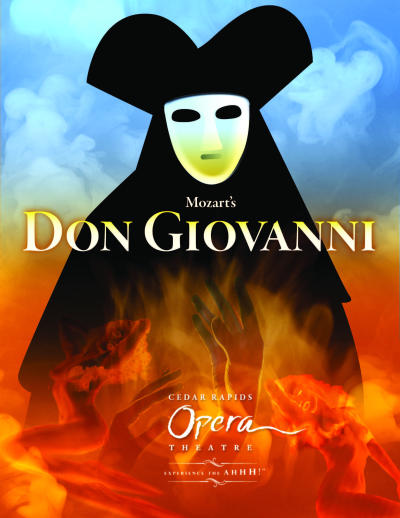
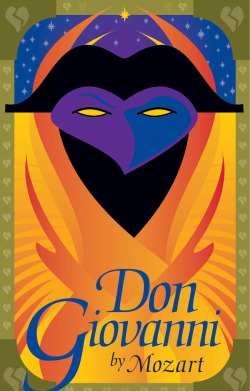
Don Giovanni is an opera in two acts with music by Wolfgang Amadeus Mozart to an Italian libretto by Lorenzo Da Ponte. Its subject is a centuries-old Spanish legend about a libertine as told by playwright Tirso de Molina in his 1630 play El burlador de Sevilla y convidado de piedra. It is a dramma giocoso blending comedy, melodrama and supernatural elements (although the composer entered it into his catalogue simply as opera buffa). It was premiered by the Prague Italian opera at the National Theater (of Bohemia), now called the Estates Theatre, on 29 October 1787. Don Giovanni is regarded as one of the greatest operas of all time and has proved a fruitful subject for commentary in its own right; critic Fiona Maddocks has described it as one of Mozart's "trio of masterpieces with librettos by Da Ponte".
Several Versions of the Complete Opera Below
Subtitles:🇮🇹 🇬🇧 🇺🇸 🇫🇷 🇨🇦
ITALIANO (CC) – ENGLISH (CC) – FRANÇAIS (intégré dans la vidéo).
Don Giovanni 🎼Teatro alla Scala Peter Mattei, Bryn Terfel 👇♪English Subtitles ♪ 👇
Peter Mattei - Don Giovanni
Bryn Terfel - Leporello
Kwangchul Youn - Il Commendatore
Anna Netrebko - Donna Anna
Giuseppe Filianoti - Don Ottavio
Barbara Frittoli - Donna Elvira
Anna Prohaska - Zerlina
Stefan Kocan - Masetto
Conductor: Daniel Barenboim
Director: Robert Carsen * Teatro alla Scala, 2011
Don Giovanni 🎼 Mozart Opéra Royal du Château de Versailles
Jamais démenti depuis la Première à l'Opéra de Prague en 1787, "Don Giovanni" est un opéra plein de péripéties écrit par Mozart. Dans le rôle principal, Robert Gleadow emmène le spectateur dans les aventures rocambolesques de ce noble séducteur.
👇 ♪ 📽 ♪ 👇
Mozart 🎼 Don Giovanni Herbert von Karajan, Salzburg Festival, 1987
👇 ♪ 📽 ♪ 👇
Don Giovanni“ from the Salzburg Festival in 1987. One of the last opera productions under the baton of Herbert von Karajan, directed by Michael Hampe. The entire performance in best possible quality is presented by the “Eliette und Herbert von Karajan Institut”. Wolfgang Amadeus Mozart (1756 – 1791) “Don Giovanni”, dramma giocoso K. 527 Don Giovanni: Samuel Ramey Il Commendatore: Paata Burchuladze Donna Anna: Anna Tomowa-Sintow Donna Elvira: Júlia Várady Don Ottavio: Gösta Winbergh Leporello: Ferruccio Furlanetto Masetto: Alexander Malta Zerlina: Kathleen Battle Konzertvereinigung Wiener Staatsopernchor Wiener Philharmoniker Conductor: Herbert von Karajan Stage direction: Michael Hampe Set: Mauro Pagano
It's a shame that subtitles often miss so many subtleties of Da Ponte’s libretto, so many allusions, and nuances that only an Italian can grasp!
For example, in the opera's opening scene, Don Giovanni and Leporello sing at the same time almost the same expression (0:10:07), but employing the verb “precipitar(e)” in two different acceptations, often confused: Don Giovanni does not fear at all his own downfall… it’s Leporello who is afraid to suffer something harmful, while Don Giovanni is justifying to himself whatever misdeed he is ready to commit, as being compelled to, with hypocritical rhetoric… And actually, shortly thereafter he will kill Donna Anna’s father, and again will claim that his victim had it coming!
The poetic witticism of putting two different acceptations of the same verb near each other is repeated in the first scene of the II act (1:37:00).
It’s striking that someone should “make love” (“fare all’amor”) beneath a window (1:50:13).
But this idiom has shifted in meaning over time in both languages: nothing to do with the present meaning: at that time, it meant “to woo”, “to court”.
Ignoring the possible meaning hidden behind the words and overlooking the libretto’s indications often could prove misleading, as shown by the common misunderstanding of the duettino “Là ci darem la mano”. Here correctly, initially Zerlina sings toward the audience, her backs on Don Giovanni, thinking out loud, trying to decide what to do. Her aside “Quick, I’m no longer strong” is not meant to urge the seducer, but amounts to saying: “Somebody help me at once! I’m afraid my strength is failing ”. This last (half-hearted) hint at resistance is shaken at the prospect of elevating her own station through marriage and (pretty comically) finally overcome when the Don explicitly promises to improve her lot… (so much for pitying Masetto!) It really isn't about romance, on either side! It’s rather a tug of war between two different cunnings. And the words with which Don Giovanni mocks Zerlina’s expectations are not accidental. “There we shall give each other our hands” is not just an invitation to “hold hands”: he intends to evoke the ritual “join your right hands” at the exchange of the wedding vows. But “to give one’s hand”, besides to swear or to seal a vow, is done to confirm a generic agreement; “darsi la mano”, as “to shake hands” intended, binds a bargain... Similarly “there you will tell me yes” patently would lead Zerlina to foresee the wedding declaration of consent, her “I do”. But surely Don Giovanni has in mind another kind of consent…
At the end, Don Giovanni and Zerlina are going to “ristorar le pene”, “to redress”, “to reward” (with marriage, or so Zerlina believes) the sufferings endured by their innocent love... Less innocent is the pun: it seems to wink at us: definitely the two don't mean the same thing! It could approximately be rendered… (0:46:26)
But how tricky it is to… “restore” such tricks!
DON GIOVANNI 🎼 W. A. MOZART.
HD full opera
🇮🇹 🇬🇧 🇺🇸 🇫🇷 🇨🇦 Subtitles:
ITALIANO (CC) – ENGLISH (CC) – FRANÇAIS (intégré dans la vidéo).
One of the best known and most popular operas ever. This version was enacted at the Festival of Aix–en–Provence, in France. The staging presents some quite radical features – very interesting and thought–provoking, by the way – concerning mainly the personality of Don Giovanni himself. A little bit too devilish, perhaps. But the singing is quite classical – and excellent.
Conductor: Jérémie ROHRER. Stage Director: Jean–François SIVADIER. Orchestre: LE CERCLE DE L'HARMONIE.
Don Giovanni: Philippe SLY. Leporello: Nahuel di PIERRO. Donna Elvira: Isabel LEONARD. Donn'Anna: Eleonora BURATTO. Don Ottavio: Pavol BRESLIK. Zerlina: Julie FUCHS. Masetto: Krzysztof BACZYK. Il Commendatore: David LEIGH. DO NOT MISS the opportunity to compare this more "classical" version with the very original staging of ACHIM FREYER (musically also excellent):
The musical level is outstanding. Extremely original and colorful "mise en scène". Its intention could possibly be – as proposed by Walter Benjamin in an insightful comment, for which many thanks – to present human beings as puppets, moved by the invisible threads of uncontrollable passions. A notion that could be fairly close to da Ponte's and Mozart's actual inspiration. 🇫🇷 NOTE:
De nombreux passages, à plusieurs voix, sont très complexes à sous–titrer de manière un tant soit peu intelligible. N'hésitez pas svp à signaler des erreurs ou à suggérer de possibles améliorations de présentation. NOTE:




.gif)
.gif)




.gif)