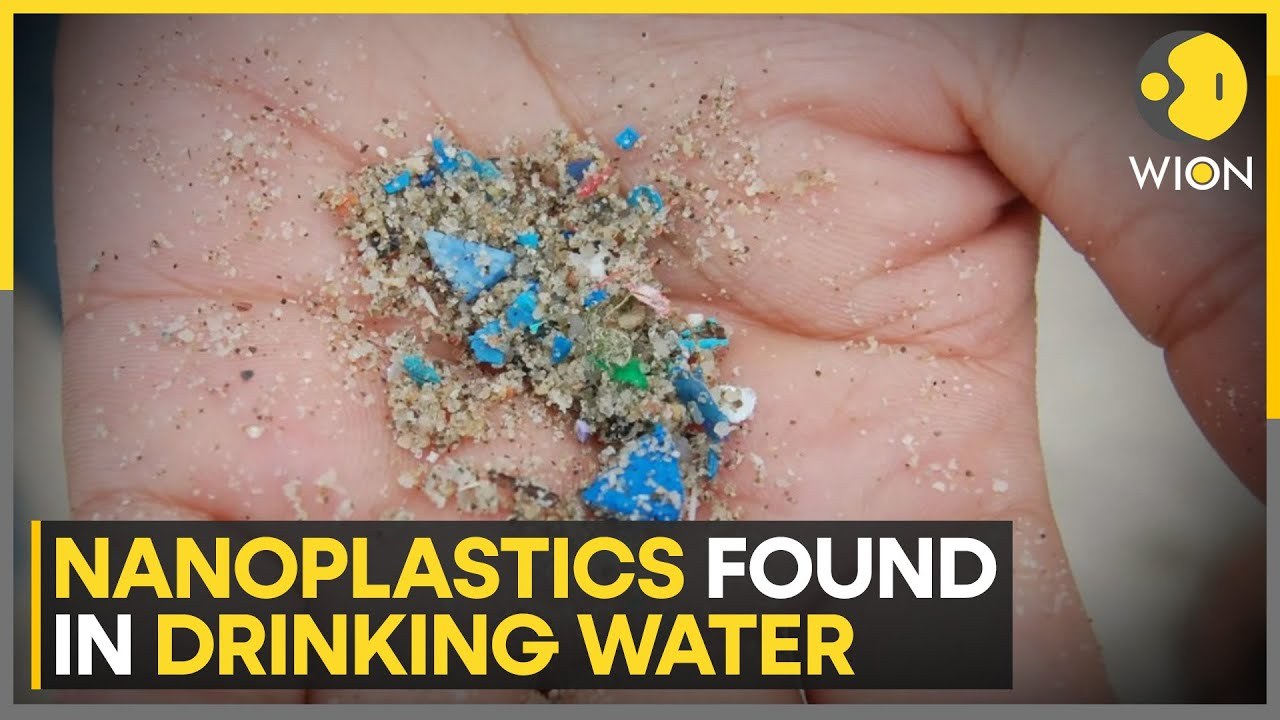
At a Glance Jan 23, 2024 * Researchers developed an imaging technique that detected thousands of tiny bits of plastic in common single-use bottles of water. The technique can help to shed light on the presence and impact of extremely small particles called nanoplastics, which are widespread but poorly understood.
* Scientists at Columbia and Rutgers have found that bottled water contains high amounts of nanoplastics. There is concern among some scientists that nanoplastics could be small enough to enter the bloodstream and be transported to organs, including the brain. David Schechter reports.
👇 👇
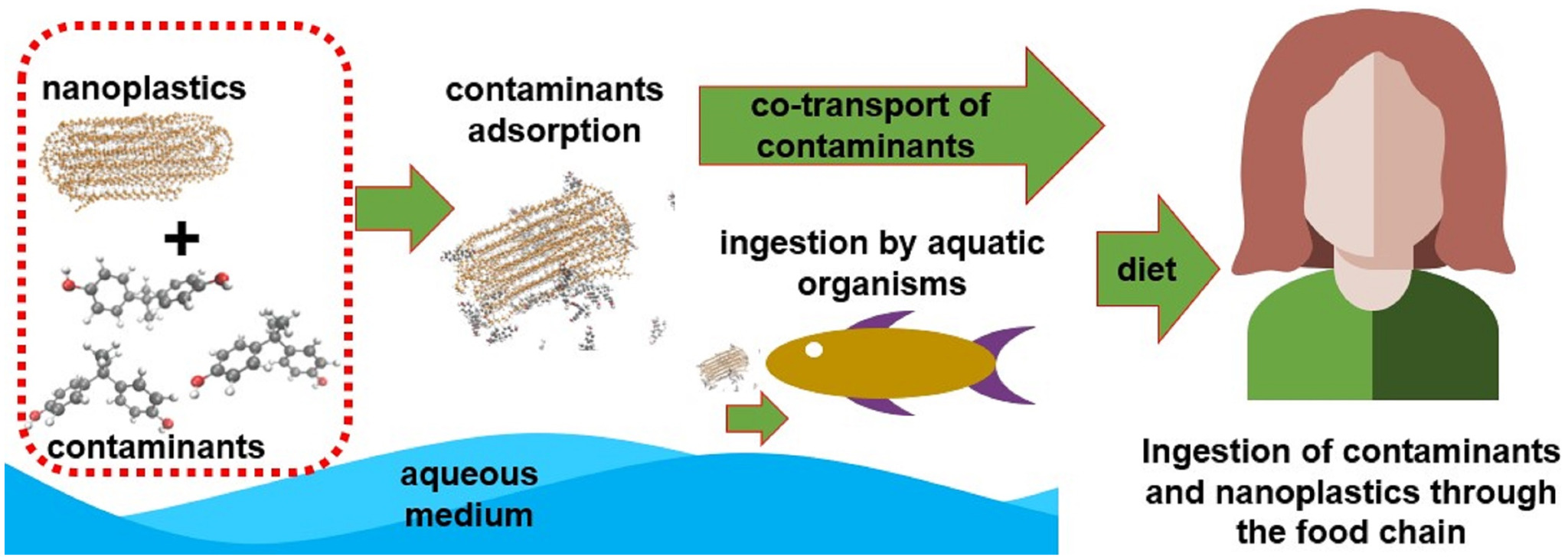
Scientists have been warning that a bottled drinking contains plastic - but what is shocking is the amounts that are present in it. Research done by the National Academy of Science has revealed that a liter of water in a plastic bottle contains an average of 240,000 fragments of plastic. This is 100 times more than the previous estimates. The study is the first to evaluate bottled water for the presence of nanoplastic. Nanoplastics pose a greater threat to human health than microplastics. Scientists say that they are small enough to penetrate human cells enter the bloodstream and impact organs nanoplastics are also known to pass through the placentainto the bodies of unborn babies. Scientists have long suspected the presence of plastic Nano particles in bottled water but they lack the technology to identify them to overcome this scientists invented a new microscopy technique and programmed a data driven algorithm to analyze bottled water for the presence of nanoplastic.
The researchers found that, on average, a liter of bottled water included about 240,000 tiny pieces of plastic. About 90% of these plastic fragments were nanoplastics. This total was 10 to 100 times more plastic particles than seen in earlier studies, which mostly focused on larger microplastics.
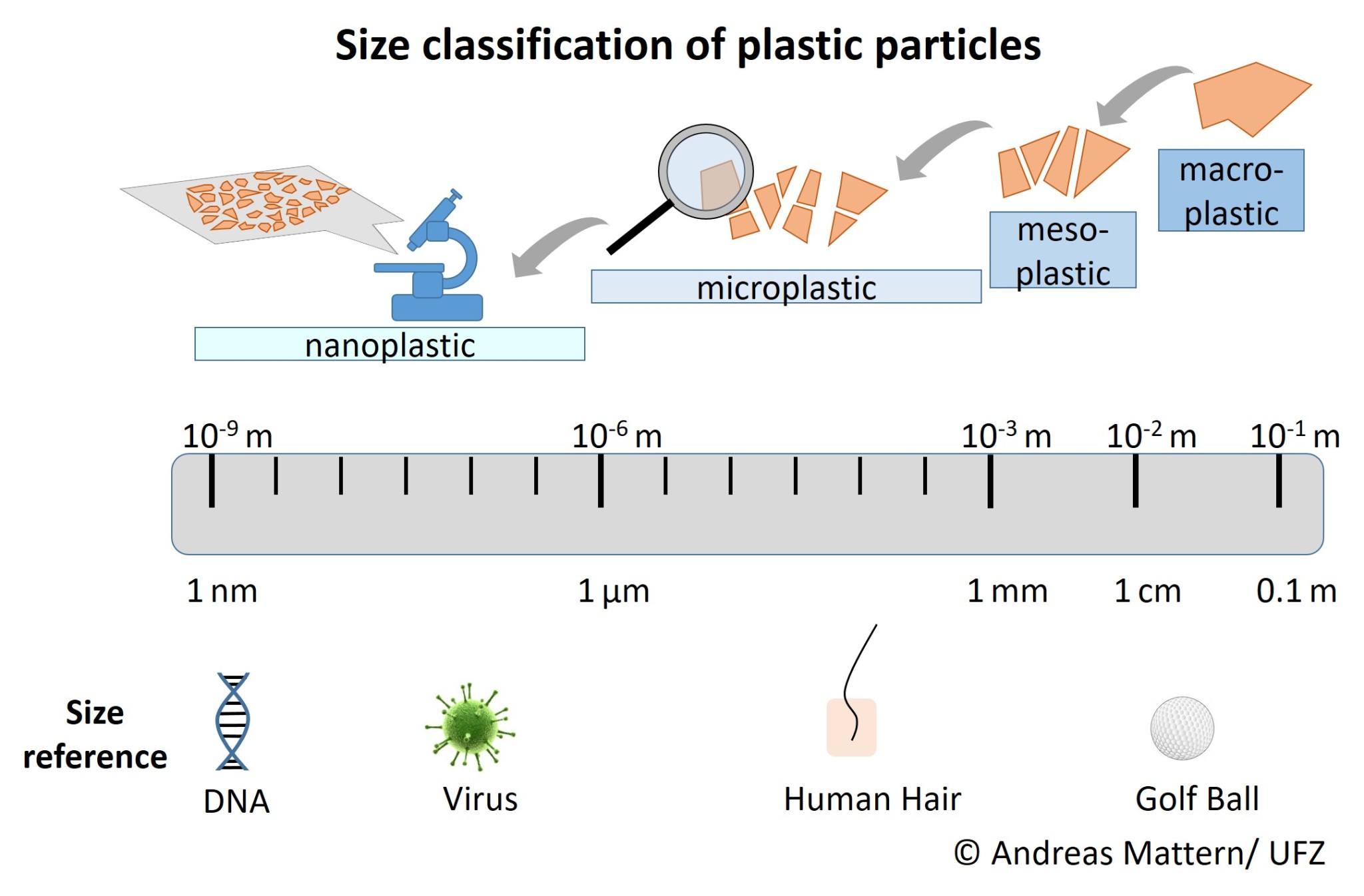
Plastics are a part of our everyday lives, and plastic pollution is a growing concern. When plastics break down over time, they can form smaller particles called microplastics, which are 5 mm or less in length - smaller than a sesame seed. Microplastics, in turn, can break down into even smaller pieces called nanoplastics, which are less than 1 μm in size. Unable to be seen with the naked eye, these are small enough to enter the body’s cells and tissues.
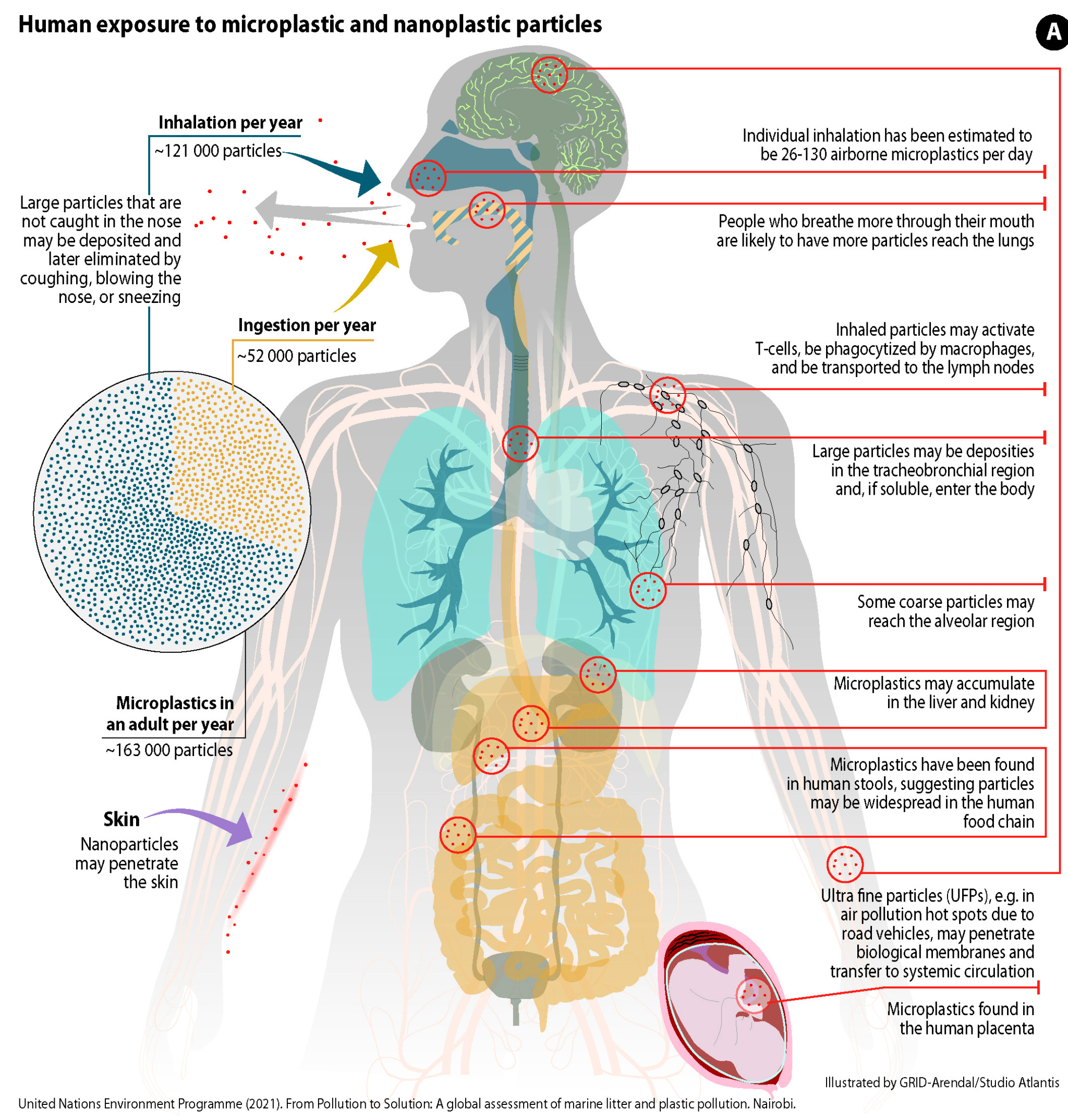
Previous research has found evidence of plastic particles in human blood, lungs, gut, feces, and reproductive tissues like the placenta and testes. But the potential health effects of these tiny plastic bits are still unproven and unknown. The small size of nanoparticles has made them especially difficult to detect and study.
To gain more insight into nanoplastics, a research team led by Drs.
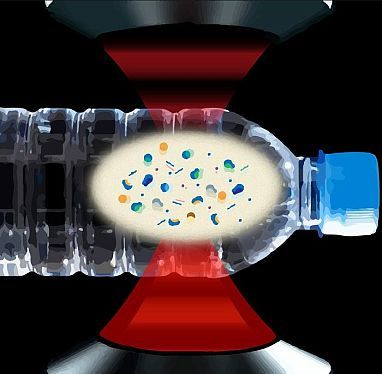
Wei Min and Beizhan Yan of Columbia University modified a powerful imaging technique that Min co-invented 15 years ago with NIH support. The technique, called stimulated Raman scattering (SRS) microscopy, is now widely used to visualize small molecules in living cells. The method works by focusing two laser beams on samples to stimulate certain molecules to emit unique detectable light signals. Unlike many other methods, SRS microscopy does not depend on labeling specific molecules to find them.
For the new study, which was supported by NIH, the researchers developed a new SRS approach to detect micro- and nanoplastics at the single-particle level. After confirming that the technique could rapidly spot plastic particles smaller than 1 μm, they developed an algorithm based on machine learning to detect seven common types of plastic.
To test their new high-throughput imaging platform, the team analyzed
the micro- and nanoplastics in three popular brands of bottled water. Results were reported on January 8, 2024, in the Proceedings of the National Academy of Sciences.
The researchers found that, on average, a liter of bottled water included about 240,000 tiny pieces of plastic. About 90% of these plastic fragments were nanoplastics. This total was 10 to 100 times more plastic particles than seen in earlier studies, which mostly focused on larger microplastics.
The water contained particles of all seven types of plastic. The most
common was polyamide, a type of nylon that’s often used to help filter and purify water. An abundance of polyethylene terephthalate (PET) was also detected. This might be expected, since PET is used to make bottles for water, soda, and many other drinks and foods. Other identified plastics included polyvinyl chloride, polymethyl methacrylate, and polystyrene, which is also used in water purification. The method identified millions of additional particles that did not match the seven categories of plastic. It’s not yet clear if these tiny particles are nanoplastics or other substances.
The researchers say that this new technique will help to advance our understanding of human exposure to nanoplastics. “This opens a window where we can look into a plastic world that was not exposed to us before,” Yan says.
In the future, the researchers will apply this approach to analyze more environmental samples, such as tap water, indoor and outdoor air samples, and biological tissues. They are also developing filters that can reduce plastic pollution from laundry wastewater, since many fabrics include nylon, PET, and other plastics.
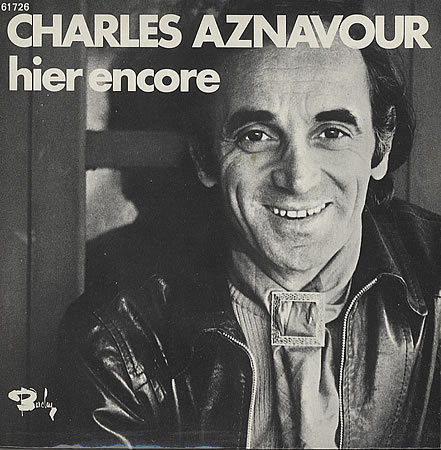
Aznavour was known for his distinctive vibratotenor voice: clear and ringing in its upper reaches, with gravelly and profound low notes. In a career as a singer and songwriter, spanning over 70 years, he recorded more than 1,200 songs interpreted in 9 languages – namely French, English, Italian, Spanish, German, Armenian, Neapolitan, Russian, and, later in his career, Kabyle. Moreover, he wrote or co-wrote more than 1,000 songs for himself and
others. Aznavour is regarded as one of the greatest songwriters in
history and an icon of 20th-century pop culture.
One of France's most popular and enduring singers, he was dubbed France's Frank Sinatra, while music critic Stephen Holden described Aznavour as a "French pop deity". Several media outlets described him as the most famous Armenian of all time. Jean Cocteau, who cast him in his 1960 Le Testament d'Orphée, joked "Before Aznavour despair was unpopular". Between 1974 and 2016, Aznavour received around sixty gold and platinum records around the world. According to his record company, the total sales of Aznavour's recordings were over 180 million units
In 1998, Aznavour was named Entertainer of the Century by CNN and users of Time Online from around the globe. He was recognized as the century's outstanding performer, with nearly 18% of the total vote, edging out Elvis Presley and Bob Dylan.
Aznavour has sung for presidents, popes and royalty, as well as at humanitarian events. In response to the 1988 Armenian earthquake, he founded the charitable organization Aznavour for Armenia along with his long-time friend impresarioLevon Sayan. In 2009, he was appointed ambassador of Armenia to Switzerland, as well as Armenia's permanent delegate to the United Nations at Geneva.
Aznavour was born in Saint-Germain-des-Prés, Paris, to Armenian immigrants Michael Aznavourian and Knar Baghdasarian, an Armenian from İzmir, Turkey.
His father sang in restaurants in France before establishing a Caucasian restaurant called Le Caucase.
Charles's parents introduced him to performing at an early age, and he
dropped out of school aged nine, taking the stage name "Aznavour".
His
big break came in 1946 when the singer Édith Piaf heard him sing and arranged to take him with her on tour in France and to the United States.
Charles Aznavour et Édith Piaf
Music
Aznavour
was already familiar with performing on stage by the time he began his
career as a musician. At the age of nine, he had roles in a play called Un Petit Diable à Paris and a film entitled La Guerre des Gosses.
Aznavour then turned to professional dancing and performed in several
nightclubs. In 1944, he and actor Pierre Roche began a partnership and
in collaborative efforts performed in numerous nightclubs. It was
through this partnership that Aznavour began to write songs and sing.
The partnership's first successes were in Canada in 1948-1950.
Meanwhile, Aznavour wrote his first song entitled J'ai Bu in 1950.
During the early stages of his career, Aznavour opened for Edith Piaf at the Moulin Rouge.
Piaf then advised Aznavour to pursue a career in singing. Piaf helped
Aznavour develop a distinctive voice that stimulated the best of his
abilities.
Sometimes described as "France's Frank Sinatra", Aznavour sings frequently about love. He has written musicals
and more than eight hundred songs, and made more than one hundred
records.
Aznavour's voice is shaded towards the tenor range, but
possesses the low range and coloration more typical of a baritone,
contributing to his unique sound. Aznavour speaks and sings in many
languages (French, English, Italian, Spanish, German, Russian, Armenian,
Neapolitan), which has helped him perform at Carnegie Hall, in the USA, and other major venues around the world.
He also recorded at least one song from the 18th century Armenian poet Sayat Nova, and a popular song, Im Yare in Armenian. Que C'est Triste Venise, sung in French, Italian (Com'è Triste Venezia), Spanish (Venecia Sin Ti), English (How Sad Venice Can Be), and German (Venedig in Grau), is one of Aznavour's most famous multilingual songs.
In 1974, Aznavour became a major success in the United Kingdom where his song "She" went to Number One in the charts three times faster than anyone else's. His other well-known song in the UK was "Dance in the Old Fashioned Way".
Fellow French pop singer Mireille Mathieu has sung and recorded with Aznavour on numerous occasions. In 1974, Jack Jones recorded an entire album of Aznavour compositions entitled Write Me A Love Song, Charlie, re-released on CD in 2006.
Aznavour and Italian tenor Luciano Pavarotti sang Gounod's aria "Ave Maria" together. He performed with Russian cellist and friend Mstislav Rostropovich to inaugurate the French presidency of the European Union in 1995. Elvis Costello recorded "She" for the film Notting Hill. One of Aznavour's greatest friends and collaborators from the music industry is Spanish operatic tenorPlácido Domingo,
who often performs his hits, most notably a solo studio recording of
"Les bateaux sont partis" in 1985 and duet versions of the song in
French and Spanish in 2008, as well as multiple live renditions
Aznavour's "Ave Maria".
In 1994, Aznavour performed with Domingo and
Norwegian sopranoSissel Kyrkjebø at Domingo's third annual Christmas in Vienna
concert. The three singers performed a variety of carols, medleys, and
duets, and the concert was televised throughout the world, as well as released on a CD internationally.
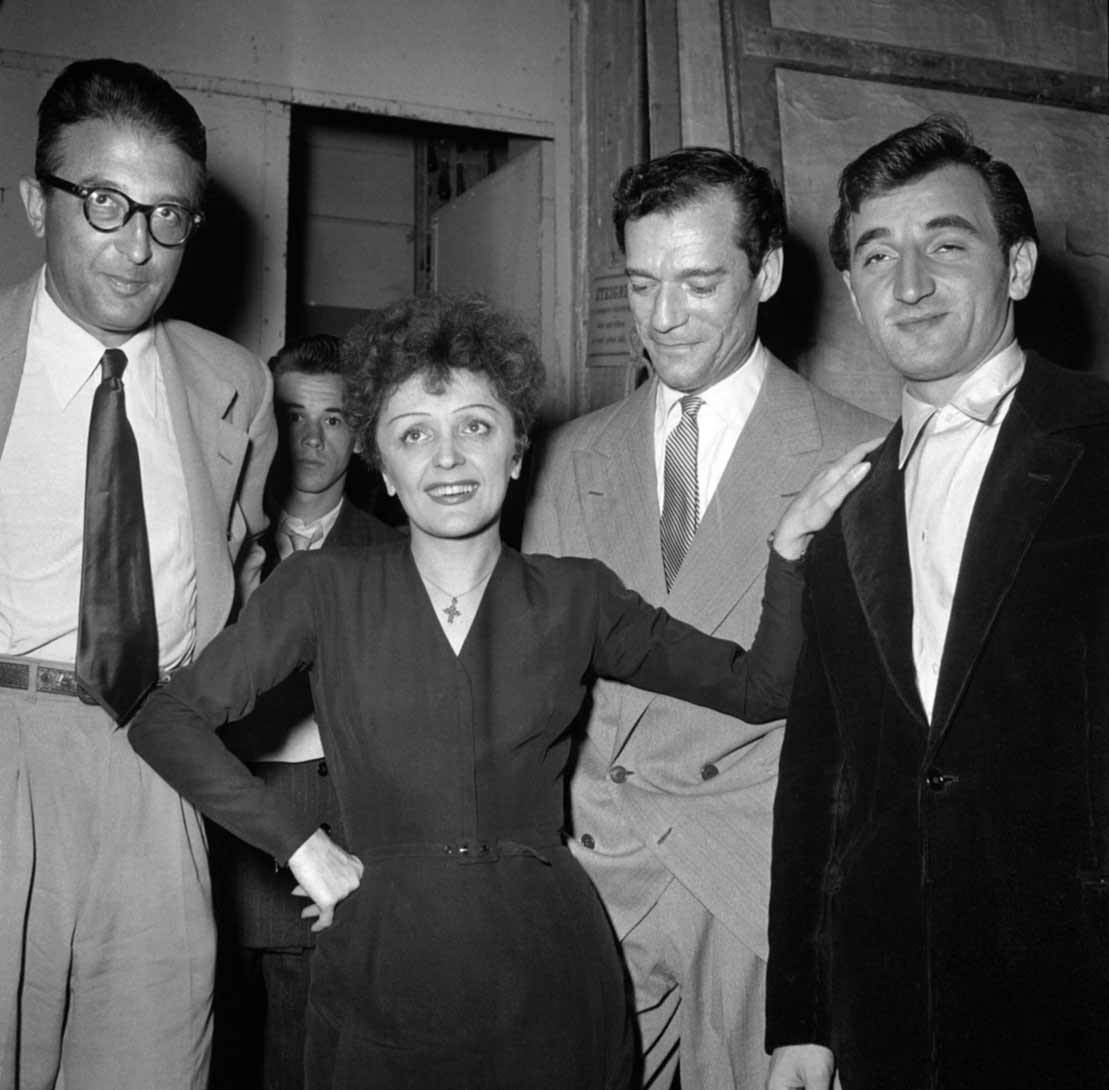
Michel Emer, Édith Piaf, Eddie Constantine et Charles Aznavour
In the 1984 version of Die Fledermaus,
he appears and performs as one of Prince Orlovsky's guests. This
version stars Kiri Te Kanawa and was directed by Plácido Domingo in the
Royal Opera House at Covent Garden.
Aznavour starred in the 2002 movie Ararat playing Edward Saroyan, a movie director.
Legacy
When Bob Dylan was asked who some of his favorite musicians are, he stated, "I like Charles Aznavour a lot. I saw him in sixty-something at Carnegie Hall, and he just blew my brains out."
Sting
has stated that "To me he [Aznavour] is an icon. Not only as a singer,
but as an actor, as a personality, as a master of 'chanson'."
Aznavour was also highly regarded by Frank Sinatra, Celine Dion, Edith Piaf, and Liza Minnelli, with whom he performed and recorded. Minnelli has said of the singer, "He changed my entire life."
Aznavour has been widely regarded as one of the most famous Armenians of his time, and a major pop culture icon of the 20th century.
His musicality and fame abroad had a significant impact on many
areas of pop culture. Aznavour's name inspired the alias of the
character Char Aznable by Yoshiyuki Tomino in his 1979 mecha anime series Mobile Suit Gundam. Char would become a Japanese pop cultural icon and the most famous character over a decades-long franchise.
Music critic Stephen Holden described Aznavour as a "French pop deity".
On 5 October, Aznavour was honoured with a state funeral at Les Invalides in Paris. The president Emmanuel Macron
delivered a eulogy describing Aznavour as one of the most important
"faces of France", and his lyrics as, "for millions of people a balm, a
remedy, a comfort ... For so many decades, he has made our life sweeter,
our tears less bitter." His coffin was carried out as his song,
"Emmenez-Moi" (Take Me Along), played. Dignitaries attending the funeral also included French Prime MinisterÉdouard Philippe, former presidents Nicolas Sarkozy and François Hollande, as well as Armenian PresidentArmen Sarkissian and Prime Minister Nikol Pashinyan and their wives.
He is interred in the family crypt at the Montfort-l'Amaury cemetery.
It's a combination of "kara" (空, meaning "empty") and "oke" (オケ), an abbreviation of "okesutora" (オーケストラ, meaning "orchestra"). Therefore, "karaoke" literally translates to "empty orchestra" reflecting the experience of singing along to instrumental tracks without live accompaniment.
Karaoke is a type of interactive entertainment system usually offered in nightclubs and bars, where people sing along to pre-recorded accompaniment using a microphone. Its musical content is an instrumental rendition of a well-known popular song. In recent times, lyrics are typically displayed on a video screen, along with a moving symbol, changing color, or music video images, to guide the singer.
In Chinese-speaking countries and regions such as mainland China, Hong Kong, Taiwan and Singapore, a karaoke box is called a KTV. The global karaoke market has been estimated to be worth nearly $10 billion.
Karaoke's global popularity has been fueled by technological advancements, making it a staple of social gatherings and entertainment venues all over the world. The precursors of karaoke machines using cassette tapes made their first appearances in Japan and the Philippines in the 1970s. Commercial versions manufactured by Japanese companies using LaserDisc became available worldwide in the 1980s, leading to a surge in popularity. Karaoke machines are commonly found in lounges, nightclubs, and bars; as well as in-home versions which later combined with home theater systems. Over time, karaoke has evolved with digital music, video games, smartphone apps, and online platforms, allowing users to sing anytime and anywhere. Beyond leisure, karaoke is used for professional training in music and public speaking, highlighting its broad appeal and impact on popular culture.
History
1960s: Development of audio-visual-recording devices
From 1961 to 1966, the American TV network NBC carried a karaoke-like series, Sing Along with Mitch, featuring host Mitch Miller and a chorus, which superimposed the lyrics to their songs near the bottom of the TV screen for home audience participation. The primary difference between karaoke and sing-along songs is the absence of the lead vocalist.
Sing-alongs (present since the beginning of singing) fundamentally changed with the introduction of new technology. In the late 1960s and into the 1970s, stored audible materials began to dominate the music recording industry and revolutionized the portability and ease of use of band and instrumental music by musicians and entertainers as the demand for entertainers increased globally. This may have been attributable to the introduction of music cassette tapes, technology that arose from the need to customize music recordings and the desire for a "handy" format that would allow fast and convenient duplication of music and thereby meet the requirements of the entertainers' lifestyles and the 'footloose' character of the entertainment industry.
1970s: Development of the karaoke machine Despite the Japanese provenance of the term karaoke (first attested in 1977), the invention of karaoke-styled machines is controversial. It is usually credited to two people, depending on the sources: Daisuke Inoue of Japan or Roberto del Rosario of the Philippines. Neither of whom significantly benefited from the worldwide surge of popularity of the karaoke starting from the 1980s. The profits in the karaoke industry went to later machines developed by larger Japanese corporations. Other people have also claimed to have invented karaoke-styled machines at various dates, but only del Rosario has a patent on his machine. The fact that the karaoke machine is simply an aggregate of existing technologies and is built on the older concept of sing-alongs makes it likely that it was developed independently multiple times.
In a 1996 interview with a Singapore-based all-karaoke TV channel, the Japanese nightclub musician Daisuke Inoue claimed to have invented the first karaoke-style machine in the city of Kobe in 1971. He was also credited for the invention of karaoke when he was later also featured on a Time magazine article in 1999.
Inoue, a bandleader, drummer, and Electone keyboardist, specialized in leading sing-alongs at nightclubs in
Sannomiya, the entertainment district of the city of Kobe. In 1970, he
and six bandmates played instruments in fancy drinking establishments to
accompany middle-aged businessmen who would sing traditional Japanese
songs. He claimed to have first thought of the idea of a karaoke-style
machine when he was asked by a prominent client to play for him on an
overnight trip to an onsen.
Not being able to do so, he instead provided a tape of his
accompaniment to the client. Realizing its potential, he thought of
merging these pre-taped accompaniments with a jukebox.
Lacking the skills to make the machine himself, one of his
bandmates introduced him to a friend who owned an electronics shop. He
described his idea to him and commissioned 11 home-made machines which
he called "8 Juke." Each machine cost around $425 per unit and consisted
of a box containing an amplifier, a microphone, a coin box, and a car stereo which used specially-made 8-track tapes. The machines metered out several minutes of singing time and used ¥100 coins.
He initially recorded his own versions of popular songs with his bandmates for the tapes. Starting from 1971, Inoue loaned the machines to establishments for free in exchange for a portion of the monthly earnings from the
machines. He placed the first 8 Jukes in Sannomiya's "snack bars", but they initially failed to take off. Inoue then hired hostesses to ostentatiously sing on them, which successfully sparked interest. This also caused a great deal of friction with Inoue's fellow musicians, who saw it as drawing customers away from them.
When profits improved at around four years of operation, he hired professional musicians and rented a recording studio to create the 8-tracks for the machines. He made the songs in keys that made them easier for casual singers. As such he also included a rudimentary reverb function to help mask singers' deficiencies. By this time, the number of units he rented had increased from the initial eleven to around 25,000. Club owners from Kobe had started bringing his machines to new clubs in Osaka
which became the birthplace of the karaoke boom in Japan. He also managed to convince large record labels to include their songs in the tracks for the 8 Jukes. For these reasons, Inoue is often considered to be the inventor of the modern business model for karaoke.
Inoue never patented his machine. While initially successful and earning approximately half a million dollars a year, Inoue lost interest in the business. He eventually handed over the company to his brother. By the 1980s, the idea of coin-operated sing-along machines was picked
up by larger Japanese corporations who started manufacturing commercial versions of their own with better technologies like LaserDiscs.
In 2004, Daisuke Inoue was awarded the tongue-in-cheekIg Nobel Peace Prize for inventing karaoke, "thereby providing an entirely new way for people to learn to tolerate each other."
World records
As of 2009, the world record for the most people singing karaoke was at Bristol Motor Speedway in the United States. Over 160,000 people began to sing Garth Brooks' song "Friends in Low Places" before the NASCAR Sharpie 500 race began.
Hungary holds the record for the longest Karaoke marathon with
multiple participants for an event organized in the Honey Grill
Restaurant by Gabor Dániel Szabó (REVVOX Music). It lasted for 1,011
hours, 1 minute, between 20 July 2011, and 31 August 2011. Each song was
over 3 minutes long and the gap between songs was no longer than 30
seconds. No song was repeated in any two-hour period.
The record for the longest Karaoke solo marathon is held by the
Italian Leonardo Polverelli, who sang 1,295 songs in 101 hours, 59
minutes, and 15 seconds.
Japanese Karaoke:
Learn the history and culture behind it The story behind Japanese karaoke:
Japanese karaoke is a beloved pastime in Japan, and its popularity is growing worldwide. This article answered the following questions: What is Japanese karaoke? What does karaoke mean in Japanese? Where is the origin of karaoke? How do you do karaoke in Japan? How is karaoke different in Japan than the rest of the world? What are popular Japanese karaoke songs? If you want to experience this unique form of entertainment for yourself, check out our website to find karaoke venues near you. https://singa.com/en/karaoke-near-me Karaoke offers a fun way to connect with friends and family while enjoying some of your favorite songs. So what are you waiting for? Grab your mic and sing karaoke anywhere!

 👇
👇





.gif)











.gif)

.gif)
